West Michigan Kayaking Club Takes on West Virginia’s Famous Upper Gauley
By Brad De Young, Founder — West Michigan Kayaking Club
THE GAULEY RIVER — WHY WE CAME
There are rivers you paddle because they are beautiful.
There are rivers you paddle because they are challenging.
And then there are rivers that become destinations in their own right.
The Gauley River in West Virginia is one of those rivers.
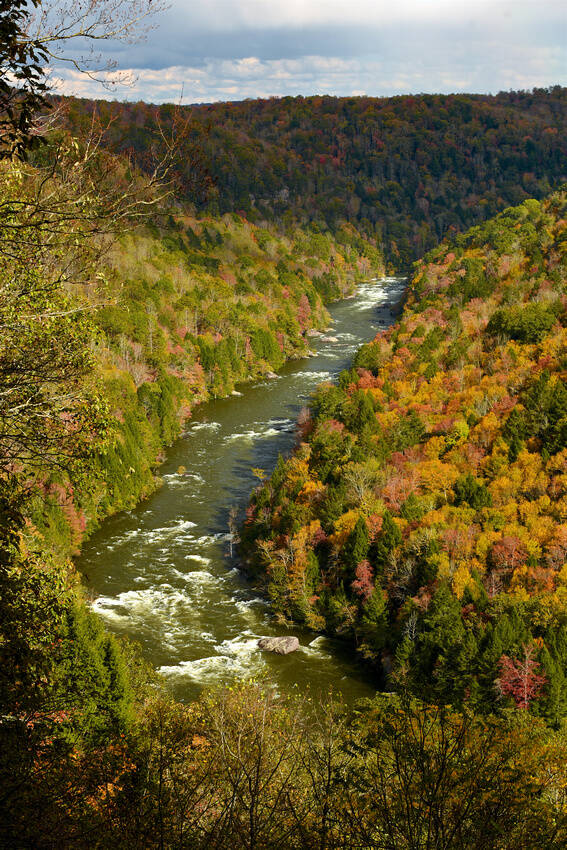
Located in the mountains of southern West Virginia, the Gauley is famous for steep drops, powerful currents, enormous waves, holes and technical whitewater.
The river is generally divided into two major sections: the Upper Gauley and Lower Gauley.
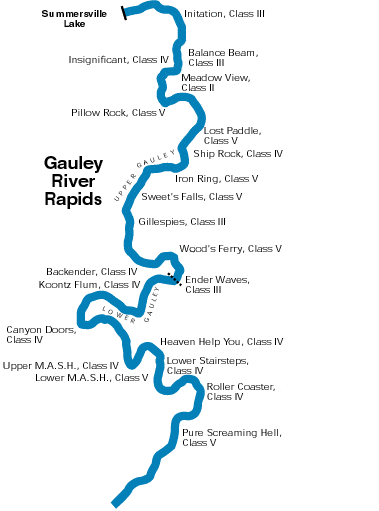
The Upper Gauley is the section that has earned a legendary reputation among whitewater boaters. It contains roughly 11 miles of continuous whitewater, with rapids ranging from Class III to Class V.
And at the heart of the Upper Gauley are five famous Class V rapids known collectively as the Big Five:
Insignificant. Pillow Rock. Lost Paddle. Iron Ring. Sweet’s Falls.
Those names would become very familiar to us.
But before we ever got anywhere near those rapids, there was something else we needed to understand about the Gauley.
The river’s famous fall whitewater is closely connected to a massive dam upstream.
SUMMERSVILLE DAM AND GAULEY SEASON
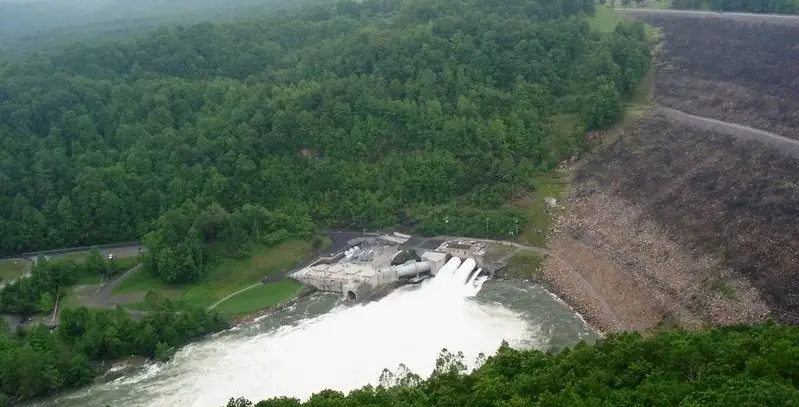
Upstream from the Upper Gauley sits Summersville Lake and Summersville Dam.
The dam holds back the Gauley River and creates Summersville Lake.
During much of the year, the river below the dam is very different from what whitewater boaters experience during the fall.
Then comes September and October.
During scheduled fall releases, water is released from Summersville Lake into the Gauley River.
That annual period is known as Gauley Season.
The additional water dramatically increases the river’s flow and power.
The Gauley becomes a much bigger river, with enormous waves, steep drops, powerful currents and strong hydraulics.
That’s what draws whitewater paddlers and rafting companies from around the country to West Virginia every fall.
For a few weeks, the river below Summersville Dam becomes a completely different animal.
And that’s what we had come to experience.
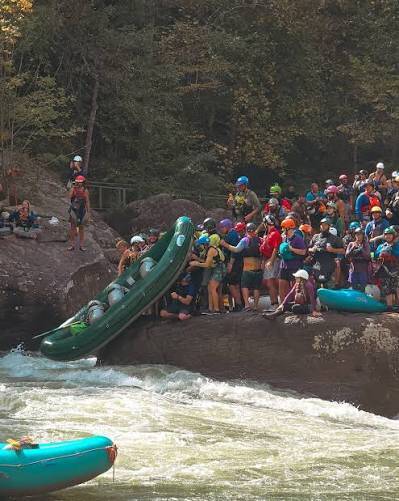
THE BIG FIVE
Before our trip, we knew the Upper Gauley was going to be serious whitewater.
But knowing the names of the rapids and actually sitting in a raft above them are two very different things.
The five major Class V rapids are known as the Big Five.
Insignificant.
The name sounds almost harmless.
It isn’t.
Pillow Rock.
A massive submerged rock creates an enormous pillow of water as the river crashes into it.
Lost Paddle.
A complex series of features that keeps the raft moving from one challenge to the next.
Iron Ring.
Powerful current, waves and technical whitewater that demand concentration and teamwork.
Sweet’s Falls.
The final member of the Big Five and one of the most recognizable rapids on the Upper Gauley.
Five Class V rapids.
One river.
And a whole lot of water between them.
Soon, we’d find out what they were really like.
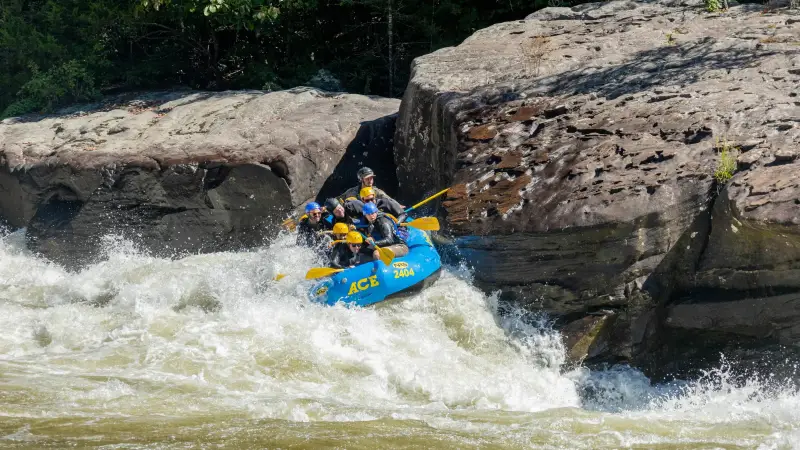
FROM GRAND RAPIDS TO WEST VIRGINIA
Several months before we ever left Michigan, my partner and fellow West Michigan Kayaking Club member Kimberly started telling me about one of her favorite adventures.
The Upper Gauley.
Kimberly had made the trip several times during Gauley Season, and every time she talked about it, I became more interested.
I’d heard the stories.
I’d seen the photographs.
But hearing someone describe a river they had actually experienced is different.
Eventually, our conversations turned into a plan.
We were going to West Virginia.
We left Grand Rapids Thursday morning and started the roughly 600-mile drive.
The farther south we traveled, the more the landscape changed.
Michigan highways gave way to Ohio farmland.
Then the hills became larger.
The roads became more winding.
The forests became thicker.
Eventually, the mountains began appearing around us.
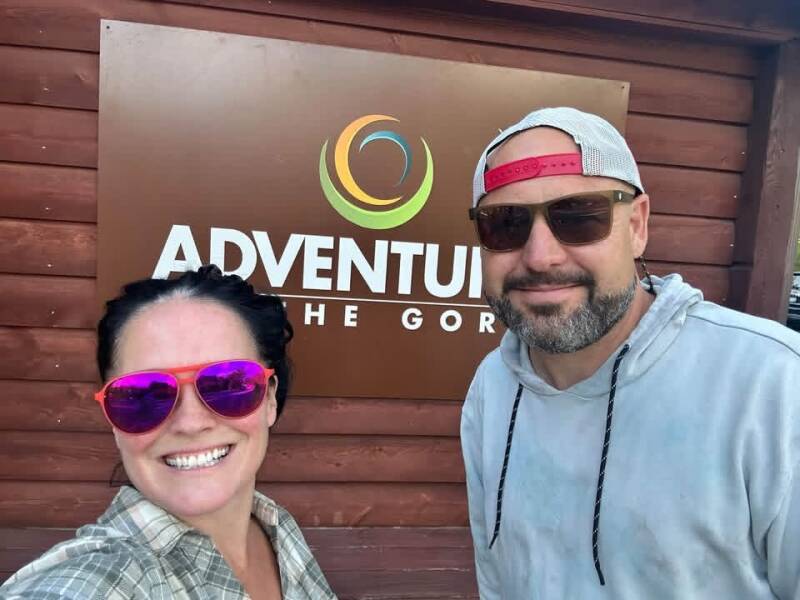
After roughly 600 miles, we arrived at Adventures on the Gorge around 6:30 that evening.
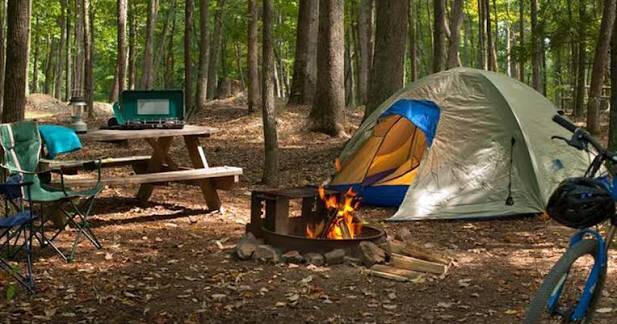
We unloaded our gear, set up camp and settled in.
We were finally there.
West Virginia.
The Gauley was waiting.
EXPLORING BEFORE THE BIG DAY
Friday wasn’t river day.
That gave us a chance to explore.
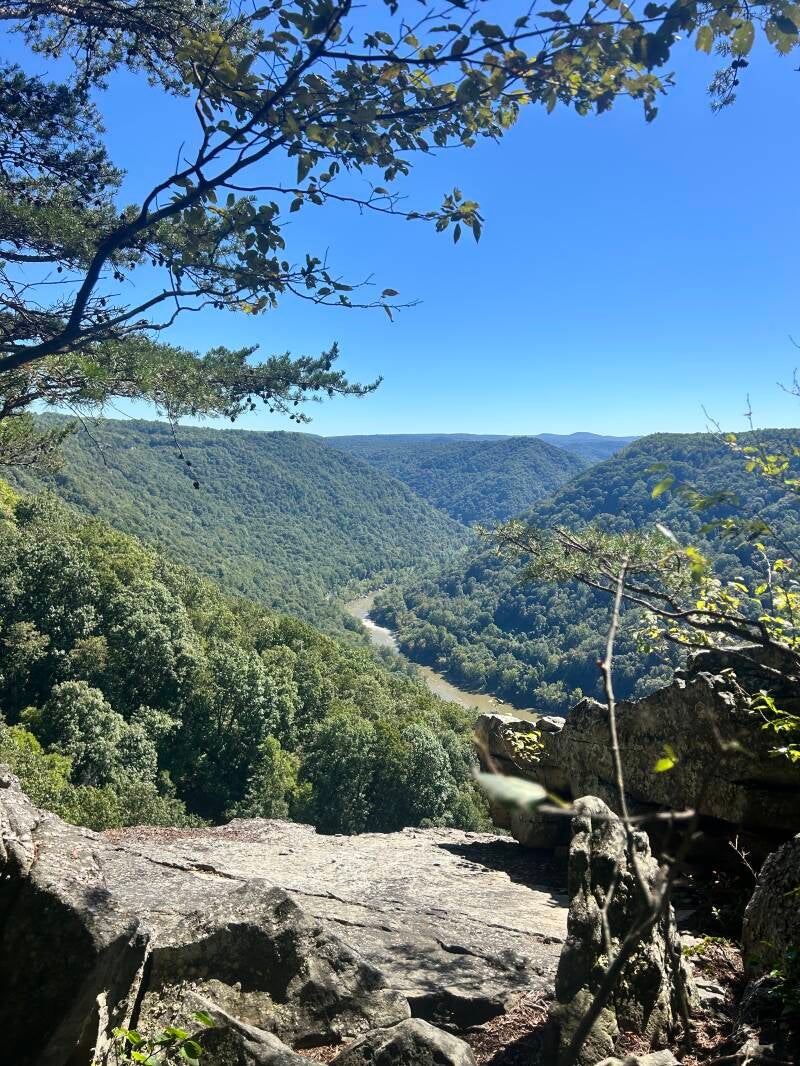
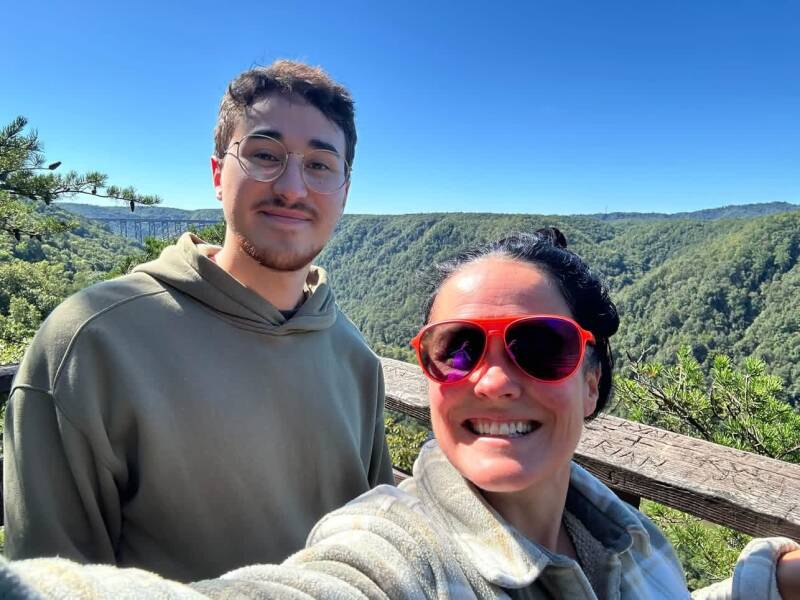
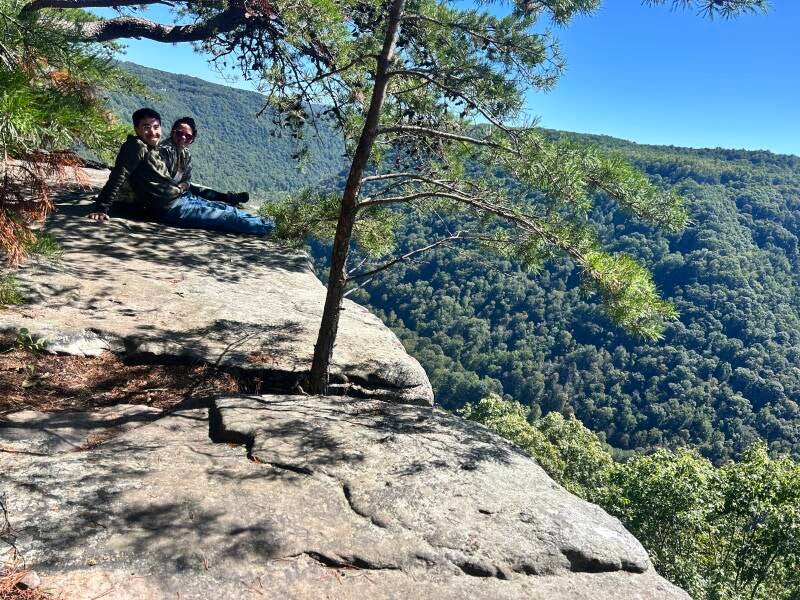
One of the highlights was hiking the Endless Wall Trail in New River Gorge National Park and Preserve.
The trail follows the edge of the gorge, with overlooks that give you a completely different perspective of the landscape.
Standing above the gorge, you realize just how dramatic this part of West Virginia really is.
The river is down there somewhere.
From above, it looks peaceful.
The forest is quiet.
The cliffs stretch along the horizon.
It’s hard to imagine that only a short distance away, another river can be tearing through a narrow gorge with enough force to toss a raft around like a toy.
We hiked toward Diamond Point and spent time taking in the views.
It was a perfect way to spend the day before the Gauley.
That evening, we returned to the lodge, listened to live music and enjoyed the atmosphere around us.
But underneath all of that was the anticipation.
Tomorrow morning.
9 a.m.
The Upper Gauley.
SATURDAY MORNING — INTO THE UPPER GAULEY
Saturday morning came quickly.
We got up, ate breakfast and prepared for the river.
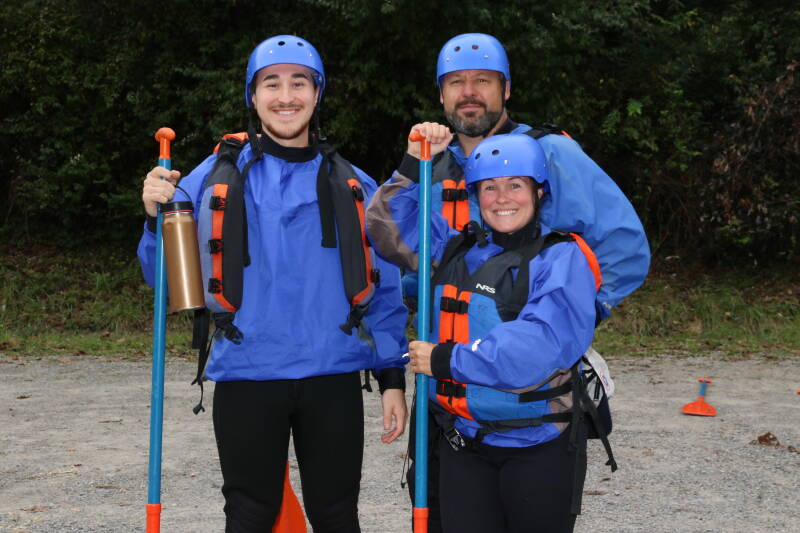
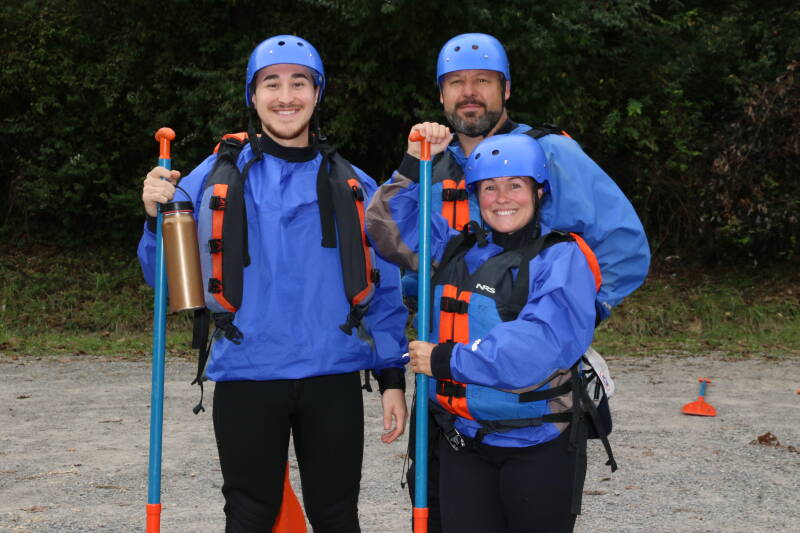
At 9 a.m., we met our rafting group and our guide, Link.
We went through the safety information, got our equipment and headed toward the river.
At this point, the anticipation had turned into something else.
This was no longer something we were talking about.
We were about to do it.
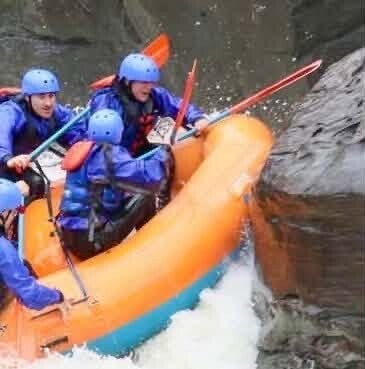
The raft entered the Upper Gauley.
And immediately, the river started moving.
The first rapids included Entrance, Initiation and Little Z.
Then came Upper Collision Creek and Lower Collision Creek.
The river was already powerful.
We were learning the rhythm of the raft.
Link called commands.
We paddled.
The raft accelerated.
Then slowed.
Then accelerated again.
Water slammed against the sides.
Waves rose in front of us.
Every time the raft climbed a wave, another feature seemed to be waiting on the other side.
There was no time to simply sit back.
We had to pay attention.
Paddle when we were told.
Brace when we were told.
Stay in position.
Stay together.
And keep moving.
Then came Geek Wave and Slant Rock.
The intensity continued building.
We were getting deeper into the Upper Gauley.
And eventually, we reached the section everyone had been talking about.
The Big Five.
BIG FIVE — INSIGNIFICANT, PILLOW ROCK AND LOST PADDLE
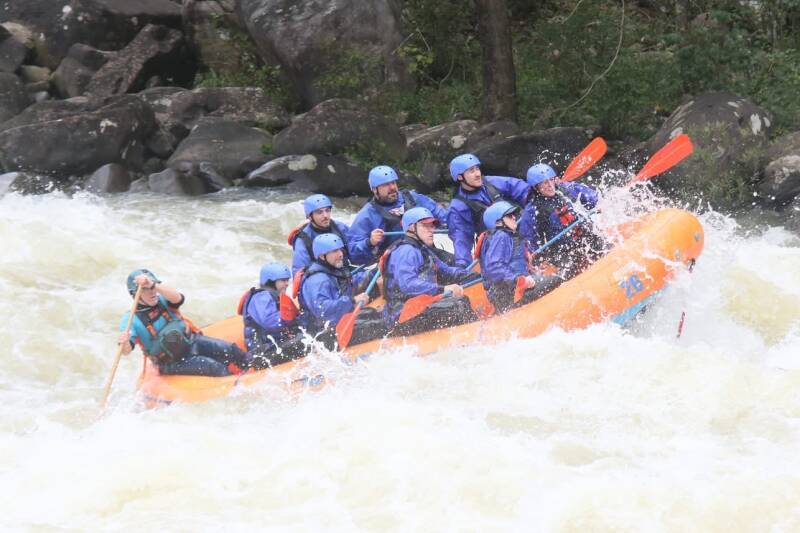
Insignificant
The name is misleading.
There was nothing insignificant about what was happening in front of us.
The river suddenly accelerated.
Water poured between the rocks and dropped into a series of steep features.
The sound changed.
Instead of the steady roar we’d been hearing, it became louder and more violent.
Link gave the command.
“Forward!”
We paddled.
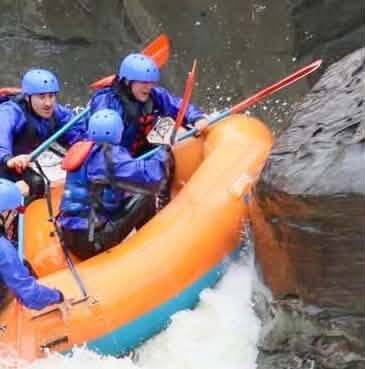
The raft climbed.
The bow rose up the face of a wave, and for a moment we were looking over the top of it.
Then the raft dropped.
The river disappeared beneath us.
A wall of cold water exploded over the raft.
For a split second, everything was water, noise and motion.
Then the raft slammed back down.
Another wave was immediately in front of us.
We hit it.
The raft bounced.
Everyone dug in.
Another command.
Another paddle stroke.
Another impact.
It felt like the river was trying to stop us at every turn.
But we kept moving.
Then suddenly we were through it.
The pressure released.
The raft settled.
Everyone looked around.
We were soaked.
We were laughing.
And there was a huge sense of relief.
That was only the first of the Big Five.
Four more were waiting.
Pillow Rock
If Insignificant got our attention, Pillow Rock demanded it.
Ahead of us was the massive submerged rock that creates the famous pillow of water.
The river was pushing hard toward it.
As we approached, the raft climbed higher and higher on the water.
The bow rose.
The raft tipped upward.
Then we dropped.
Water exploded over the front of the raft.
For a moment, I couldn’t see much of anything.
Just whitewater.
Cold water hit us from every direction.
The raft slammed down and immediately climbed another wave.
The force was incredible.
It wasn’t a smooth ride.
It was violent, chaotic movement.
Up.
Down.
Forward.
Impact.
Another wave.
Another command from Link.
We paddled harder.
Then we broke through the final part of the rapid.
The raft leveled out.
Everyone was still there.
And once again, the fear and concentration gave way to laughter.
You could feel the relief.
We had just gone through Pillow Rock.
Two of the Big Five were behind us.
Lost Paddle
There wasn’t much time to relax.
Lost Paddle was next.
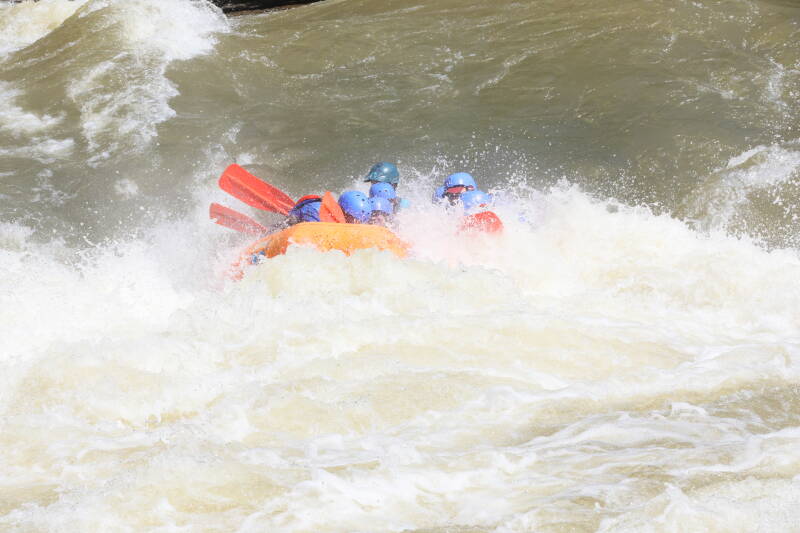
The raft entered the rapid and immediately began moving.
We climbed one wave and dropped into the trough.
Then another.
The current grabbed the raft and pushed us forward.
The boat turned.
We paddled.
Water poured over the sides.
Link continued calling commands through the noise.
There was no time to wonder what was coming next.
You simply reacted.
Paddle.
Brace.
Hold on.
Then paddle again.
The raft surged forward.
Another wave hit.
We climbed it.
The raft dropped hard on the other side.
The river continued pushing us through feature after feature.
It was relentless.
And then, just as suddenly as it had started, Lost Paddle was behind us.
We had made it through.
Three of the Big Five were gone.
We were soaked, tired and smiling.
And there was still more to come.
IRON RING AND SWEET’S FALLS
Iron Ring
By the time we reached Iron Ring, we’d already spent hours surrounded by whitewater.
The excitement was still there.
But now fatigue was beginning to creep in.
That made teamwork even more important.
The current grabbed the raft and pushed us toward the next feature.
Waves slammed into the side.
The bow rose.
Then dropped.
The raft twisted through the current.
Link called another command.
We responded.
Paddles hit the water.
The raft surged forward.
A wave crashed over us.
Then another.
It felt like the river was constantly trying to knock us off our rhythm.
But we’d learned to trust the commands.
We knew what we had to do.
Keep paddling.
Stay together.
Don’t panic.
Keep moving.
The raft finally broke through the last major feature.
Iron Ring was behind us.
Four down.
Only one remained.
Sweet’s Falls.
⸻
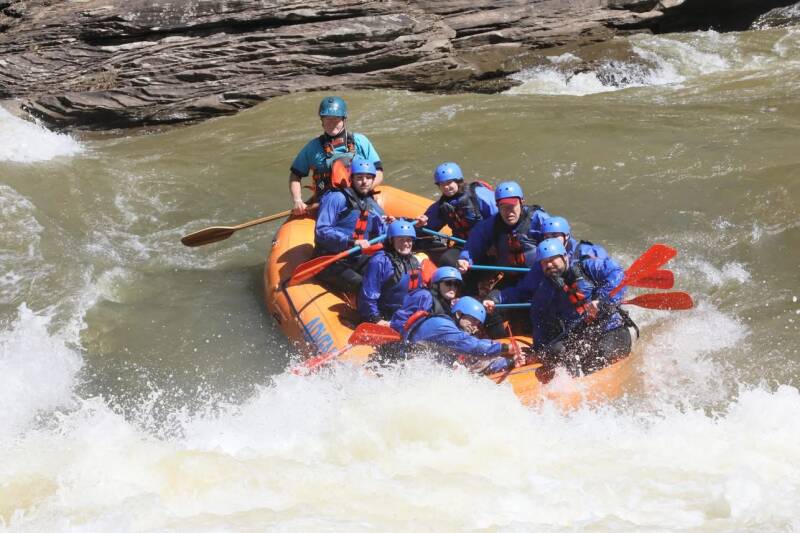
Sweet’s Falls
By the time we approached Sweet’s Falls, we knew we were getting close to the end of the Big Five.
But the river wasn’t giving us a break.
The current accelerated.
The sound of the water grew louder.
The raft moved toward the drop.
We could see the whitewater ahead.
Then we were in it.
The raft dropped.
Water surrounded us.
The impact was hard.
The boat slammed into the current and immediately started climbing through another wave.
Cold water crashed over us.
Everyone paddled.
Another command.
Another push.
Another impact.
For a few moments, there was nothing but whitewater.
Then the raft broke through.
The river began to settle.
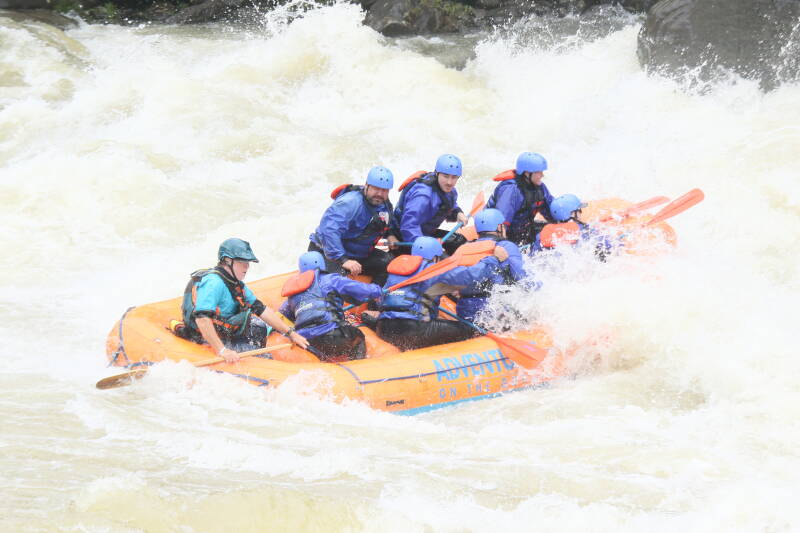
And just like that, the Big Five were behind us.
Insignificant.
Pillow Rock.
Lost Paddle.
Iron Ring.
Sweet’s Falls.
All five.
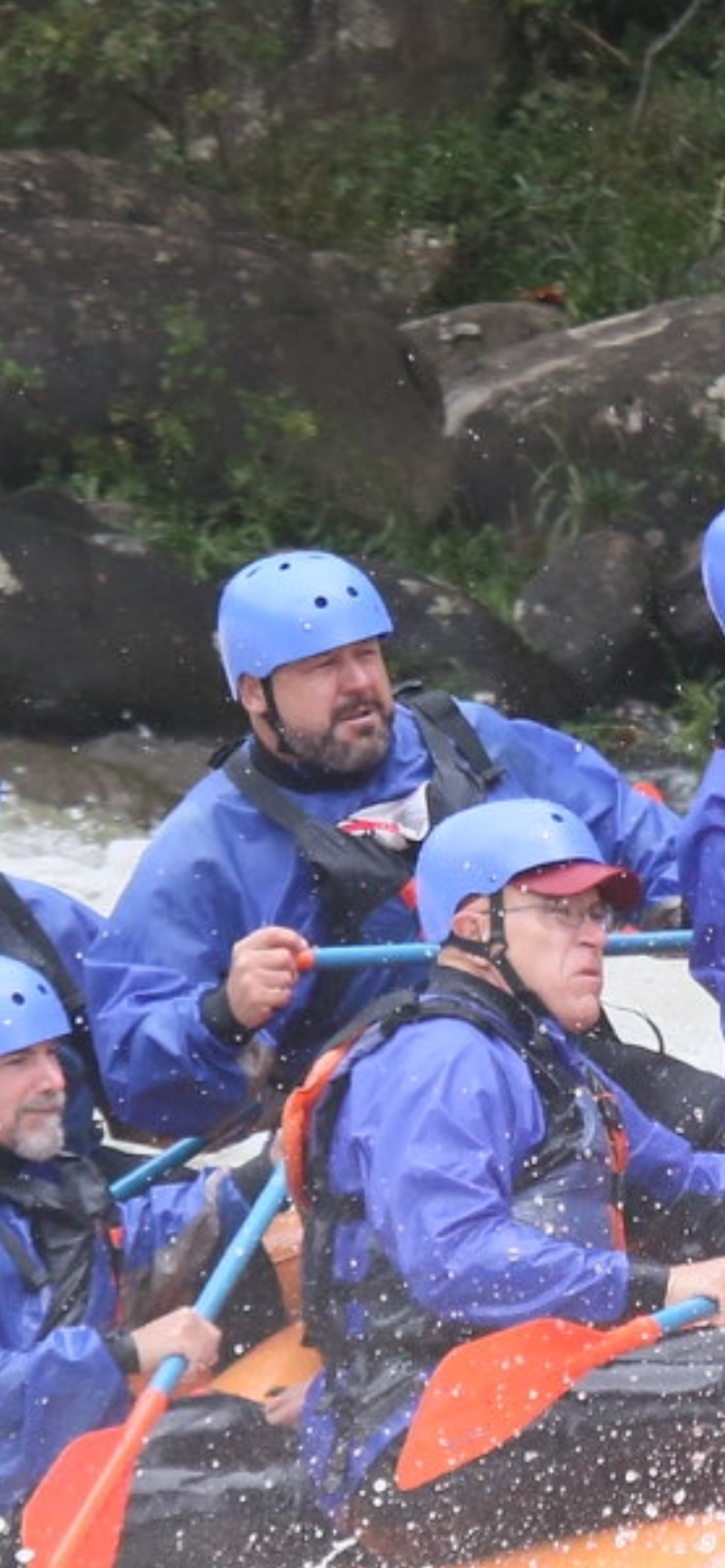
There was laughter throughout the raft.
People were smiling.
Some of us were completely soaked.
Everyone looked exhausted.
And everyone looked relieved.
We had just made it through the most famous section of the Upper Gauley.
The feeling was incredible.
THE REST OF THE RIVER AND BACK TO CAMP
You might think finishing the Big Five would mean the adventure was basically over.
It wasn’t.
There was still plenty of river ahead.
We continued through rapids including Thumper, Nemesis, Gillespie’s Hole and Chicken.
By now, something had changed.
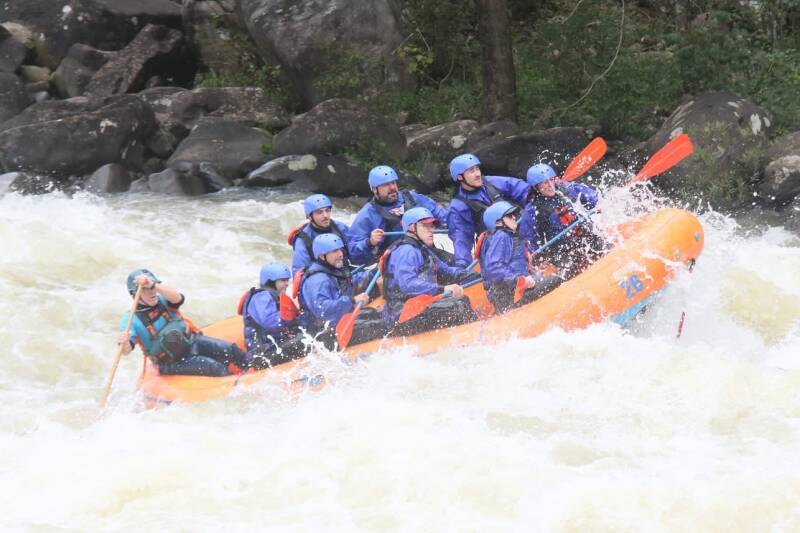
At the beginning of the day, we were learning how the raft moved.
Now we were functioning as a team.
We knew the commands.
We knew when to paddle.
We knew when to brace.
And we trusted each other.
Eventually, the intensity began to ease.
The water became calmer.
The noise of the biggest rapids faded behind us.
For the first time in hours, we had a chance to simply look around.
We had made it.
Getting off the river felt almost strange.
We were exhausted.
Our clothes were soaked.
Our arms were tired.
But there was a huge sense of accomplishment.
We had spent the day on one of the most famous whitewater rivers in the country.
And we hadn’t simply watched it.
We had been in it.
That evening, we returned to camp.
The fire felt good.
Food tasted even better.
And, naturally, the conversation kept coming back to the river.
Everyone had a favorite rapid.
Everyone had a moment that stood out.
And everyone had a story to tell.
THE DRIVE HOME — AND WHY WE GO
Eventually, Sunday arrived.
It was time to pack everything back into the vehicles.
The tents came down.
The gear was loaded.
The campsite disappeared.
And we started the long drive back to Michigan.
The same highways that had seemed so long on Thursday now felt different.
We were tired.
But we were also satisfied.
We had driven roughly 600 miles each way for a single day on the Upper Gauley.
Some people might wonder why anyone would do that.
To us, the answer is pretty simple.
Because sometimes the best adventures aren’t the ones that are convenient.
They’re the ones worth traveling for.
The Upper Gauley was the centerpiece of the adventure.
But it wasn’t the entire adventure.
The trip started months earlier with a conversation.
It continued with a 600-mile drive from Michigan.
Camping in West Virginia.
Hiking above the New River Gorge.
Standing at Diamond Point.
Listening to live music.
Sitting around a campfire.
Laughing with friends.
And finally spending a full day on the Upper Gauley.
Five Class V rapids.
Dozens of other rapids.
Hours on the water.
Cold water.
Big waves.
Hard paddling.
Teamwork.
Adrenaline.
And afterward, a whole lot of laughter and relief.
That’s what makes an adventure memorable.
It’s not just about reaching the end of the river.
It’s everything that happens along the way.
The places you see.
The people you share it with.
The challenges you overcome.
And the stories you bring home.
Some adventures happen close to home.
Others require a 600-mile drive.
Either way, the reason we go is the same.
We’re looking for what’s around the next bend.
Wild Rivers. Rugged Trails. Real Adventure.
West Michigan Kayaking Club
Grand Rapids, Michigan
🌊🛶 Ready to get your adrenaline flowing? 🛶🌊
Our West Michigan Kayaking Club Whitewater Adventure is coming up next year, and we want YOU to join us! Get ready for an unforgettable day on the river filled with whitewater, adventure, and great people.
🔥 Follow our official Facebook page and check the Events section for upcoming dates, trip details, and registration information.
👉 Follow us here: https://www.facebook.com/WestMichiganKayakingClub/
Grab your gear, bring your sense of adventure, and let’s hit the river! See you on the river! 🌊🤙