Trip Report | June 1, 2021
Crockery Creek: 36 Miles of Fallen Trees
We didn't go down Crockery Creek just to paddle it. We went to open it.
In August 2021, Brad De Young and Tim Postma led a crew of West Michigan Kayaking Club paddlers into Crockery Creek with more than paddles in their boats. We carried chainsaws, hand saws, axes and loppers.
From the Ensley Road area downstream to the mouth of Crockery Creek at the Grand River, roughly 36 miles of river stood between us and the finish. And the creek was badly blocked.
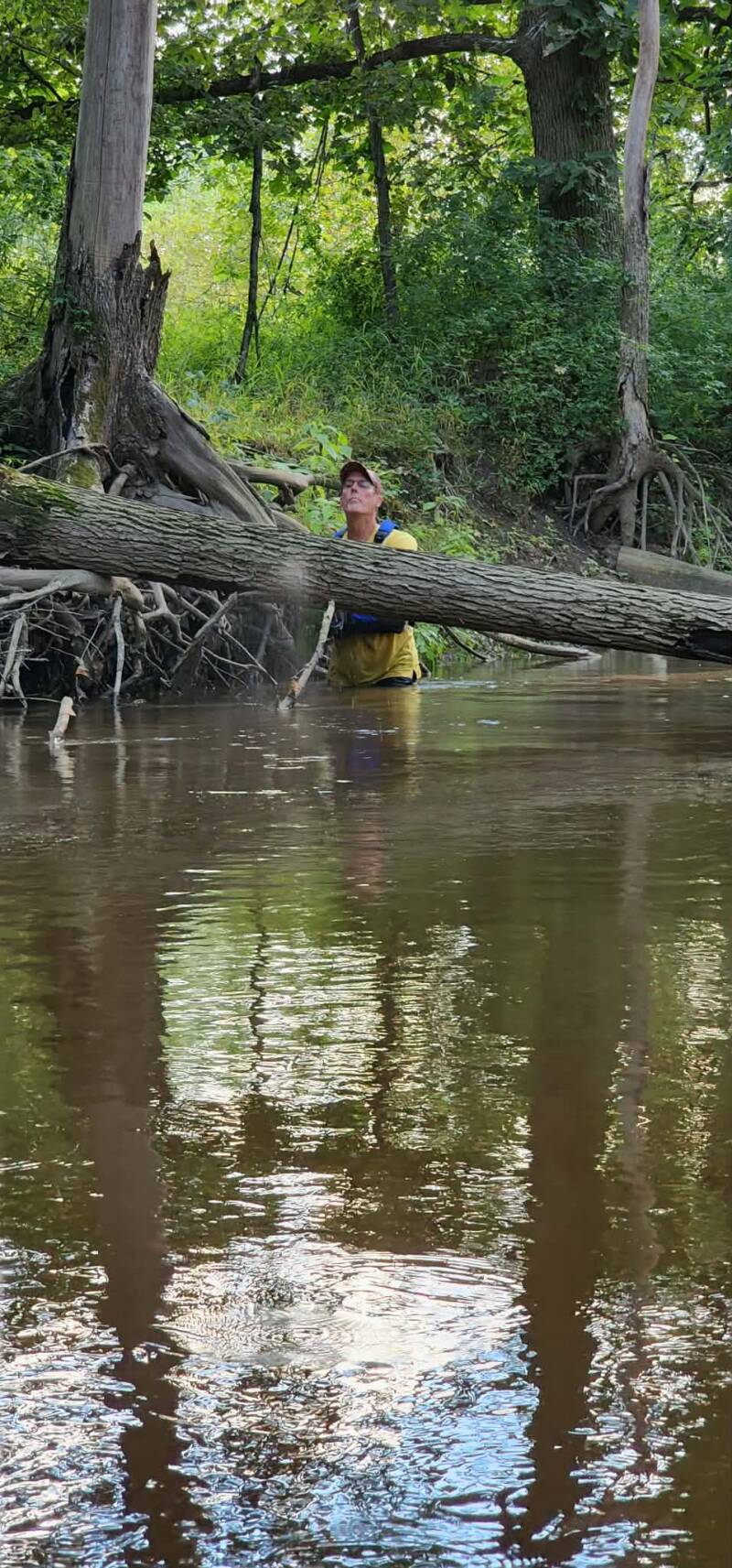
Fallen trees spanned the channel. Branches were packed into tangled masses. Logjams squeezed the current into narrow chutes, and in places there was simply no route for a kayak at all.
Every time we thought we'd hit the worst of it, another blockage waited around the next bend. This trip quickly became less of a paddle and more of a fight against the forest.
The Creek Fought Back
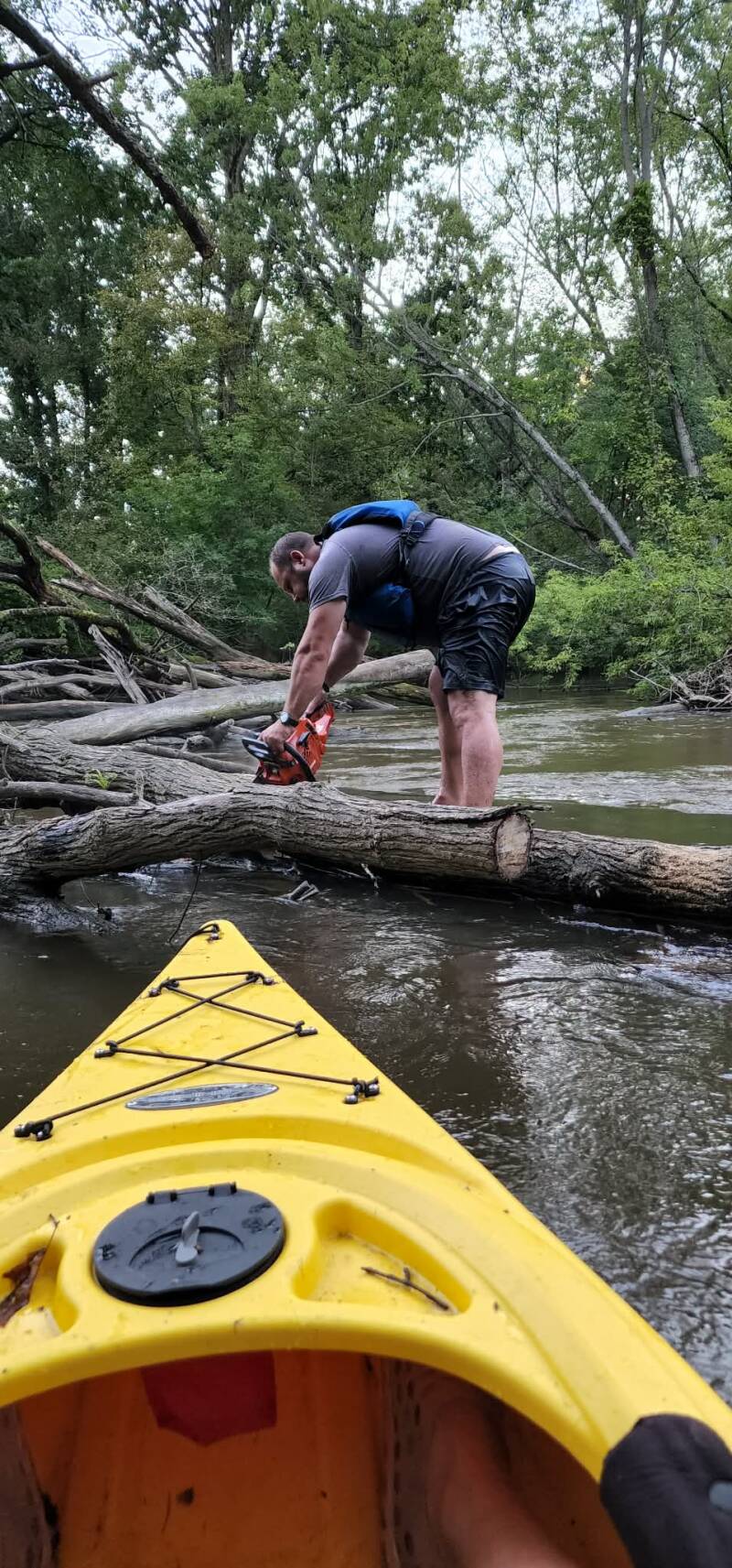
Crockery Creek didn't give us an easy introduction. Trees had fallen from both banks, building walls of wood across the stream. Some we could work around. Others we couldn't.
When a tree blocked the channel completely, there was only one option: get out and start cutting.
Boats were pulled onto whatever scrap of shoreline we could reach. The saws came out. Branches were cut away, larger limbs removed and logs repositioned or cut into manageable sections. Sometimes the whole group had to work together just to make room for the boats to pass.
Then we'd climb back in, paddle a few hundred yards and find another blockage. And another. And another.
The worst jams were in a class of their own. A single big tree could reach the full width of the creek, its branches trailing downstream into a huge tangle while the current pushed and squeezed beneath and around it. Sometimes there was a narrow gap a kayak could slip through. Sometimes there wasn't even that.
Those were the all-hands moments. Move the boats clear. Pick the safest cutting points. Take the branches first, then the bigger pieces, then move or cut apart what was left. Only once the channel was open did anyone get back in a boat.
The rhythm of Crockery Creek
- Paddle
- Stop
- Assess
- Cut
- Clear
- Drag
- Paddle again
Clearing one jam never meant the work was over. It meant we'd earned the next stretch of river.
When the Chainsaw Came Out
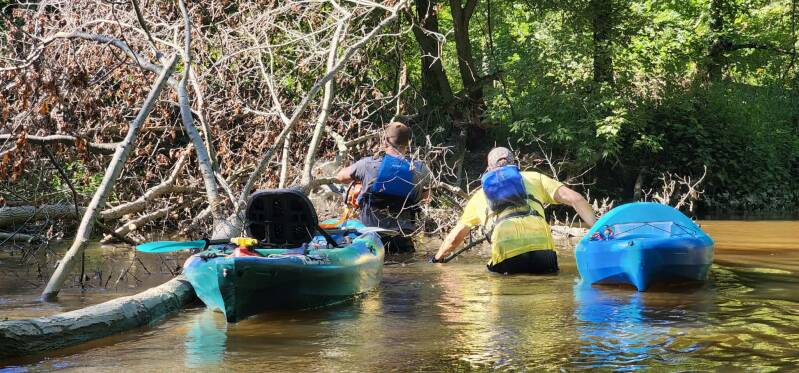
Starting a chainsaw beside a river changes the whole character of a trip. One minute you're paddling through quiet Michigan woods; the next, the sound of a saw biting into timber echoes down the creek.
But a chainsaw isn't a magic wand. Every big cut took planning and teamwork: how the tree was lying, where to cut, where the pieces would go and how to open a passage without creating a new hazard.
- Chainsaws for the large trees spanning the channel
- Hand saws for mid-size limbs and tight spots
- Axes for working logs into movable sections
- Loppers for the brush and small growth that made tough sections even tougher
- Teamwork: sometimes the answer wasn't a tool at all, just several people pulling together
Clearing without destroying the river. We were never trying to strip Crockery Creek of every fallen tree. Natural woody debris is part of a healthy river and provides habitat for fish and wildlife.
Our goal was to deal with the major obstructions that made sections unsafe or impassable. That took judgment. Some trees stayed. Some branches stayed. The jams standing between paddlers and the downstream river did not.
And after every cut, there was the moment we all looked forward to: tools back in the boats, everyone aboard and someone pushing off into the freshly opened channel. For a little while, there was nothing to do but paddle.
Then we'd round another bend and see another tree. Back to work.
Mile After Mile
Crockery Creek wasn't defined by one enormous obstacle. It was defined by the relentless succession of them.
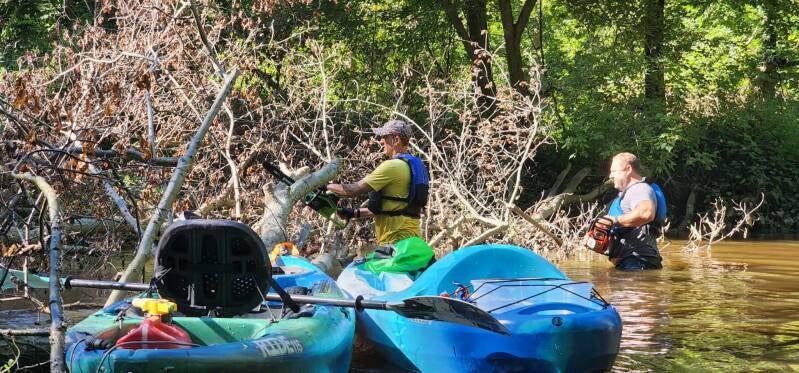
The creek kept changing character. One stretch might offer easy paddling; around the next corner sat a wall of timber. Boats secured, tools out, work begins again.
The hard part wasn't any single tree. It was the accumulation: the repeated stops, the repeated climbs in and out of the boats, hauling gear through mud and brush, crawling over and around deadfall. The sweat. The scratches. Then back into the kayak to do it all over again.
Our progress wasn't measured simply in miles traveled. It was measured in miles opened.
There's something deeply satisfying about watching a blockage disappear under your own hands. A tree that had stopped everyone before you is suddenly gone. The current opens up, the boats move forward and the river carries on.
Behind us, the channel was becoming navigable. Ahead, the river was still unknown. And the Grand River was a long way downstream.
By the time we neared the mouth of Crockery Creek and its confluence with the Grand River, the trip had become a true endurance effort. We were tired, dirty and scratched up. But behind us lay miles of river that hadn't been open when we started.
Crockery Creek didn't give us those miles. We earned them.
More Than the Miles
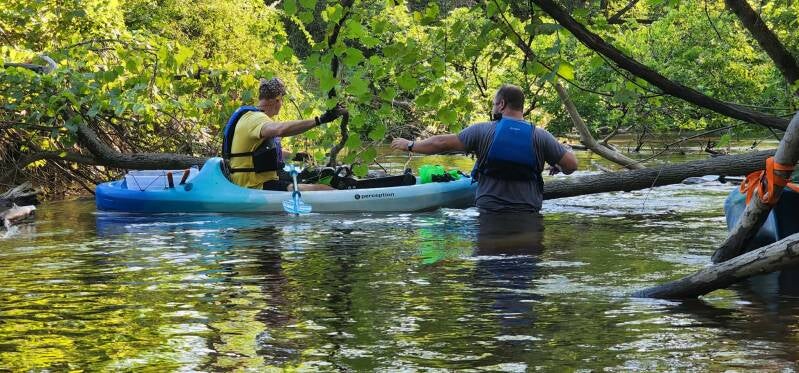
Years later, Crockery Creek still stands out. Not because it was glamorous. It wasn't. It was exhausting, dirty, physically demanding and, at times, downright frustrating.
But those are the trips that become legends: the ones where the plan changes, where the river wins a few battles, where everyone has to work together, and where you finally look back and realize how much ground you've covered.
Crockery Creek also taught us something. We weren't just paddling Michigan's rivers; we were learning them. How they move. Where they narrow. Where trees fall and debris collects. And how much work it can take to make a river navigable again.
- Approximately 36 miles of creek.
- From the Ensley Road area to the Grand River.
- Chainsaws, hand saws, axes and loppers.
- More logjams than anyone could count.
- A crew that refused to turn back.
- And a river story that became part of club history.
Thank you to everyone who signed on for this one, hauled tools through the mud and kept cutting when the next tree came into view. Sometimes the best adventures aren't found on a map. Sometimes you have to make the route yourself.
More Than Just a Kayaking Club
Brad De Young and Tim Postma built West Michigan Kayaking Club around a simple idea: paddling can be about more than a casual day on the water. It can be about exploration, distance, challenge, river knowledge and stewardship, and about doing things most people wouldn't think to attempt.
Crockery Creek embodied that philosophy. There was no easy finish waiting for us. There were trees, lots of them, and there was work to do.
We're a community of kayakers, canoeists, SUP paddlers and outdoor adventurers. Our trips range from beginner paddles and skill-building days to long-distance river expeditions, kayak camping, hiking and multi-day wilderness adventures.
Not a club built around sitting on the shoreline. A club built around going farther, going deeper and, sometimes, cutting our way through.
Join us on the next adventure
If you're ready to explore Michigan's rivers, trails and wilderness with a community of active paddlers and outdoor adventurers, we'd love to have you along.
Wild Rivers. Rugged Trails. Real Adventure.