

Dam Removal in Michigan: Restoring Rivers, Native Fish, and Long-Term Ecological Health
By Staff Writer
Published 6/17/2026
Across Michigan, a growing movement is reshaping the state’s rivers by removing aging dams that no longer serve their intended purpose. From the Boardman River in northern Michigan to the planned removal of Big Creek Dam in Crawford County, state agencies, conservation organizations, fisheries biologists, and local communities are increasingly recognizing that many obsolete dams create more environmental problems than benefits. While dams were once viewed as symbols of progress, recreation, and economic development, decades of scientific research have demonstrated that they fragment rivers, degrade aquatic habitat, disrupt natural ecological processes, and contribute to the decline of native fish populations.
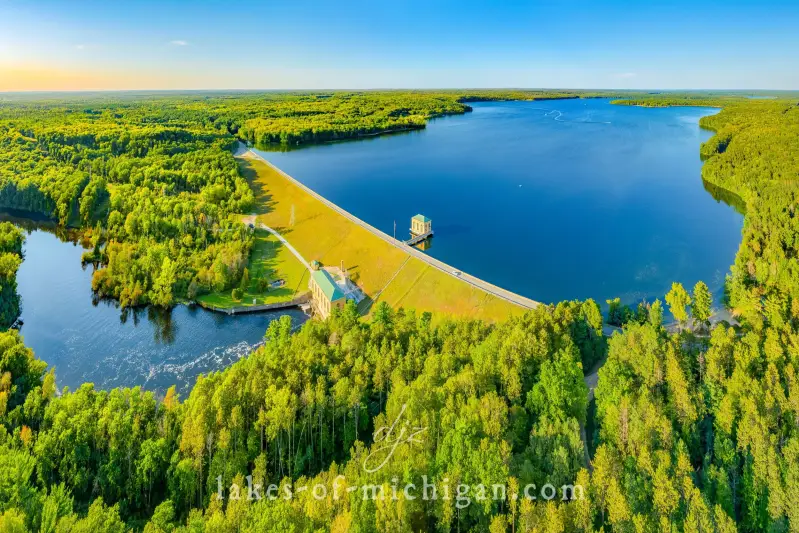
The Michigan Department of Natural Resources’ recent decision to move forward with plans to remove the 62-year-old Big Creek Dam reflects this changing understanding. Built in 1964 to improve fishing opportunities and support downstream trout populations in the North Branch Au Sable River, the dam ultimately failed to achieve its objectives. Instead, it altered natural river conditions, degraded habitat, and required ongoing maintenance while providing little ecological value.
The debate surrounding dam removal extends beyond individual structures. It raises a broader question about how Michigan should manage its rivers in the twenty-first century. Should aging dams be maintained indefinitely, often at enormous expense, to preserve artificial conditions? Or should rivers be allowed to return to a more natural state that supports native species and ecological resilience?
Increasingly, the evidence points toward river restoration through dam removal as the better long-term solution.
⸻
The Ecological Cost of Dams
Michigan contains thousands of dams, many of which were constructed during the twentieth century for hydropower generation, flood control, recreation, industrial use, or fisheries management. While these structures provided benefits at the time they were built, many have outlived their original purpose.
Dams fundamentally alter rivers by converting free-flowing streams into impoundments. Water slows, warms, and accumulates sediment behind the structure. Natural seasonal flow patterns are disrupted. Fish migration is blocked. Aquatic insects and other organisms that evolved in flowing water environments often decline.
For coldwater species such as brook trout, brown trout, and other native fish, these changes can be particularly damaging. Trout depend on cool, oxygen-rich water. Reservoirs created by dams frequently warm river temperatures during summer months, reducing suitable habitat and increasing stress on fish populations.
The Big Creek Dam illustrates this problem. According to the Michigan Department of Natural Resources, the structure failed to maintain coldwater conditions downstream and did not improve trout fishing opportunities as originally intended. Rather than enhancing the fishery, the dam became an obstacle to the ecological processes necessary for a healthy trout stream.
When rivers are fragmented by dams, fish lose access to spawning habitat, feeding areas, and seasonal refuges. Over time, isolated populations become more vulnerable to environmental disturbances, disease, and genetic decline.
Removing dams reconnects these habitats, allowing fish to move freely throughout the watershed once again.
⸻
Native Fish Thrive in Connected Rivers
One of the strongest arguments for dam removal is the benefit it provides to native fish populations.
Michigan’s rivers historically supported diverse communities of brook trout, lake sturgeon, walleye, suckers, darters, and numerous other native species. These fish evolved in rivers characterized by seasonal flooding, flowing water, natural sediment transport, and unrestricted movement.
Dams interrupt these processes.
Lake sturgeon provide a compelling example. These ancient fish can live for more than a century and require access to specific spawning habitats. Across the Great Lakes region, dams have blocked sturgeon from reaching historic spawning grounds for generations. Removing barriers can reopen dozens of miles of habitat almost immediately.
Brook trout, Michigan’s only native stream trout, also benefit from restored connectivity. Fragmented streams often prevent trout from accessing cooler waters during summer heat or suitable spawning habitat during the fall. Reconnecting river systems allows populations to become more resilient in the face of climate change and environmental stress.
Research conducted across North America consistently demonstrates that fish populations often recover rapidly following dam removal. Rivers regain natural flow patterns, spawning habitat improves, aquatic insect communities rebound, and native species expand into previously inaccessible areas.
In many cases, fish begin recolonizing restored habitats within months.
⸻
The False Promise of Artificial Fisheries
Historically, many dams were justified as fisheries management tools. The assumption was that impoundments would create new recreational fishing opportunities while benefiting downstream fisheries.
In practice, these projects often produced mixed results.
Artificial reservoirs frequently support species adapted to lake-like conditions rather than the native river species that historically occupied the watershed. While anglers may enjoy fishing in these impoundments, the ecological trade-offs can be substantial.
The Big Creek Dam represents a clear example. Built to support trout fishing, it ultimately failed to create unique recreational opportunities beyond those already available in nearby natural lakes. Meanwhile, it degraded river habitat and altered ecological conditions.
This outcome is not unusual.
Many fisheries managers now recognize that protecting naturally functioning rivers often produces better long-term fishing opportunities than attempting to engineer artificial systems through dam construction.
Healthy rivers create healthy fisheries.
Rather than relying on costly infrastructure to manipulate aquatic ecosystems, restoration efforts focus on protecting natural processes that have sustained fish populations for thousands of years.
⸻
The Invasive Species Debate
Supporters of maintaining certain dams often point to invasive species control as a primary justification.
This argument frequently emerges in discussions surrounding sea lamprey management in the Great Lakes. Sea lampreys are invasive parasitic fish that have caused significant ecological and economic damage throughout the region. By attaching themselves to other fish and feeding on bodily fluids, lampreys can kill large numbers of native and recreationally valuable species.
Some dams function as barriers that limit upstream movement of sea lampreys.
At first glance, maintaining these barriers appears logical.
However, relying on aging dams as a long-term invasive species management strategy presents significant problems.
First, dams were rarely designed specifically for invasive species control. Most were built for entirely different purposes and only later acquired secondary value as barriers.
Second, infrastructure eventually fails.
The Big Creek Dam itself demonstrates this reality. After more than six decades, inspections revealed structural deterioration severe enough that repairs were deemed impractical. Across Michigan, many dams are approaching or exceeding their design life.
Building invasive species management strategies around aging infrastructure creates uncertainty and long-term risk.
Third, dams block native fish just as effectively as they block invasive species. A barrier that prevents sea lampreys from moving upstream may also prevent lake sturgeon, suckers, walleye, and other native species from accessing important habitat.
In effect, managers often sacrifice ecological connectivity for native species in order to maintain barriers against invasives.
This trade-off becomes increasingly difficult to justify as new technologies emerge.
⸻
Why Dam Zones Are Not a Permanent Solution
Some hydropower dams, including facilities operated by utilities such as Consumer Energy, are frequently cited as barriers that help limit invasive species movement.
While these structures may provide short-term containment benefits, they should not be viewed as permanent ecological solutions.
Dams require continuous maintenance, regulatory oversight, and substantial financial investment. As infrastructure ages, repair costs increase. Climate change is also creating new challenges through more intense rainfall events, flooding, and changing hydrological conditions.
Eventually, every dam faces one of three outcomes: expensive rehabilitation, replacement, or removal.
Using these structures as the primary defense against invasive species simply postpones a larger management challenge.
A more sustainable strategy involves targeted invasive species control measures designed specifically for that purpose.
Modern technologies include selective barriers, trapping systems, pheromone-based controls, targeted treatments, and ongoing monitoring programs. These tools can focus on invasive species while minimizing impacts on native fish movement.
Unlike conventional dams, modern management systems can be adapted as scientific understanding evolves.
The goal should not be to preserve obsolete infrastructure indefinitely because it happens to impede invasive species. Instead, managers should invest in solutions specifically engineered to address invasive species while restoring river connectivity.
⸻
River Restoration Benefits Extend Beyond Fish
The advantages of dam removal extend far beyond fisheries.
When dams are removed, rivers regain their ability to transport sediment naturally. This process rebuilds downstream habitat, improves spawning areas, and restores natural channel structure.
Water quality often improves as stagnant impoundments disappear. Dissolved oxygen levels increase. Water temperatures become more consistent with natural conditions.
Wildlife throughout the watershed benefits.
Birds, amphibians, reptiles, mammals, and aquatic insects all depend on healthy river ecosystems. Reconnected rivers support greater biodiversity and ecological resilience.
Flood risks can also decrease in some circumstances. Aging dams create potential hazards during extreme weather events. Removal eliminates the risk of catastrophic structural failure while allowing rivers to spread naturally across floodplains.
These ecological improvements create recreational benefits as well.
Paddlers gain access to longer stretches of free-flowing river. Anglers benefit from healthier fish populations. Wildlife watchers enjoy more diverse ecosystems.
The result is often a river system that provides greater long-term public value than the aging dam it replaces.
⸻
Learning from Michigan’s Success Stories
Michigan has already demonstrated the benefits of dam removal through several high-profile restoration projects.
The Boardman River restoration effort near Traverse City reopened significant habitat for native fish and restored natural river processes after decades of fragmentation.
Similar projects throughout the state have shown that rivers can recover remarkably quickly once barriers are removed.
Sediment stabilizes. Vegetation returns. Fish recolonize newly accessible habitat.
While each project presents unique challenges, the overall trend is clear: restored rivers tend to become healthier, more resilient ecosystems than the impounded systems they replace.
These successes provide a roadmap for future decisions regarding aging dams across Michigan.
⸻
A Future Defined by Healthy Rivers
The planned removal of Big Creek Dam reflects a broader shift in environmental management. Rather than attempting to preserve aging infrastructure indefinitely, agencies are increasingly focusing on restoring natural systems that can sustain themselves over time.
This approach recognizes a fundamental truth: rivers are dynamic ecosystems, not static engineering projects.
For decades, dams were viewed as tools for controlling nature. Today, scientists and resource managers increasingly understand that ecological health often depends on allowing natural processes to function with minimal interference.
While some dams may continue serving important purposes, many obsolete structures now impose greater environmental costs than benefits.
Removing these barriers reconnects habitat, improves water quality, restores natural river function, and supports native fish populations that have been fragmented for generations.
The argument that aging dams should be maintained primarily as invasive species barriers overlooks the broader ecological consequences. Blocking invasive species is important, but relying on deteriorating infrastructure is neither sustainable nor scientifically optimal. Long-term invasive species management requires targeted solutions designed specifically for that purpose, not the indefinite preservation of obsolete dams that harm native ecosystems.
Michigan’s rivers have shaped the state’s natural heritage for thousands of years. By restoring connectivity and allowing rivers to flow freely once again, dam removal offers an opportunity to protect native fish, strengthen ecosystems, and create healthier waterways for future generations.
The lesson from Big Creek Dam is not simply that one aging structure has reached the end of its life. It is that Michigan’s future may be best served not by holding rivers back, but by letting them run free.