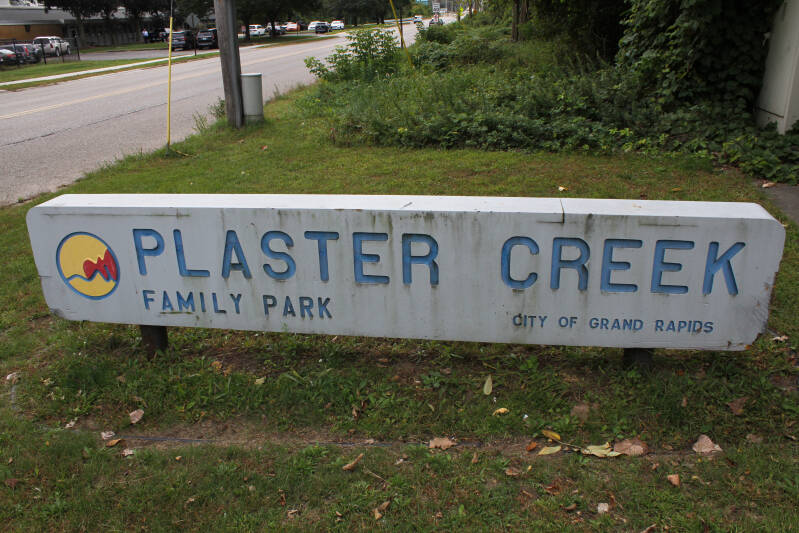
A Creek Built to Carry the Consequences of Development
An investigation into stormwater, industrial pollution, PFAS concerns and the long fight to restore one of Kent County’s most degraded waterways
By Michigan Watershed Watch | The Kayaker’s Journal
West Michigan Kayaking Club
There is an uncomfortable reality beneath the neighborhoods, roads, businesses and development of Kent County:
When it rains, much of what falls on the landscape eventually becomes part of Plaster Creek.
Oil from parking lots. Sediment from construction sites. Fertilizer from lawns. Bacteria from animal waste. Road salt. Trash. Heat from pavement. Industrial contaminants.
They can all be swept into drainage systems that ultimately lead to the creek.
Plaster Creek is not an isolated stream. It is a 58-square-mile watershed stretching across agricultural, industrial, suburban and urban landscapes before the creek reaches the Grand River in Grand Rapids.
Michigan EGLE identifies sedimentation, E. coli, mercury and PCBs among the documented impairments associated with the watershed.
And despite years of restoration work, the creek remains a cautionary example of what happens when development, stormwater and pollution overwhelm a river system.
A Creek Built to Carry the Consequences of Development
Plaster Creek Stewards, a Calvin University initiative working with community partners, describes Plaster Creek as one of the most polluted waterways in West Michigan.
Its problems are not caused by one single source.
The watershed has been transformed by development, agriculture, roads, parking lots, railroads, industry and residential neighborhoods. Nine local governments have jurisdiction somewhere within the watershed.
That makes accountability complicated.
It also makes the solution complicated.
Plaster Creek Stewards identifies stormwater as a central driver of the problem. Rain falling on impervious surfaces can pick up sediment, bacteria, nutrients, oil and other contaminants before flowing through storm drains and into waterways.
In other words, the creek can become a collection point for pollution generated across an entire metropolitan landscape.
The Water Doesn’t Know Municipal Boundaries
A storm drain does not stop at a city limit.
Neither does contaminated groundwater.
Neither does a pollutant moving downstream.
That reality is particularly important in the Plaster Creek watershed because the stream passes through communities with different governments, land uses and infrastructure systems.
The question therefore isn’t simply whether one city is keeping its portion of the creek clean.
The larger question is whether the watershed as a whole is being adequately protected.
That requires coordination among municipalities, developers, businesses, state regulators, property owners and residents.
And it requires looking at pollution sources collectively rather than treating every problem as an isolated incident.
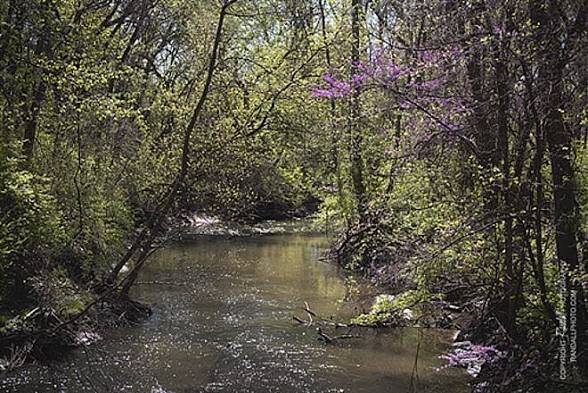
Airport Connection and the PFAS Question
One of the most significant documented environmental issues in the broader Plaster Creek system involves Gerald R. Ford International Airport.
State records show that the airport has an NPDES permit covering industrial stormwater discharges to the Thornapple River and Plaster Creek.
In a March 2021 violation notice, Michigan EGLE said testing of airport stormwater had identified PFOS concentrations that appeared to exceed Michigan water-quality standards.
That does not mean every PFAS-related problem in Kent County originated at the airport.
It does mean the airport’s relationship with stormwater and PFAS is a documented environmental issue that deserves continued public scrutiny.
EGLE records describe potential pathways by which PFAS-affected stormwater from airport areas could have moved off-site. State documents also describe historical use of aqueous film-forming foam, or AFFF, associated with firefighting activities at the airport.
The state’s PFAS program continues to list Gerald R. Ford International Airport among Kent County PFAS sites and areas of interest.
That raises an important investigative question:
How much contamination has entered the watershed historically, where did it go, and how effectively has it been contained or remediated?
Those are questions that deserve data—not assumptions.
PFAS Changes the Conversation
PFAS contamination has become one of Michigan’s most consequential environmental issues.
These chemicals are persistent, mobile and associated with a wide range of industrial and consumer applications.
Kent County has multiple PFAS sites and areas of interest, including locations associated with industrial facilities, landfills and the Gerald R. Ford International Airport.
But PFAS should not be casually blamed for every water-quality problem in Plaster Creek.
The watershed’s documented problems are broader.
Sediment, bacteria, nutrients, erosion, altered hydrology, heat and legacy contaminants all contribute to the creek’s condition.
That distinction matters because solving one pollutant does not restore a watershed.
The Bigger Question
The public should be able to distinguish between documented contamination, suspected pathways and unproven assumptions.
That means continued testing, transparent reporting and access to environmental records.
The question isn’t simply whether PFAS exists.
The question is:
Where is it coming from, where has it gone, and what is being done about it?
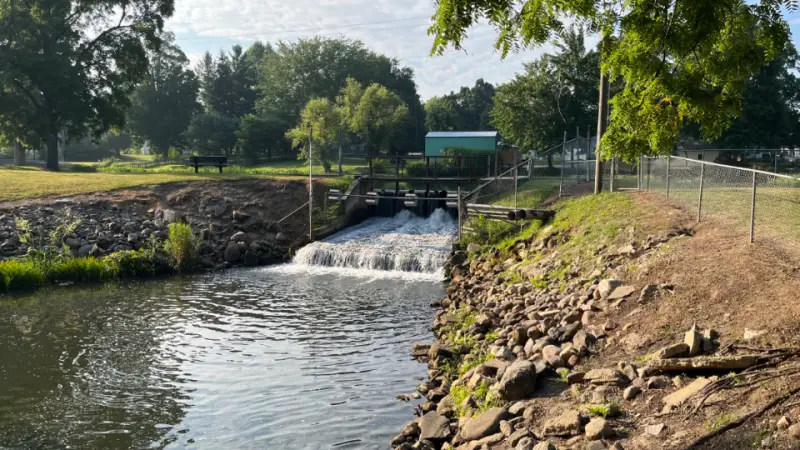
The Stormwater Problem and the Uncomfortable Measurement
Plaster Creek’s pollution problem cannot be solved by focusing on one chemical, one business or one location.
The larger problem may be the way water moves across the entire watershed.
The Stormwater Problem May Be the Biggest Piece of the Puzzle
Plaster Creek Stewards describes stormwater as a central driver of the watershed’s problems.
Development replaces forests, wetlands and soils capable of absorbing rainfall with rooftops, pavement and other impervious surfaces.
Instead of infiltrating gradually into the ground, rainfall can rapidly move across the landscape and into storm drains.
The result can be increased flooding, erosion, sediment transport, bacteria and nutrient loading.
It can also increase water temperatures and reduce habitat quality.
This is why restoration isn’t simply about cleaning the creek itself.
The watershed has to be changed.
Rainwater has to be slowed down.
More water needs to be infiltrated where it falls.
Native vegetation has to replace some of the landscape that has been lost.
Wetlands and natural drainage systems need protection.
And development needs to account for what happens to every gallon of stormwater after it leaves a parking lot, subdivision or commercial property.
The Uncomfortable Measurement
There is encouraging work happening throughout the watershed.
Rain gardens, native plantings, green stormwater infrastructure, erosion-control projects, research and community education are all part of the restoration effort.
Michigan EGLE’s Plaster Creek Watershed Restoration project has supported efforts to reduce stormwater and nonpoint-source pollution and restore natural stream function. The project has also contributed to a cumulative total of 130 rain gardens in southeast Grand Rapids.
But there is a sobering measurement that should not be ignored.
Plaster Creek Stewards reports that since 2010 it has not measured an overall change in the creek’s water quality.
The organization argues that the absence of a dramatic measurable improvement does not mean restoration work has failed, noting the enormous scale of the watershed and the relatively short period of modern restoration compared with roughly 150 years of intensive human alteration.
That may be true.
But it also raises a legitimate public-policy question:
Are current restoration efforts happening at a scale large enough to overcome the sources of pollution?
Restoration Versus Prevention
There is a fundamental difference between cleaning up pollution after it reaches a river and preventing it from entering the river in the first place.
A rain garden can capture runoff.
A restored wetland can filter water.
A vegetated streambank can reduce erosion.
But if development continues producing more polluted runoff than restoration projects can absorb, the watershed can remain trapped in a cycle of degradation.
That means some of the most important environmental policy may occur far from the creek itself—in zoning decisions, road design, stormwater ordinances, construction permits, industrial operations and land-use planning.
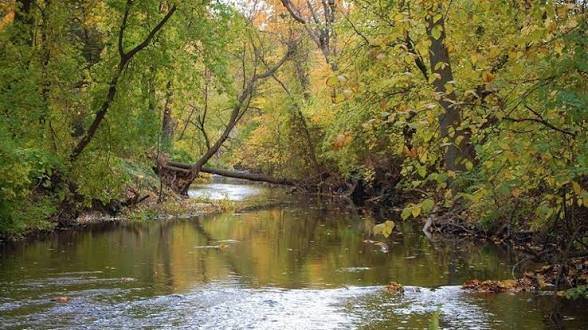
Who Is Responsible—and What Does Success Look like?
Who is responsible for the condition of Plaster Creek?
That may be the hardest question.
There is no single villain in the Plaster Creek story.
There are also no easy solutions.
Some pollution is generated by ordinary residents.
Some comes from roads.
Some comes from agriculture.
Some comes from development.
Some comes from industrial activity.
Some problems are historical.
Some may be ongoing.
And some pollution pathways remain difficult to identify.
That is why effective watershed protection requires transparent monitoring and public access to the underlying data.
The Public Deserves Answers
Residents should be able to determine:
- Where are the major pollution sources?
- Which stormwater outfalls contribute the greatest pollutant loads?
- Where are PFAS and other contaminants being detected?
- Which facilities have exceeded permit limits?
- What enforcement actions have occurred?
- How much money is being spent on restoration?
- Which projects are producing measurable improvements?
- And, most importantly, is the creek actually getting cleaner?
Michigan has sophisticated environmental monitoring programs and an extensive regulatory framework.
EGLE’s MiEnviro system provides public access to many permits, discharge monitoring reports, violation notices and other environmental records.
That information is critical.
Environmental restoration should not be measured solely by the number of trees planted, rain gardens installed or meetings held.
Those activities matter.
But ultimately, the public needs to know whether they are producing measurable improvements in water quality, aquatic habitat, fish populations, bacteria levels, sedimentation and contaminant concentrations.
The creek itself should be the scoreboard.
There Is Reason for Hope
Despite its problems, Plaster Creek is not dead.
That may be the most important lesson.
Researchers and restoration workers have documented organisms and aquatic life in portions of the watershed that demonstrate the creek retains ecological potential.
Restoration work is giving communities tools to rebuild that potential.
Every rain garden, restored wetland, native planting, erosion-control project and stormwater improvement can become part of a larger transformation.
But hope should not become an excuse for complacency.
West Michigan Has a Choice
Plaster Creek represents something larger than one polluted stream.
It represents the consequences of how a growing metropolitan region manages water.
We can continue treating stormwater as waste and rushing it away as quickly as possible.
Or we can begin treating rainfall as a resource.
We can continue viewing rivers as drainage channels.
Or we can recognize them as living ecosystems.
We can continue measuring restoration by activity.
Or we can demand measurable results.
The future of Plaster Creek will ultimately be determined not by one organization or one government agency, but by thousands of individual decisions made across the watershed.
The creek connects them all.
And eventually, everything that enters Plaster Creek becomes part of the Grand River—and the Great Lakes.
What happens in Plaster Creek doesn’t stay in Plaster Creek.
Michigan Watershed Watch
Michigan Watershed Watch is an independent environmental and watershed-focused publication covering Michigan rivers, lakes, dams, fisheries, water quality, conservation and public policy.
West Michigan Kayaking Club is a community of paddlers committed to exploring Michigan’s waterways and supporting responsible stewardship of the state’s rivers, lakes and watersheds.
Wild Rivers. Rugged Trails. Real Adventure.
Join the West Michigan Kayaking Club Facebook Group
#MichiganWatershedWatch #PlasterCreek #PlasterCreekWatershed #KentCounty #GrandRapids #MichiganRivers #WaterQuality #PFAS #Stormwater #RiverRestoration #MichiganEnvironment #GreatLakes #WestMichiganKayakingClub