State funding targets fish habitat, aquatic connectivity and dam-related projects across Michigan
By Michigan Watershed Watch | West Michigan Kayaking Club.
September 2026
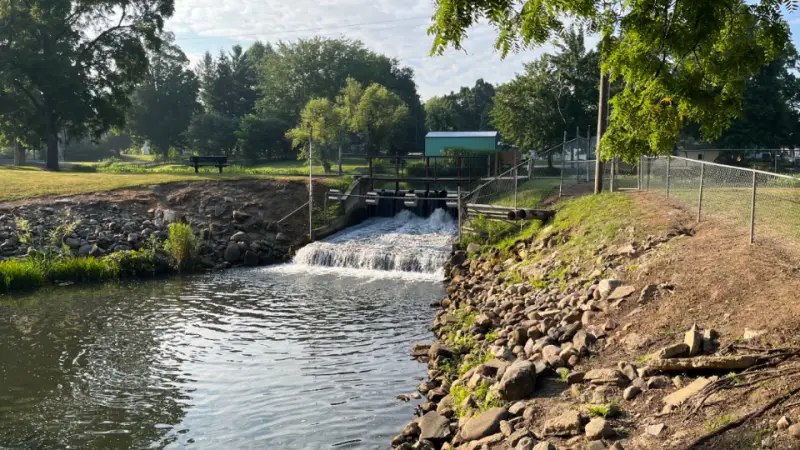
Michigan is putting nearly $900,000 toward improving fish habitat and aquatic ecosystems across the state, with one of the funded projects focused directly on the future of the Athens Dam in Calhoun County.
The Michigan Department of Natural Resources announced September 9 that 10 Fisheries Habitat Grant projects will receive a combined $892,200, backed by more than $240,000 in partner contributions. Together, the projects represent more than $1.1 million in conservation work aimed at improving aquatic habitat, fish populations, water quality and fish passage. (Michigan)
For Calhoun County, the award includes $65,000 to the Calhoun Conservation District for an Athens Dam feasibility study.
That project is significant because feasibility studies can provide the technical information needed to determine whether an aging or environmentally problematic dam should be repaired, modified or removed.
Athens Dam becomes part of a larger statewide conversation
The Athens Dam project is one of several awards in the latest grant cycle involving dams, barriers and aquatic connectivity.
The DNR says its Fisheries Habitat Grant program supports projects that address the causes of habitat degradation rather than simply treating its symptoms. Eligible work can include fish habitat conservation, dam removal or repair, aquatic organism passage and resource assessments designed to guide future conservation decisions. (Michigan)
That approach is increasingly important in Michigan, where dams and other barriers can interrupt fish movement, alter natural river processes and change aquatic habitat.
According to the DNR, the projects funded in this grant cycle are expected to contribute to fish migration across more than 147 miles of Michigan streams and work toward the removal or replacement of five dams. (Michigan)
For communities such as Athens, the feasibility work can therefore be about more than the structure itself. It can help answer a larger question: What option provides the greatest long-term benefit for the river, fish, public safety and the surrounding community?
A broader investment in Michigan’s rivers
The Calhoun County award is one piece of a much larger statewide effort.
Other funded projects include the removal of the Brick Plant Causeway in Shiawassee County, woody habitat restoration on the Boardman and Little Manistee rivers, work associated with Swan Creek and Highbanks dams, a fish-passage project at Hesperia Dam, and habitat work on the Au Sable and Pigeon rivers. (Michigan)
The DNR says five of the funded projects are designated Priority Habitat Conservation Projects, while seven directly support priorities identified in Michigan’s Wildlife Action Plan. (Michigan)
The funding comes from Michigan’s Game and Fish Protection Fund and state general funds. For this grant cycle, fishing license revenue contributed $542,200, while $350,000 in general funds was designated for dam-management grants. (Michigan)
That funding model is particularly notable for anglers and outdoor recreationists: money generated in part through fishing licenses is being reinvested into the aquatic systems that support Michigan’s fisheries.
Why habitat restoration matters to paddlers, anglers and communities
Healthy fish habitat is not simply a fisheries issue.
Rivers are interconnected systems. Changes to flow, water temperature, woody habitat, sediment movement, shoreline vegetation and fish passage can affect aquatic species as well as the recreational users who depend on healthy waterways.
The DNR identifies numerous threats to fish habitat, including erosion, loss of vegetation and downed timber, warming water temperatures, poor water quality, altered stream flows and blocked fish passage. (Michigan)
For Michigan’s paddling community, restoration projects can also have broader implications. Removing or modifying barriers can restore sections of river that have been fragmented for decades, while improving river function can benefit the ecological and recreational character of an entire watershed.
The important question is what comes next
The $65,000 Athens Dam feasibility study is not itself a dam-removal project. It is an investigation intended to provide information for future decisions.
That distinction matters.
A feasibility study should ultimately help decision-makers compare alternatives based on measurable factors such as ecological restoration, fish passage, public safety, structural condition, long-term maintenance obligations, recreational benefits and cost.
Michigan’s own Fisheries Habitat Grant program states that competitive projects should provide long-lasting benefits, address the causes of habitat degradation, use appropriate methods and address health and human safety when dealing with dams. (Michigan)
That makes the Athens study an opportunity to look beyond simply asking how a dam can continue to exist.
The more consequential question is whether the dam continues to provide enough public benefit to justify its environmental, structural, financial and safety costs — or whether restoring the river would provide the stronger long-term outcome.
For Michigan’s rivers, that is increasingly the conversation worth having.
Michigan’s waterways are public resources
The latest grant awards demonstrate that Michigan is willing to invest in restoring aquatic systems rather than simply accepting degraded habitat as permanent.
The challenge now is making sure those investments lead to decisions based on sound science, transparent analysis and the long-term public interest.
In Calhoun County, the Athens Dam feasibility study will provide another piece of that information.
For anglers, paddlers, conservationists and communities throughout Michigan, the outcome could have implications well beyond Athens.
Healthy rivers support healthy fisheries. Healthy fisheries support recreation, tourism and local economies. And restoring connectivity can give Michigan’s rivers a chance to function more like the systems they were meant to be.
About Michigan Watershed Watch
Michigan Watershed Watch reports on Michigan’s rivers, lakes, dams, fisheries, conservation efforts, water quality and the decisions affecting the state’s aquatic resources.
West Michigan Kayaking Club is a community of paddlers committed to exploring and protecting Michigan’s waterways through active outdoor adventure and responsible stewardship.
Wild Rivers. Rugged Trails. Real Adventure.
Follow and join the West Michigan Kayaking Club community on Facebook:
West Michigan Kayaking Club Facebook Group
#MichiganWatershedWatch #MichiganDNR #MichiganFisheries #FishHabitat #CalhounCounty #AthensDam #DamRemoval #RiverRestoration #MichiganRivers #MichiganKayaking #WestMichiganKayakingClub #FishPassage #WatershedRestoration
Source: Michigan Department of Natural Resources, Sept. 9, 2026. The DNR’s official announcement confirms the statewide $892,200 award total and the $65,000 Athens Dam feasibility study.