There is something different about preparing for a long river expedition.
A day trip is easy.
You throw the kayak on the vehicle, load a little food and water, paddle for a few hours and head home.
But three days and 60 miles?
That’s different.
For this trip, we’re not just showing up at a launch and going for a paddle. We’re loading our boats with camping gear, food, water, clothing and everything we’ll need to live beside the river for three days.
We’re committing ourselves to the current.
And before we launch, I wanted to take a moment to understand the river we’re about to travel.
Because the Manistee River isn’t just another beautiful Michigan waterway.
This river has a story.
And it’s a hell of a story.
Before Roads, Before Bridges, Before Towns
Long before highways crossed northern Michigan, long before lumber camps carved roads through the forests, people were already traveling the Manistee watershed.
The landscape was shaped by glaciers thousands of years ago, leaving behind the forests, wetlands, sandy banks and winding waterways we see today.
People followed those waterways.
The Manistee watershed has a human history stretching back more than 10,000 years. Indigenous peoples, including Ottawa, Chippewa and Potawatomi communities, used the region for travel, hunting and fishing.
The river wasn’t an obstacle.
It was a highway.
The name Manistee itself comes from an Ojibwe word, although its exact meaning is debated.
That’s something worth remembering when we’re sitting in our kayaks watching the forest slide past.
We’re not the first people to travel this river.
Not even close.
Then the Forest Came Down
Eventually, the character of the Manistee changed.
Michigan’s great white pine forests became one of the state’s most valuable resources.
Lumber camps spread throughout northern Michigan.
Sawmills appeared.
Railroads pushed deeper into the woods.
And the Manistee became a working river.
Logs were cut in the forests, dragged to the water and floated downstream toward the mills.
Imagine that.
The same river we’re going to quietly paddle this weekend once carried enormous quantities of timber toward the lumber towns of northern Michigan.
The river was crowded with logs.
Logjams could stretch across sections of the waterway.
Crews worked to keep the river open for the massive log drives.
The forests that had stood for centuries were being reduced to lumber at an incredible pace.
Northern Michigan was being transformed.
And the Manistee was right in the middle of it.
A River Covered in Logs
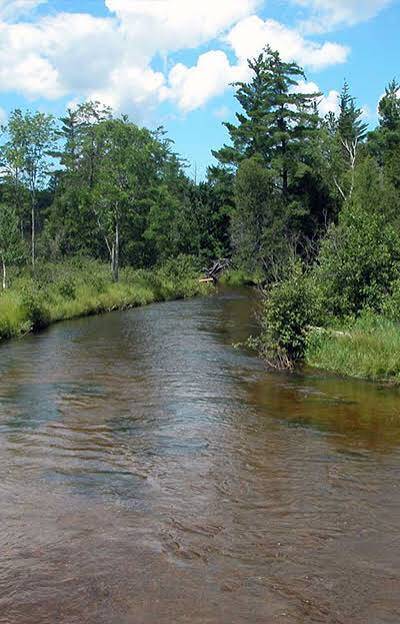
Today, we think of the Manistee as a place of quiet water, wooded banks, trout, salmon, bald eagles, campsites and kayaks.
But imagine looking at it 150 years ago.
Instead of paddlers drifting quietly downstream, you could have been looking at a river packed with timber.
Logs everywhere.
Crews working along the banks.
Sawmills operating downstream.
Entire communities dependent on what the river could carry.
The river was a transportation system.
And for a time, it was one of the most important transportation systems in northern Michigan.
Eventually, the logging industry moved on.
The great forests were largely gone.
The lumber camps disappeared.
The sawmills closed.
The river began another chapter.
The Forest Came Back
This is one of the most remarkable parts of Michigan’s story.
The landscape changed again.
The cutover forests began to regenerate.
Trees returned.
Wildlife returned.
And eventually, large portions of the region became protected public land.
The Manistee National Forest was established in 1938, helping preserve enormous areas of northern Michigan for future generations.
Today, much of the river corridor looks almost nothing like the devastated landscape left behind by the logging era.
Stand on a riverbank today and look into the forest.
It’s hard to imagine that the land was once stripped of its timber.
That’s the resilience of a river.
And the resilience of a forest.
The River We Know Today
Today, the Manistee is one of Michigan’s great recreational rivers.
It supports trout, steelhead, salmon, bass and numerous other species.
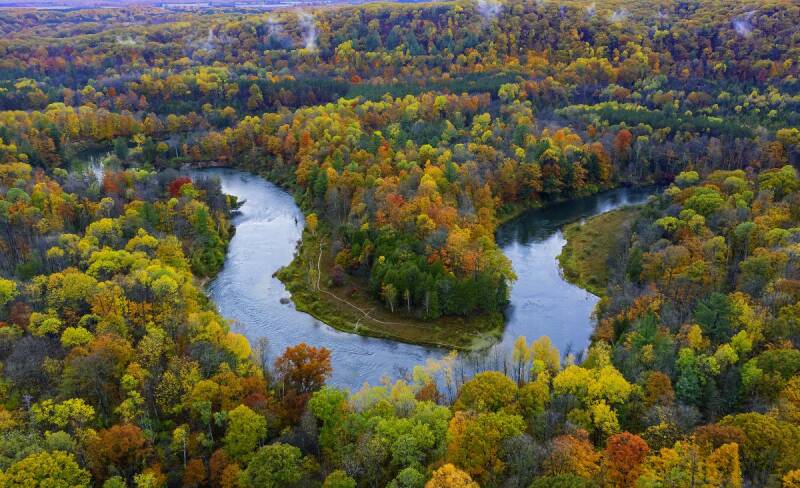
It winds through some of the most beautiful country in the Lower Peninsula.
Parts of the river have received special protections because of their scenic, recreational, fish and wildlife values.
And people come here for exactly the reason we’re coming:
To get away from everything.
To paddle.
To fish.
To camp.
To explore.
To spend a few days moving through the wilderness under their own power.
Sixty Miles
That’s where West Michigan Kayaking Club comes in.
Our upcoming adventure isn’t going to be a sightseeing tour.
We’re preparing for approximately 60 miles over three days.
Our kayaks will be loaded.
Our camping gear will be packed.
Our food will be accounted for.
And once we launch, we’re committed to the river.
There will be no hotel at the end of the afternoon.
No restaurant waiting around the corner.
No easy button.
We’ll paddle until we’ve covered the day’s miles.
Then we’ll find camp.
Unload the boats.
Set up.
Eat.
Dry out.
Rest.
And do it again the next morning.
That’s what makes a river expedition different.
You begin to measure the day in miles instead of hours.
You start paying attention to the current.
You notice the wind.
You watch the weather.
You study the bends.
You learn to read the river.
And eventually, the outside world starts disappearing.
60 Miles of Michigan
There will be long stretches where we’re simply moving downstream.
There will be quiet water.
There will be current.
There will be wildlife.
There will be sand.
There will be obstacles.
There will probably be moments when somebody looks at the day’s remaining mileage and wonders exactly what we were thinking.
That’s part of it.
Adventure isn’t supposed to be completely comfortable.
That’s why we go.
We’re not looking for the easiest 60 miles in Michigan.
We’re looking for an experience.
Something we’ll remember.
Something we’ll talk about years from now.
Something that reminds us why we spend so much time outside in the first place.
Respect the River
Long-distance paddling also demands respect.
The Manistee may look peaceful, but a river can change quickly.
Weather changes.
Water levels change.
Wind changes.
A kayak loaded for a three-day expedition handles differently than an empty boat on a two-hour afternoon paddle.
That’s why preparation matters.
We carry the equipment we need.
We keep our PFDs on.
We pay attention to one another.
We don’t treat the river casually.
And we leave the river the way we found it.
Because we’re guests here.
Before the First Paddle Stroke
When we finally push away from shore, I want to remember everything that came before us.
The Indigenous people who traveled these waters thousands of years ago.
The lumbermen who depended on this river.
The enormous log drives.
The communities that rose and disappeared.
The forests that were cut.
The forests that returned.
The people who fought to protect these rivers.
And the generations of paddlers who came here simply because there is something about moving down a river that gets inside you.
Now it’s our turn.
Three days.
Sixty miles.
One river.
A few kayaks loaded with everything we need.
And thousands of years of history flowing beneath our hulls.
The Manistee doesn’t care who we are.
It doesn’t care what we do for a living.
It doesn’t care about our schedules, our phones, our jobs or whatever problems are waiting for us back home.
It simply keeps moving.
So will we.
See you on the river.
— Brad De Young
Founder, West Michigan Kayaking Club
West Michigan Kayaking Club
West Michigan Kayaking Club is an adventure-focused paddling community based in the Grand Rapids area. We organize long-distance river expeditions, kayaking, canoeing, SUP, hiking, camping and multi-day adventures throughout Michigan and beyond.
For people who want more than a casual float.
Wild Rivers. Rugged Trails. Real Adventure.