Most people find this club through the water. They search for West Michigan kayaking, find a river trip, show up at a launch — and then notice something. The trip does not end at the take-out. There is a hike after lunch. There is a camp that night. There is talk of a bike ride later in the week and a backpacking weekend later in the season. The paddling was the doorway, not the whole house.
That blend is written right into the club's tagline: Wild Rivers. Rugged Trails. Real Adventure. Rivers and trails, in that order, on purpose. West Michigan is country where the two keep crossing each other — where a river valley carries a footpath along its bluffs, a launch doubles as a trailhead, and a weekend can hold a paddle, a hike, and a night under the trees without anyone driving very far. This is a look at how those pieces fit together, and why a kayaking club ended up being an outdoor adventure club in the full sense.
West Michigan Kayaking Is Only the First Half of the Story
Start with the geography. West Michigan's rivers run out of big, wooded country — much of the region's wild heart sits inside the Manistee National Forest, where rivers, trails, and campgrounds share the same valleys. A river here is rarely just a river. It is a corridor: foot trails follow the banks and the bluffs above them, forest roads and two-tracks lead to landings, and campgrounds sit close enough to the water that a boat can be your transport and your luggage hauler at the same time.
That geography shapes a particular kind of trip. Paddle in the morning while the water is quiet. Pull out at midday and walk the bluff trail for the view you just paddled under. Camp where the trail crosses the river, and wake up already staged for the next stretch. None of that requires expedition-level ambition — it just requires seeing the river and the trail as one connected system instead of two separate hobbies. West Michigan kayaking, done this way, stops being a single activity and becomes a way of moving through a landscape.
Where the River Meets the Trail
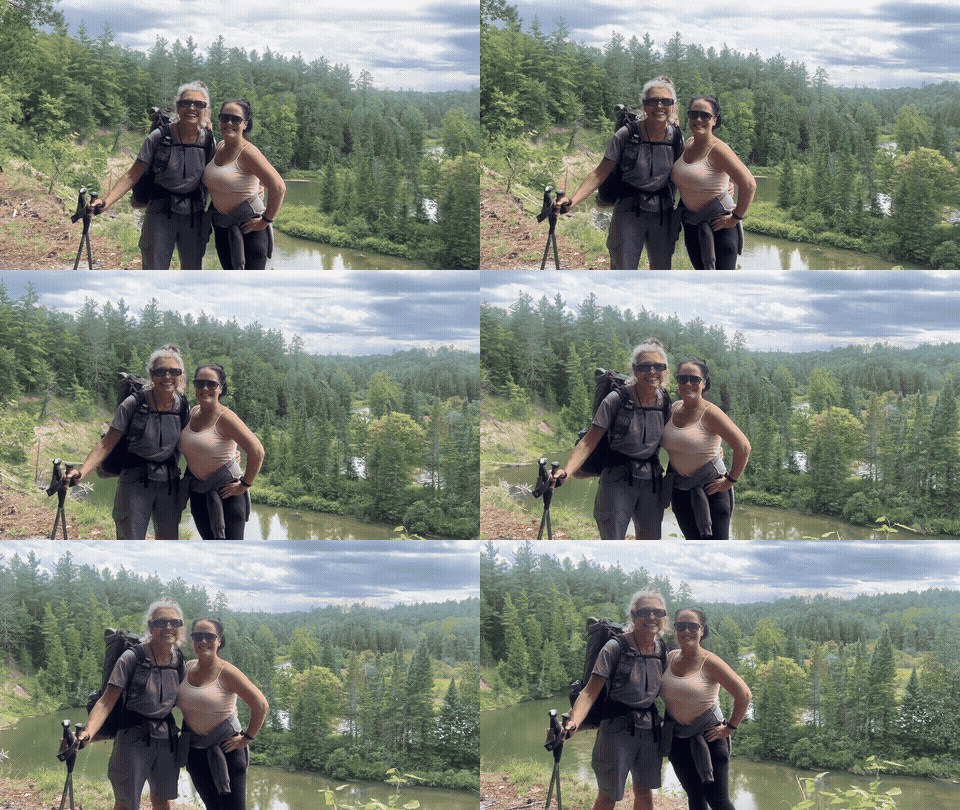
A recent club trip to the Fife Lake area shows the pattern at its clearest. Members paddled the Boardman River and also hiked a stretch of the North Country Trail — the long-distance National Scenic Trail that crosses Michigan on its way across the northern United States, with segments running through West and northern Michigan. One trip, two kinds of miles, and a much fuller picture of the country than either would have given alone. The club's Fife Lake trip report tells that story properly, with the river, the trail, and the camp all in one account.
The North Country Trail is the biggest thread in this fabric, and the National Park Service, which administers the trail, is the authority for its routes and rules. But the principle works on any scale. Most Michigan river valleys have some footpath in them — a state forest trail, a park path, an old two-track along the bank. Walking a stretch of river before you paddle it changes the paddle: you have seen the bend from above, spotted the downed tree from the bank, and learned where the current is pushing before you are sitting in it.
Reading a River From the Bank
Hiking also returns something paddlers lose when they only ever see a river from a cockpit: the slow look. From a trail you notice the heron rookery in the dead trees, the otter slide on the mud bank, the spring seeping out of the hillside. Wildlife observation comes naturally to this blended style, because each mode of travel shows you what the other one misses. A kayak approaches quietly at water level, close enough to watch a kingfisher work a pool. A trail puts you at eye level with the forest itself — deer sign, wildflowers, the first morels of spring. Neither view is complete alone; together they add up to knowing a place.
Sleep Out: Camping and Backpacking Turn Paddles Into Expeditions
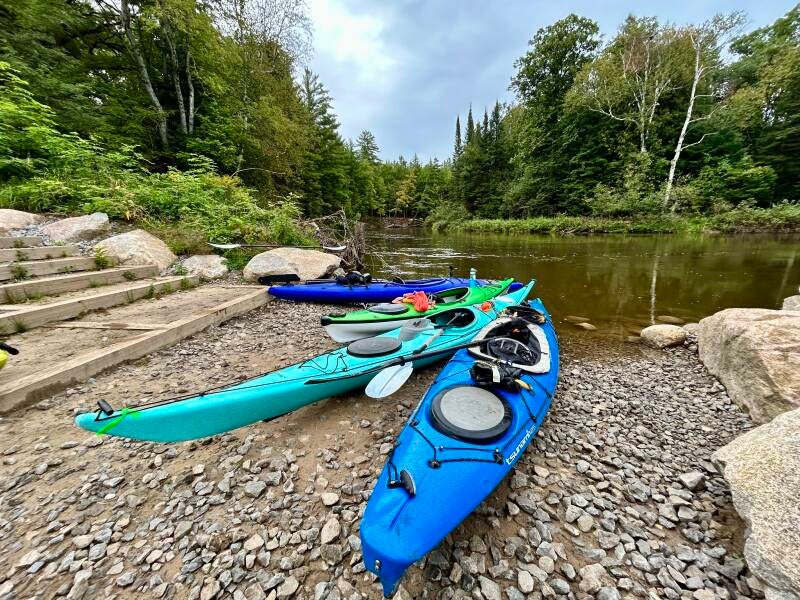
The third thread is the overnight. Kayak camping is where West Michigan kayaking grows into genuine Michigan river expeditions: load the boat with a tent, food, and dry bags, and the river becomes a road you can travel for days. The club's multi-day trips on rivers like the Manistee — written up in our Manistee River trip report — run on exactly that logic, linking stretches of river with riverside camps.
Backpacking belongs in the same conversation because the skills are the same skills wearing different boots. Packing light, planning food and water, reading weather, choosing a camp, leaving it cleaner than you found it — a backpacker and a kayak camper are solving the same problems, just with different vehicles. Members who do both find the gear closet overlaps happily, and that a club comfortable in both worlds can build trips neither group would plan alone: paddle to a trailhead, hike a loop, paddle out.
One responsibility comes with all of this: know whose land you are on and what its rules are. Much of the region's river and trail country is public land, but rules for camping, fires, and access differ between state land and national forest. The Michigan Department of Natural Resources covers state land and state trails, and the U.S. Forest Service covers the national forest. Check before you go — it is part of the craft, not a formality.
Two Wheels in the Rotation
The oddest item on a kayaking club's calendar, until you think about it, is the bicycle. This club runs a Weekly Cycling Training Ride series through the riding season, and it earns its place. Paddling builds the shoulders and the core; cycling builds the legs and the engine, and strong legs matter more to wilderness travel than most paddlers admit — every portage, every bluff hike, every loaded walk from a landing to a campsite runs on them.
There is a practical side too. The same country roads and paved trails that make good training rides run through the same river towns the club paddles out of. A member who has ridden a valley knows it differently when they paddle it, and more than one scouting look at a launch or a take-out has happened from a bike saddle. Cycling keeps the community moving together in the weeks between river trips, which is its own kind of value.
One Calendar, One Community
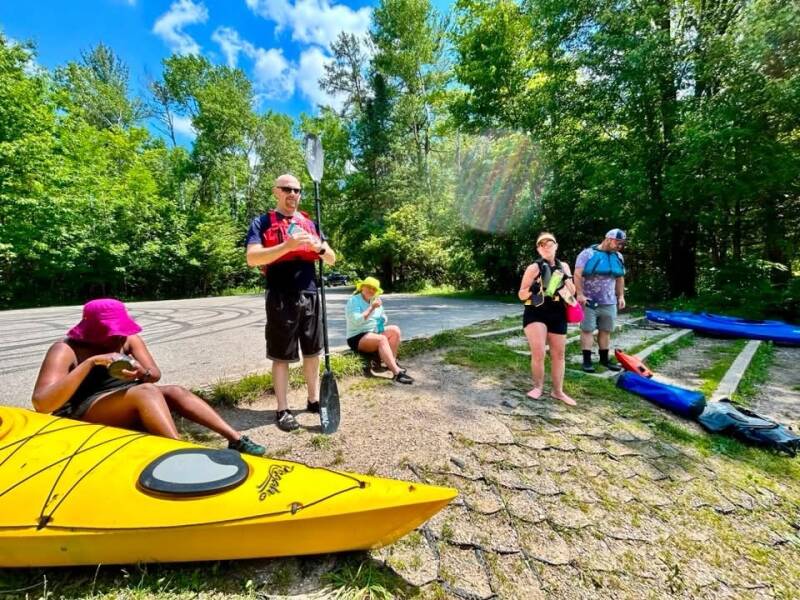
West Michigan Kayaking Club was founded in Grand Rapids in 2019 by Brad De Young and Tim Postma, and it has grown into a community of more than 2,000 members. In 2026 the club ran 76 sponsored trips — paddles, yes, but also hikes, rides, camps, and combinations that do not fit a single label. Membership is free, and the club is member-led: experienced members plan the routes and organize the details, and every participant is responsible for their own gear, their own decisions, and their own safety.
The club calendar is where the blend becomes visible. In a single month you might find a river day trip, a trail hike, a training ride, and a weekend expedition stacked side by side — and members drift between them according to season and mood. The paddlers learn trail skills from the hikers; the hikers end up in boats. That cross-training is not an accident or a side effect. It is the point. And when a trip sparks a story worth telling, it lands in The Kayakers Journal alongside the river guides and trip reports.
Plan a Blended Trip of Your Own
If you want to try the pattern yourself, keep it simple and build it from one valley:
- Pick a river and a trail in the same drainage. Short sections of each beat an epic plan. The club's Lower Peninsula river guide is a good place to start choosing water.
- Check the land rules for both halves — DNR for state land, the Forest Service for national forest — especially for camping and fires.
- Wear your PFD on the water, properly fitted, every time, and dress for the water temperature rather than the air temperature.
- File a trip plan covering both the paddle and the hike, and tell someone when to expect you back.
- Carry the camp out. Everything you pack in — by boat, by pack, or by bike — packs out with you.
Start with a paddle and a short hike on the same day, close to home. The combination has a way of selling itself.
Explore Michigan with West Michigan Kayaking Club
Looking for more than an occasional paddle? Join the West Michigan Kayaking Club, a Grand Rapids-based outdoor adventure community exploring Michigan's rivers, lakes, trails, and wilderness.
Our adventures include active day paddles, multi-day river expeditions, kayak camping, hiking, backpacking, cycling, and outdoor exploration.
We believe in getting out there, covering miles, and discovering what's around the next bend.
Wild Rivers. Rugged Trails. Real Adventure.
Membership is free. There are no dues or membership fees.
Website: https://www.westmichigankayakingclub.online
Become a member: https://www.westmichigankayakingclub.online/become-a-member
Facebook community: West Michigan Kayaking Club
By Brad De Young | Co-Founder, West Michigan Kayaking Club
The Kayakers Journal
Add comment
Comments