

Opinion | Restoring the Grand River Is an Investment in Our Community’s Future
By Brad De Young
West Michigan Kayaking Club
Published: July 8, 2026
For nearly 15 years, I have followed and supported the effort to restore the Grand River through downtown Grand Rapids. During that time, I have volunteered in river restoration projects, spent countless hours paddling Michigan’s waterways, and watched the conversation surrounding this project evolve. Unfortunately, many of the public comments opposing the removal of the downtown low-head dams are rooted in misconceptions rather than the history, engineering, or science behind the restoration.
The reality is simple: restoring a river to a more natural condition is almost always the best long-term outcome. Healthy rivers support healthier ecosystems, stronger local economies, improved recreation, better fisheries, and communities that are more connected to their natural resources.
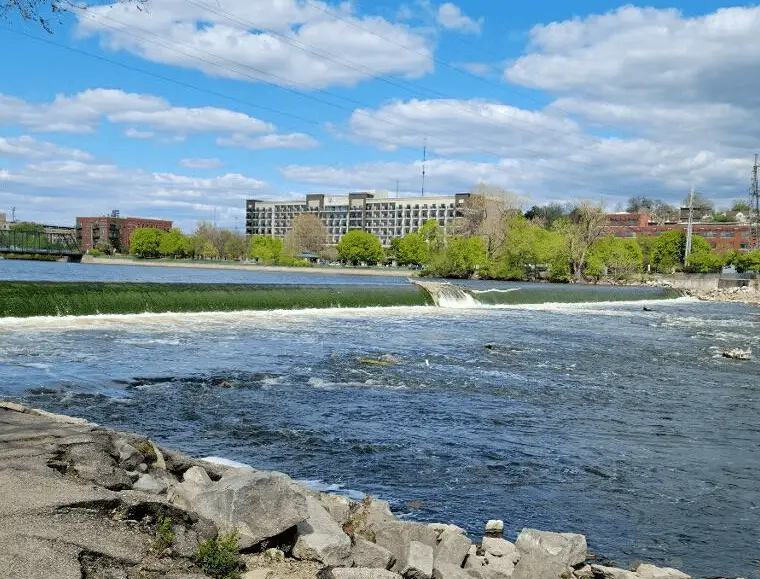
One of the most common myths is that the downtown low-head dams protect Grand Rapids from flooding. They do not. These structures were never designed as flood-control dams and provide virtually no flood-storage capacity. Their purpose was to raise upstream water levels for historical industrial uses. Removing them will not suddenly expose the city to catastrophic flooding because they simply are not flood-control infrastructure.
Another misconception is that the Grand River will somehow “dry up” once the dams are removed. History tells a different story.
Long before the dams were built, the Grand River naturally rose and fell with seasonal rainfall and snowmelt. In the early 1900s, much of the river’s flow through the downtown rapids was diverted into mill races and canals that powered Grand Rapids’ booming furniture industry and supported other industrial operations on the west side of the city. Those diversions—not the absence of dams—often left portions of the rapids looking much drier than they naturally would have.
The restoration project is not about draining the river. It is about allowing the river to function more naturally while restoring fish passage, improving water quality, creating healthier habitat, and reconnecting residents with one of Michigan’s greatest natural resources.
The work behind this project has been extraordinary.
For more than 15 years, the team at Grand Rapids WhiteWater has navigated an endless series of engineering challenges, environmental reviews, funding hurdles, regulatory requirements, and public debate. Many organizations would have abandoned the effort long ago. Instead, they remained committed to restoring one of the defining natural features of our city.
Their persistence deserves recognition.
For many people in my generation, the Grand River was not a place you wanted to swim, fish, or even put your feet into. Decades of industrial pollution, untreated runoff, and neglect left many stretches of the river unhealthy and largely disconnected from the community.
Today, while the Grand River is far from perfect, it is substantially healthier than it was 30 or 35 years ago. That progress did not happen by chance. It resulted from stronger environmental protections, improved wastewater treatment, stricter industrial regulations, watershed restoration, volunteer cleanup efforts, and the work of conservation organizations, paddlers, anglers, and community groups who refused to accept the river’s decline.
The removal of the Fifth Street Dam and lower cofferdams represents another important milestone in that recovery.
Restoring natural rapids will improve aquatic habitat, reconnect spawning areas for native fish, enhance recreational opportunities, and create a healthier river corridor that residents and visitors alike can enjoy. Perhaps most importantly, it continues shifting the Grand River from an industrial utility back into the centerpiece of our community.
Healthy rivers create healthy communities.
Public discussion is important, and honest questions should always be welcomed. But opinions should be informed by history, science, and engineering—not by fear or misinformation. Constructive debate moves projects forward. Misconceptions only slow progress.
As someone who has spent decades exploring Michigan’s rivers and nearly 15 years supporting this restoration, I believe this project represents one of the most significant environmental investments our city has made in generations.
The Grand River has been altered, diverted, polluted, and neglected throughout much of its modern history. Restoring it will not erase every problem overnight, but it is another meaningful step toward giving Michigan’s longest river the opportunity to function more as nature intended.
Future generations will inherit the river we choose to leave behind.
For that reason alone, the effort has been worth it.
Brad De Young is co-founder of the West Michigan Kayaking Club, an outdoor organization dedicated to promoting safe paddling, stewardship, conservation, and exploration of Michigan’s waterways.
Add comment
Comments