Why public access and restoration must be part of every decision shaping Northern Michigan’s waterways
By Staff Writer
Michigan Watershed Watch / West Michigan Kayaking Club
September 4, 2026
The Boyne River is facing two questions that could shape its future: Who gets access to the river, and how long should aging dams remain in place?
As luxury glamping development expands near the Boyne River and concerns continue over public access around the Boyne USA hydroelectric project, another aging dam farther within the watershed is being evaluated for possible removal.
Together, these issues highlight a larger challenge facing Michigan: how to balance private development, public access, aging infrastructure and the long-term health of its waterways.
When Development Meets a Public River
Luxury development is not inherently a problem.
Tourism creates jobs, businesses invest in communities and visitors support local economies.
The concern begins when development limits public access to the natural resources that made the area desirable in the first place.
The Boyne River is valued for its cold water, fisheries, wildlife and recreational opportunities. Those resources existed long before luxury cabins, resorts and glamping developments.
As development associated with Boyne USA’s planned luxury destination continues, concerns have been raised about access around the river and the company’s hydroelectric facility.
For critics, the issue is larger than glamping.
It is whether development and restricted access could gradually make parts of the river more difficult for the public to experience and navigate.
That concern becomes particularly important when fencing or other barriers affect paddlers attempting to safely travel around artificial obstructions.
Safety and Access Can Coexist
Boyne USA has argued that fencing around the hydroelectric facility is necessary because of legitimate safety concerns involving dam infrastructure, mechanical gates and dangerous elevation changes.
Those concerns should be taken seriously.
The public should not enter dangerous dam facilities or restricted operational areas.
But protecting people from hazardous infrastructure does not have to mean eliminating reasonable access around it.
A clearly marked and properly maintained portage route can protect public safety while allowing paddlers and other recreationists to continue their journey.
When dams interrupt a river, access around those structures should be part of the conversation between operators, regulators and the public.
The Hydroelectric Dam Deserves a Fresh Review
The Boyne USA hydroelectric facility is undergoing a federal relicensing process after its previous long-term license expired.
That process could shape the facility’s operation for decades.
Before another long-term commitment is approved, regulators should carefully examine public access, fish passage, sediment, water temperatures and the environmental consequences of continued operation.
Every aging dam should eventually face a basic question:
Does the structure still provide enough public benefit to justify its environmental and financial costs?
If it does, continued operation should meet modern environmental and safety standards.
If it does not, removal should remain on the table.
That is not anti-development.
It is responsible infrastructure management.
The Boyne Falls Dam: An Opportunity for Restoration
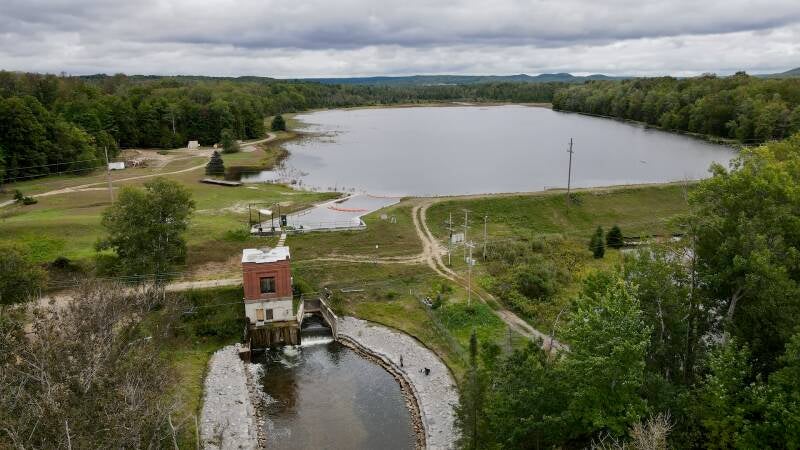
The Boyne Falls Dam on the South Branch of the Boyne River presents a separate and potentially significant opportunity.
Built during Michigan’s industrial era, the aging dam remains on the river long after its original purpose has faded.
The Village of Boyne Falls is now studying the future of the structure, including the possibility of removal.
That discussion should extend beyond the immediate cost of repairs.
It should consider what the community and watershed could gain from restoring a connected river system.
According to conservation planning surrounding the project, removing the dam could reconnect approximately three miles of river and dozens of miles of tributaries within the larger Boyne River watershed.
For a cold-water river system, connectivity matters.
Fish need access to habitat.
Aquatic species depend on connected waterways.
And natural river systems transport water and sediment in ways that aging dams can interrupt.
The Cost of Keeping an Aging Dam
The Boyne Falls Dam represents a challenge increasingly faced by communities throughout Michigan.
Every dam eventually reaches a crossroads:
Repair it. Replace it. Or remove it.
Concrete deteriorates.
Spillways age.
Infrastructure requires inspection.
Sediment accumulates.
And maintenance costs continue.
Delaying those decisions can make future repairs more expensive.
The real question is whether continued investment provides enough value to justify the long-term costs.
If a dam no longer serves its original purpose, produces limited public benefits and continues to fragment an important river system, maintaining it indefinitely becomes increasingly difficult to justify.
Removal offers another option.
Instead of investing in an aging barrier, a community can invest in restoring natural habitat and reducing long-term maintenance obligations.
Dam Removal Is Not Abandonment
Dam removal is sometimes portrayed as destruction.
In reality, successful removal projects require extensive planning.
Engineering, sediment analysis, environmental studies, infrastructure evaluation and long-term monitoring are all part of the process.
The objective is not simply to remove concrete.
It is to safely restore natural river functions.
When properly planned, dam removal can reconnect habitat, restore natural flow and improve conditions for aquatic ecosystems.
The South Branch of the Boyne River has been divided by infrastructure for generations.
The current feasibility process offers an opportunity to determine whether maintaining that division remains the best option.
The Larger Question
The debates over glamping, public access and dam removal are connected by a common issue:
How should Michigan manage its rivers as development increases and aging infrastructure reaches the end of its useful life?
Private development can coexist with public recreation.
Safety restrictions can coexist with reasonable access.
Historic structures can be evaluated respectfully without assuming they must remain forever.
But Michigan should not treat aging dams as permanent simply because they have always been there, nor should public access become an afterthought as waterfront development expands.
The decisions being made today will shape the Boyne River for decades.
The Case for Action
The Boyne USA hydroelectric relicensing process should include meaningful consideration of public access, environmental impacts and the long-term value of continued dam operation.
At the same time, Boyne Falls should carefully evaluate whether removing its aging dam provides greater long-term benefits than continued maintenance.
These decisions should be based on science, safety, environmental impacts and the public interest.
For the Boyne Falls Dam, removal deserves serious consideration as a long-term restoration strategy.
For the Boyne River as a whole, public access should remain part of every major development and infrastructure decision.
The future of the watershed should not be determined solely by fences, aging concrete or private investment.
It should be shaped by informed decisions that protect public safety, maintain reasonable access and preserve the ecological health of one of Northern Michigan’s important river systems.
Follow West Michigan Kayaking Club
West Michigan Kayaking Club is an adventure-focused outdoor community exploring Michigan’s rivers, lakes, trails and wild places while advocating for the protection, restoration and public access of Michigan’s waterways.
From long-distance kayaking expeditions and challenging river adventures to hiking, camping and conservation, West Michigan Kayaking Club believes that experiencing Michigan’s natural resources also comes with a responsibility to protect them.
🌐 Visit West Michigan Kayaking Club:
West Michigan Kayaking Club Website
📘 Follow and join the community:
West Michigan Kayaking Club Facebook Group
West Michigan Kayaking Club
Wild Rivers. Rugged Trails. Real Adventure.
#MichiganWatershedWatch #WestMichiganKayakingClub #BoyneRiver #DamRemoval #RiverRestoration #PublicAccess #ProtectMichiganWaters