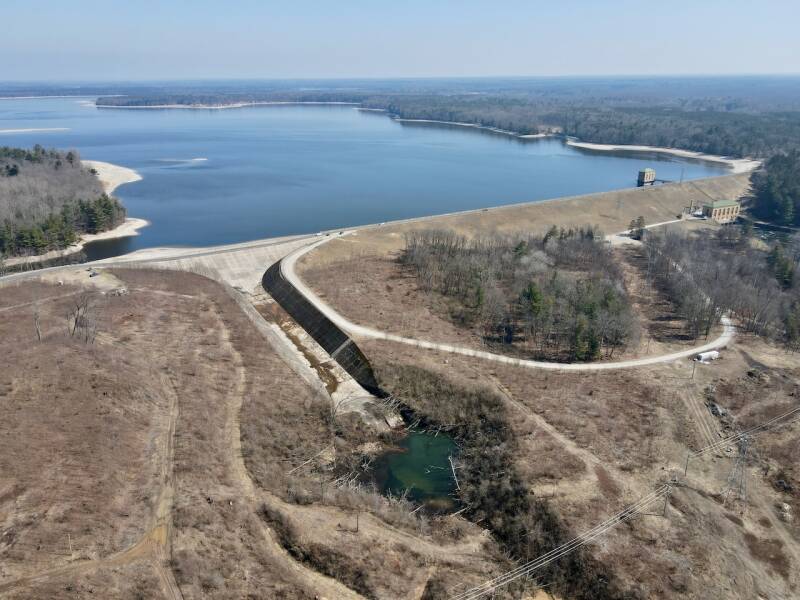
Days before Michigan Public Service Commission regulators were expected to rule, Consumers Energy is asking for more time to negotiate its controversial plan to sell 13 aging hydroelectric dams.
The utility filed a request Tuesday seeking up to a 60-day delay of a decision that had been set for Thursday. Company lawyer Bret Totoraitis said the extra time would give Consumers and critics “an opportunity to resolve the issues in this case cooperatively.”
The request comes after both an administrative law judge and Gov. Gretchen Whitmer recommended denying the sale, citing risks to ratepayers and the public. Critics of the deal, including river advocacy groups, say the time for negotiations has long passed.
“Consumers obviously thinks that they’re not going to win,” said Howard Learner, CEO of the Environmental Law & Policy Center, which represents several river groups opposing the sale. “The company could have made a settlement request to the parties at a much earlier time, but explicitly refused to do so.”
Why this matters for paddlers and watersheds
The 13 century-old dams sit on some of Michigan’s most important rivers for recreation and ecology: the Kalamazoo, Grand, Muskegon, Manistee, and Au Sable. These include Hodenpyl and Tippy (Manistee), Mio, Alcona, Cooke, Foote, Five Channels and Loud (Au Sable), Hardy, Rogers and Croton (Muskegon), Webber (Grand), and Calkins Bridge (Kalamazoo).
Consumers proposes selling the dams to Confluence Hydro (a subsidiary of Maryland private equity firm Hull Street Energy) for $1 each, then locking ratepayers into a 30-year power-purchase agreement at roughly double market rates, plus a $270 million payment to Consumers. The company argues this is cheaper than keeping or removing the dams. Opponents say the math doesn’t hold up and worry that a private equity owner will under-invest in the hundreds of millions of dollars of needed maintenance and upgrades.
For kayakers and river users, the stakes are high. Aging dams that fall into disrepair create safety hazards (dangerous hydraulics, failing structures), can degrade water quality and habitat, and risk becoming taxpayer burdens if they fail. Many of these rivers are core paddling destinations for West Michigan paddlers.
A sudden shift
Consumers had spent months treating the deal as non-negotiable and pushing for a quick decision. In July it offered to redirect the $270 million into a safety fund the state could access if maintenance lagged—critics called that ratepayers subsidizing the new owner’s responsibilities.
Now the company says it is open to unspecified conditions. Consumers hydropower chief Adam Monroe called the delay request “great news for anyone who cares about our dams and the Michigan communities that depend on them.” Spokesperson Brian Wheeler left open the possibility of further extensions.
Learner and other opponents urge the Commission to decide this week: “It’s too late. Consumers refused to negotiate throughout the entire case… That should not now be somehow excused on the very eve of the commission’s decision.”
Michigan Public Service Commission spokesperson Matt Helms declined to comment on the delay request.
Stay involved with the West Michigan Kayaking Club
We paddle many of the same rivers affected by these dams (Manistee, Muskegon, Au Sable, Grand River system, and more). Keep an eye on this issue and join the conversation:
- Club website: https://www.westmichigankayakingclub.online/
- Facebook group: https://www.facebook.com/groups/749998724166493/
Wild rivers, rugged trails, real adventure—protecting the waterways we paddle is part of the mission.