By Brad De Young | The Kayakers Journal
West Michigan Kayaking Club
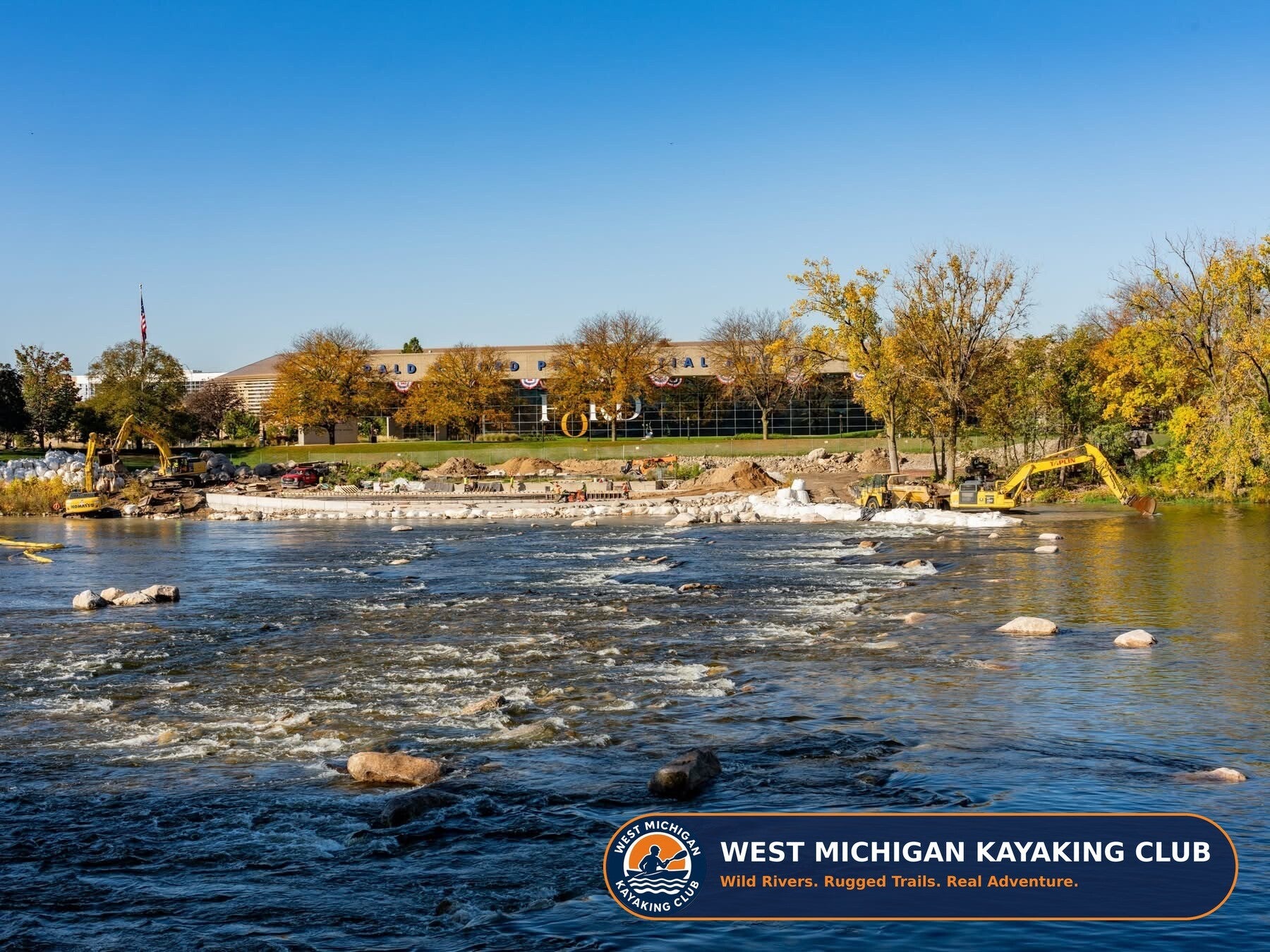
The Grand River is changing, and for those of us who love exploring Michigan’s waterways by kayak, the transformation taking place in downtown Grand Rapids is something worth watching.
For generations, the Grand River’s natural rapids helped give Grand Rapids its name. Over time, dams and other river modifications changed the character of the waterway, limiting fish passage, altering aquatic habitat, and creating dangerous conditions for recreational users.
Today, that history is beginning to change.
Thanks to the Lower Reach Restoration Project, the Grand River is gradually returning to a more natural state. The work underway is not simply a downtown beautification project. It represents a major investment in the river’s ecological health, public safety, recreational opportunities, and the future of one of West Michigan’s most important waterways.
For the paddling community, this is an especially exciting development.
A Major Milestone for the Grand River
The Lower Reach Restoration Project represents years of planning, environmental studies, engineering, and community involvement.
Led by the City of Grand Rapids, with Grand Rapids WhiteWater and numerous regional, state, and federal partners, the project is designed to restore the historic character of the river between the Bridge Street and Fulton Street areas.
Construction officially began in July 2026, marking an important turning point in an effort that has been nearly two decades in the making.
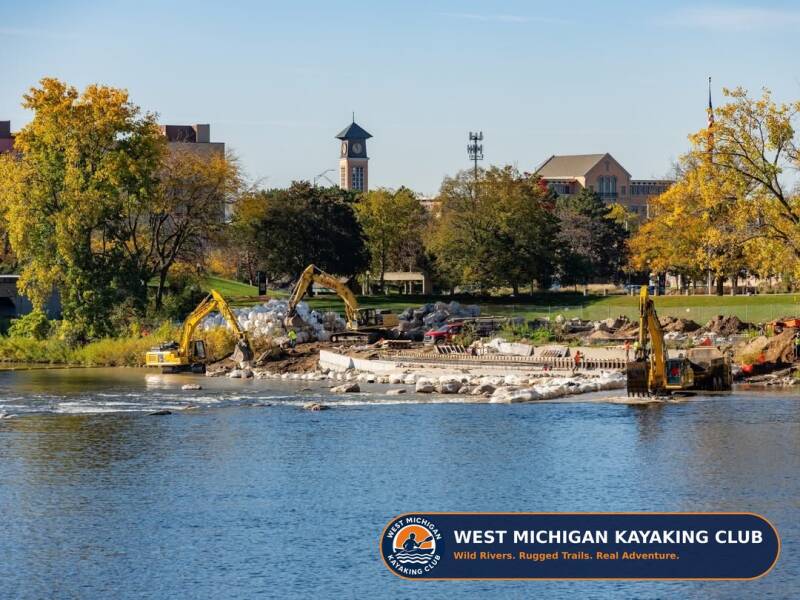
The project includes the removal of four low-head dams and the installation of natural rock structures designed to recreate portions of the river’s historic flow patterns.
These improvements are intended to:
- Restore natural rapids and improve river flow.
- Eliminate dangerous hydraulic conditions associated with low-head dams.
- Improve fish passage and aquatic habitat.
- Create additional habitat for native Great Lakes fish and mussel species.
- Improve public access and recreational opportunities along the river.
The project is expected to continue through multiple construction seasons, with additional work planned for 2027.
The Rapids Are Already Beginning to Return
One of the most exciting developments during the first construction season has been the installation of natural rock features throughout the Lower Reach.
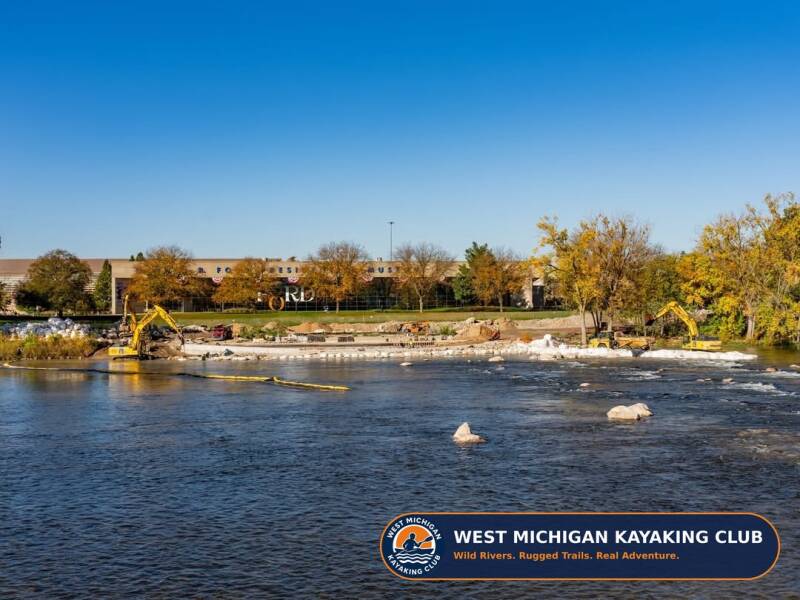
Crews have constructed temporary causeways and isolated sections of the river to safely complete the work. Large Michigan-sourced boulders have been strategically placed to create natural channel features and improve aquatic habitat.
Among the improvements already installed are:
Boulder drop structures: These structures help recreate natural changes in elevation while improving fish passage and creating more diverse water conditions.
Habitat boulders: Strategically placed rocks provide shelter, resting areas, and habitat diversity for aquatic wildlife.
J-hook structures: These arched rock formations help redirect currents, create slower-moving water and eddies, and improve conditions along portions of the river.
Construction and sediment controls: Temporary cofferdams, turbidity curtains, and causeways have helped crews isolate work areas and limit construction-related sediment disturbance.
The results are already becoming visible. Sections of the river look and sound different, and the returning rapids are beginning to restore some of the character that once defined this stretch of the Grand River.
Protecting the River’s Wildlife and Natural Habitat
Restoring a river is about much more than moving rocks and removing dams. It is about rebuilding an ecosystem.
The Grand River supports an incredible variety of aquatic life, including native Great Lakes fish species and freshwater mussels. Among the species benefiting from the project’s habitat goals are lake sturgeon, river redhorse, and the protected snuffbox mussel.
Environmental monitoring and wildlife relocation efforts have been important parts of the construction process.
By improving fish passage, restoring more natural flow patterns, and introducing habitat features, the project is working toward a healthier and more resilient river system.
For those of us who spend considerable time on Michigan’s rivers, these improvements matter.
A healthy river is a living river. It supports wildlife, connects ecosystems, provides recreational opportunities, and remains an important natural resource for future generations.
What This Means for Michigan Kayakers
At West Michigan Kayaking Club, we believe that protecting Michigan’s waterways and improving access to our rivers are important parts of preserving our outdoor heritage.
The Grand River is one of the region’s most significant waterways. It connects communities, provides opportunities for recreation, and offers paddlers an opportunity to experience West Michigan from an entirely different perspective.
The restoration project could eventually create a more dynamic paddling environment through downtown Grand Rapids.
Restored rapids and natural rock formations may provide new paddling opportunities at appropriate water levels. However, the final conditions will depend on the completed design, river flows, and seasonal conditions.
It is important to remember that this is still an active construction project. Paddlers should stay out of restricted construction areas and follow all posted closures and safety notices. The Sixth Street Dam remains a separate hazard and must still be portaged.
We look forward to seeing how the river develops as construction progresses and how these improvements will shape the future of recreational paddling in our region.
A Community Investment That Will Last for Generations
The Lower Reach Restoration Project is the result of an extraordinary partnership.
Project partners include:
- City of Grand Rapids — Project Lead
- Grand Rapids WhiteWater
- Michigan Department of Environment, Great Lakes, and Energy (EGLE)
- Lower Grand River Organization of Watersheds (LGROW)
- Grand Rapids Public Museum
- River Restoration Org
Construction Contractor: Taplin Group, LLC
The first season has already delivered significant progress, including newly installed rock structures and the beginning of dam removal work ahead of the original schedule.
The project is a reminder of what can happen when a community comes together with a shared vision for protecting and restoring its natural resources.
As Brad De Young and the members of West Michigan Kayaking Club continue exploring Michigan’s rivers, we will be watching this transformation closely.
The Grand River is more than a waterway running through downtown Grand Rapids. It is part of our region’s identity, history, and outdoor heritage.
And now, after generations of change, the river is beginning to reclaim some of what made it special in the first place.
The rapids are returning. The river is coming back to life. And the future of paddling in West Michigan is looking brighter.
Follow West Michigan Kayaking Club
Interested in exploring Michigan’s rivers, lakes, and waterways with other active paddlers?
Join West Michigan Kayaking Club, a Grand Rapids-based kayaking and outdoor adventure community.
Website: https://www.westmichigankayakingclub.online
Facebook Group: https://www.facebook.com/share/g/17wBZ9RP4w/
Wild Rivers. Rugged Trails. Real Adventure.
#WestMichiganKayakingClub #GrandRiver #GrandRapids #GrandRiverRestoration #GrandRapidsWhiteWater #MichiganKayaking #KayakersJournal #RiverRestoration #MichiganRivers
Keep Exploring
A New Gateway to the Grand River: Canal Park Reopens After $9.9 Million Transformation

Add comment
Comments