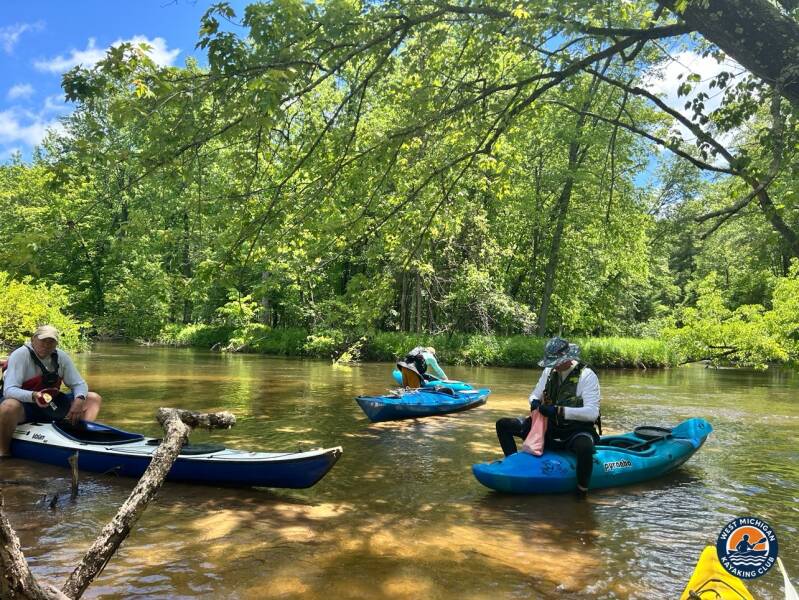
Michigan is built for paddling — two peninsulas, hundreds of rivers, and more freshwater shoreline than a person could explore in a lifetime. Most Michigan kayakers start the same way: a boat, a roof rack, and a stretch of river they drive over on the way to somewhere else. What changes everything is other people. If you have been looking into kayaking clubs in Michigan, you have probably already felt the pull: more water, more often, with people who know where to go and are glad you came along.
A good club does not just add company. It adds rivers you would never have found, skills you would have taken years to build alone, and a calendar that gets your boat off the rack and onto the water. Here is how kayaking clubs in Michigan actually work, how the different kinds of groups differ, and what to look for before you join one.
Why Paddle With a Club at All?
Start with local knowledge. Michigan rivers change constantly — a strainer that was not there in June is waiting in September, a stretch that runs beautifully at one water level is a scrape at another. Club members carry that knowledge in their heads because they were there last month, and they share it freely at the launch. Years of trial and error get handed to you over a morning.
Then there is the shuttle, the least glamorous and most practical problem in river paddling. A river trip starts in one place and ends in another, and somebody has to solve the vehicle puzzle. On a club trip, that choreography is handled — cars spotted at the take-out, drivers shuttled back, everyone paddling instead of problem-solving.
Skills grow faster in a group, too. You watch how experienced paddlers read a bend, handle a logjam, and pack a boat for a weekend, and you absorb it without a lesson ever being scheduled. And there is the calendar effect: a trip with a date, a meeting time, and people expecting you is far harder to skip than a vague intention to "get out sometime." That is how one paddle a summer becomes twenty.
The Main Types of Kayaking Groups in Michigan
Not all kayaking groups in Michigan are built the same way, and the differences matter more than the labels. Most fall into a few broad types.
Informal meetups and social paddling groups
These are loose communities, often organized through social media, where someone posts a time and a launch and whoever shows up, paddles. They are friendly, free, and a fine way to meet local paddlers. The trade-off is structure: experience levels vary widely, nobody is really in charge, and safety practices depend entirely on whoever happens to be there that day. Fine for easy water and self-reliant paddlers; less ideal when you are learning or tackling new rivers.
Outfitter-led trips
Canoe and kayak liveries and outfitters across Michigan run organized trips where the business provides the boats, the transport, and a staff member who leads the group on the water. These are a genuinely good way to try paddling for the first time or enjoy a river while traveling, with no gear to own and nothing to plan. What they are not is a community — you paddle with strangers, pay per trip, and the experience ends at the take-out. Many club members started exactly this way and joined a club when they wanted more.
Race and performance clubs
Some Michigan paddling clubs are built around competition — marathon canoe and kayak racing has deep roots in this state, most famously on the AuSable. These groups train together, share a start line, and measure the season in race results. If your idea of a good paddle involves a stopwatch, a training schedule, and improving your time year over year, a racing club is a strong fit. If it does not, the next type probably is.
Member-led adventure clubs
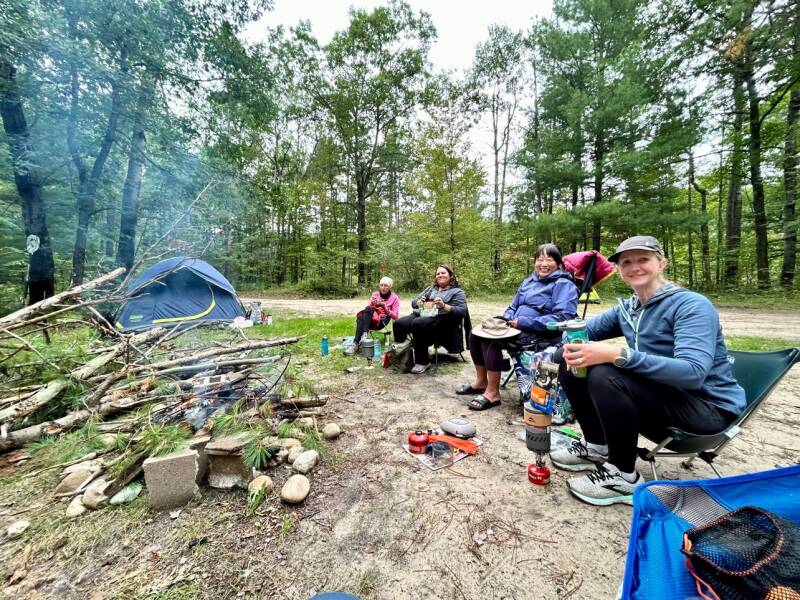
In a member-led club, the members themselves plan the routes, lead the trips, and set the culture. Trips are organized by people who paddle the water for the love of it, participants bring their own boats and gear, and everyone is responsible for their own decisions on the water. This model tends to produce the widest variety — day paddles close to home, multi-day river expeditions, kayak camping, and often hiking, backpacking, and cycling in the mix — because the trip list grows out of whatever the members want to explore. It is also the model that builds real skills and real friendships, because the same people keep showing up. West Michigan Kayaking Club is built this way, and it is the type of Michigan paddling club this article knows best.
What to Look for in a Michigan Paddling Club
Whatever type you are considering, a few questions separate a healthy club from a headache:
- Is there a real calendar? A club that publishes its trips in one place, with dates, rivers, and meeting details, is a club that actually runs trips. Our own club calendar is the single source of truth for everything we run — look for that level of organization anywhere you join.
- Are trips rated honestly? Rivers differ, and so do paddlers. A good club labels difficulty clearly and means it, so a beginner does not end up on advanced water and an experienced paddler knows which trips will challenge them.
- What is the safety culture? Look for a club that treats PFDs as non-negotiable, talks about water levels, and plans for things going wrong. You can read our club safety guidelines to see what that looks like in writing — any club you join should be able to show you the same.
- What are you responsible for? In member-led clubs, trips are self-supported: your boat, your gear, your shuttle contribution, your decisions. That is a strength, not a gap — but you should know it before your first launch, not after.
- What does it cost? Some clubs charge dues, some charge per trip, and some — including ours — are free. There is no wrong answer, but there should be a clear one.
- Is there a progression? The right club lets you start where you are and grow: easier water first, longer days next, and expeditions when you are ready.
Safety Is a Team Sport
The deepest benefit of club paddling is not social at all — it is that a group is safer than a solo paddler in almost every way that matters. There are more eyes on the water, more hands if a boat pins or a paddler swims, and more experience in the group to recognize a bad situation before it becomes one.
Good clubs build safety into the routine rather than the rescue. Members check levels before launch on pages like our current water levels page, which gathers the relevant gauges in one place, backed by real-time data from the U.S. Geological Survey. Somebody files a trip plan with a person staying home. Everyone dresses for the water temperature, not the air temperature — a rule that matters enormously in Michigan spring and fall. And everyone knows the state rules that apply to paddlers, which the Michigan Department of Natural Resources publishes and enforces.
None of that requires a club, strictly speaking. It just happens far more consistently inside one.
Where Club Paddling Leads: Michigan Kayak Adventures
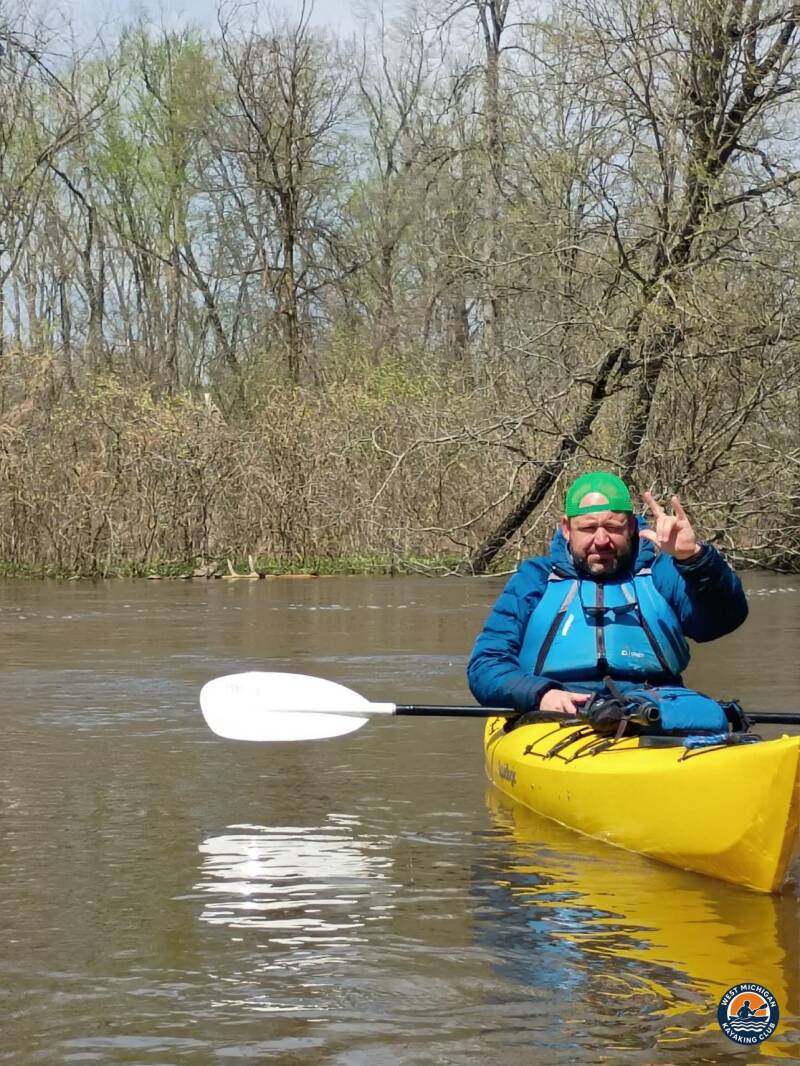
Join a club for the company and you stay for the map. The real product of organized paddling is a widening circle of Michigan kayak adventures you would not have attempted alone: a long day on the Manistee River through national forest, a fall weekend on the AuSable, a first night of kayak camping with your whole camp in your hatch, a new river in a part of the state you had never visited. Clubs keep libraries for exactly this — our Lower Peninsula river guide collects the club's river knowledge in one place, and our trip reports show what actual club trips look like, flows, weather, logjams and all.
That progression — local water, then longer water, then overnight water — is the arc of most members' paddling lives. A club simply makes each step arrive sooner, with better company and better information.
A Grand Rapids Kayaking Club, Up Close
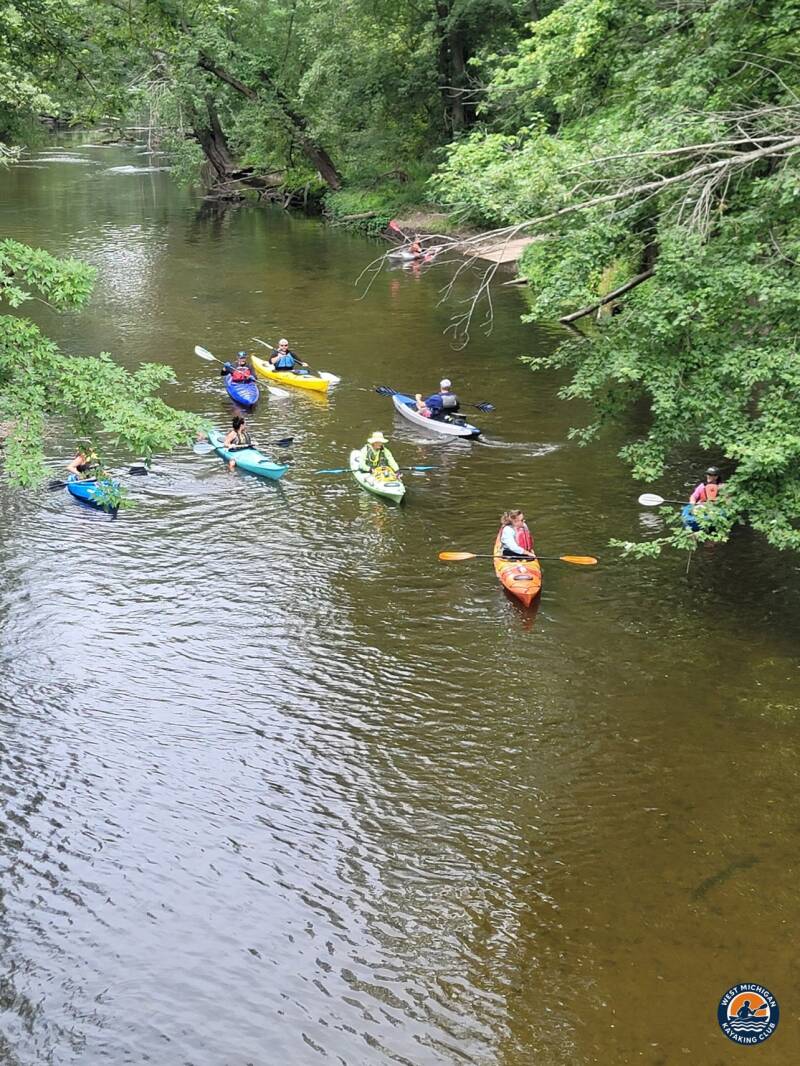
So what does this look like in practice? West Michigan Kayaking Club was founded in Grand Rapids in 2019 by Brad De Young and Tim Postma, and has grown to more than 2,000 members. It is a member-led Michigan kayaking club: no dues, no fees, and a trip list built by the people who paddle it. In 2026 the club ran 76 sponsored trips — Grand River evenings close to home, day trips across West Michigan, and multi-day expeditions on the Manistee and AuSable — alongside kayak camping, hiking, backpacking, and cycling.
If you are looking for a Grand Rapids kayaking club specifically, that is the shape to expect: local roots, statewide range, and a calendar that stays full because the members keep filling it.
Your First Club Trip
Start smaller than your ambition. Pick an easier-rated trip, show up early, and ask the questions everyone is happy to answer — where the take-out is, what the pace will be, what to do at the first logjam. Bring your own boat and gear if you have them, wear your PFD, and paddle honestly within your skills. Read a few trip reports in The Kayakers Journal beforehand and you will arrive knowing exactly what a club day feels like.
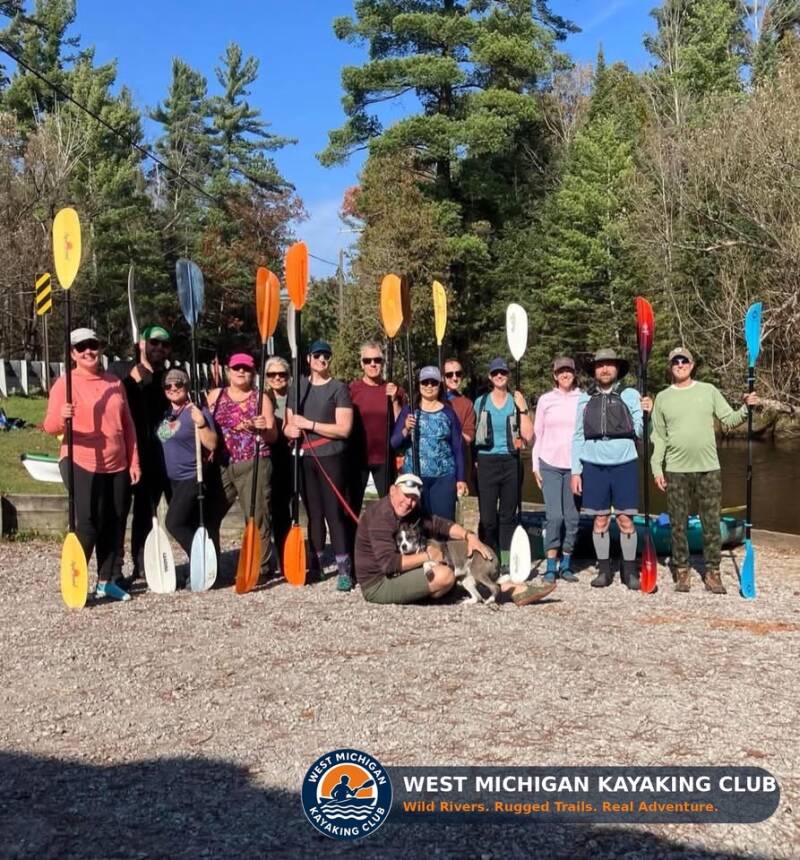
Michigan's rivers are not going anywhere. The only real question is how many of them you will paddle, and who will be in the photo at the take-out.
Explore Michigan with West Michigan Kayaking Club
Looking for more than an occasional paddle? Join the West Michigan Kayaking Club, a Grand Rapids-based outdoor adventure community exploring Michigan's rivers, lakes, trails, and wilderness.
Our adventures include active day paddles, multi-day river expeditions, kayak camping, hiking, backpacking, cycling, and outdoor exploration.
We believe in getting out there, covering miles, and discovering what's around the next bend.
Wild Rivers. Rugged Trails. Real Adventure.
Membership is free. There are no dues or membership fees.
Website: https://www.westmichigankayakingclub.online
Become a member: https://www.westmichigankayakingclub.online/become-a-member
Facebook community: West Michigan Kayaking Club
By Brad De Young | Co-Founder, West Michigan Kayaking Club
The Kayakers Journal
Add comment
Comments