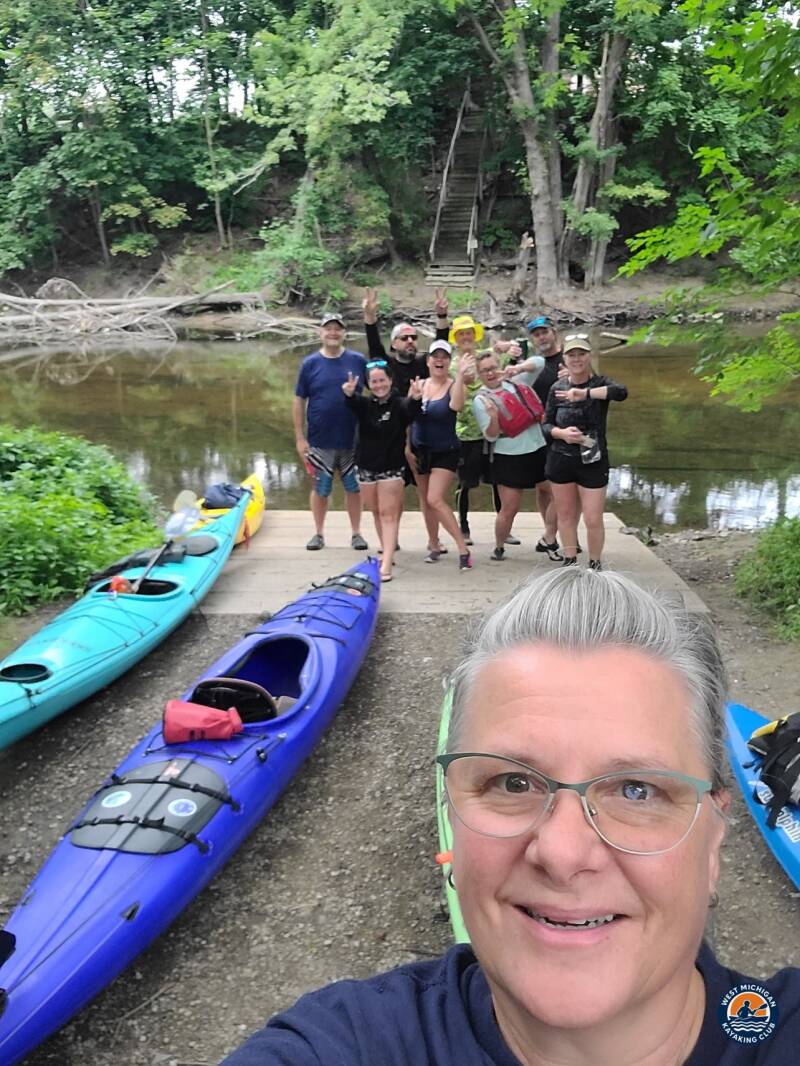
Owning a kayak is the easy part. The harder part — the part that decides whether you paddle six new rivers this year or the same lake twice — is finding the right people to paddle with. If you are comparing Michigan kayaking clubs, you have real choices: informal meetup groups, traditional membership clubs, commercially run paddling programs, and expedition-minded communities all operate in this state, and they are not interchangeable.
The difference between a club you try once and a club you stay with for years rarely shows up in a logo or a mission statement. It shows up at the launch: in who is in charge, in what the trip description didn't say, and in whether anyone checked the water level that morning. This is a practical checklist for evaluating any Michigan paddling club before you commit your weekends — the things to look for, and the questions to ask.
Comparing Michigan Kayaking Clubs: Start With the Trip Calendar
Before you read a club's "about" page, read its calendar — last season's, not just next month's. A calendar is the one document a club cannot fake. It shows how often trips actually run, what kinds of water the group really paddles, and whether the season has a rhythm or just a couple of outings surrounded by silence.
Look at the spread. A club whose calendar is all short, easy water serves a different paddler than one mixing day trips with multi-day expeditions. Neither is better in the abstract — but one of them matches the paddler you are, and the one you want to become. Read the descriptions, too. Honest trip listings include the distance, the expected pace, the put-in and take-out, and the hazards that matter on that stretch. Vague listings — "fun river day, all welcome!" — are not a crime, but they are information: they tell you the organization behind them is loose.
West Michigan Kayaking Club treats its calendar as the single source of truth for exactly this reason: if it is not on the calendar, it is not an official trip. Whatever club you are evaluating, ask where its source of truth lives. If the honest answer is "somewhere in the group chat," adjust your expectations accordingly.
Leadership: Who Is in Charge at the Launch?
Every good river trip has someone who has run that stretch before, knows where the take-out is, and thought about the shuttle before breakfast. When you evaluate a club, find out who leads its trips and how those people end up in charge.
Healthy signs: trip leaders are named in advance, not decided in the parking lot. They have personal experience on the specific river being paddled, not just general enthusiasm. The club has more than one or two people capable of leading, so the whole program does not rest on a single volunteer's free time. And the people in charge are willing to make unpopular calls — shortening a route, splitting a group, or cancelling outright when conditions say so.
Questions worth asking: Who is leading Saturday's trip, and how many times have they paddled that river? What happens if that person can't make it? Has the club ever steered someone away from a trip that was beyond their skills? A well-run club answers all three without blinking. A group where "we're all just friends meeting up" is the entire plan may still be fun — but go in understanding that on the water, you are your own leader.
Safety Culture Tells You Almost Everything
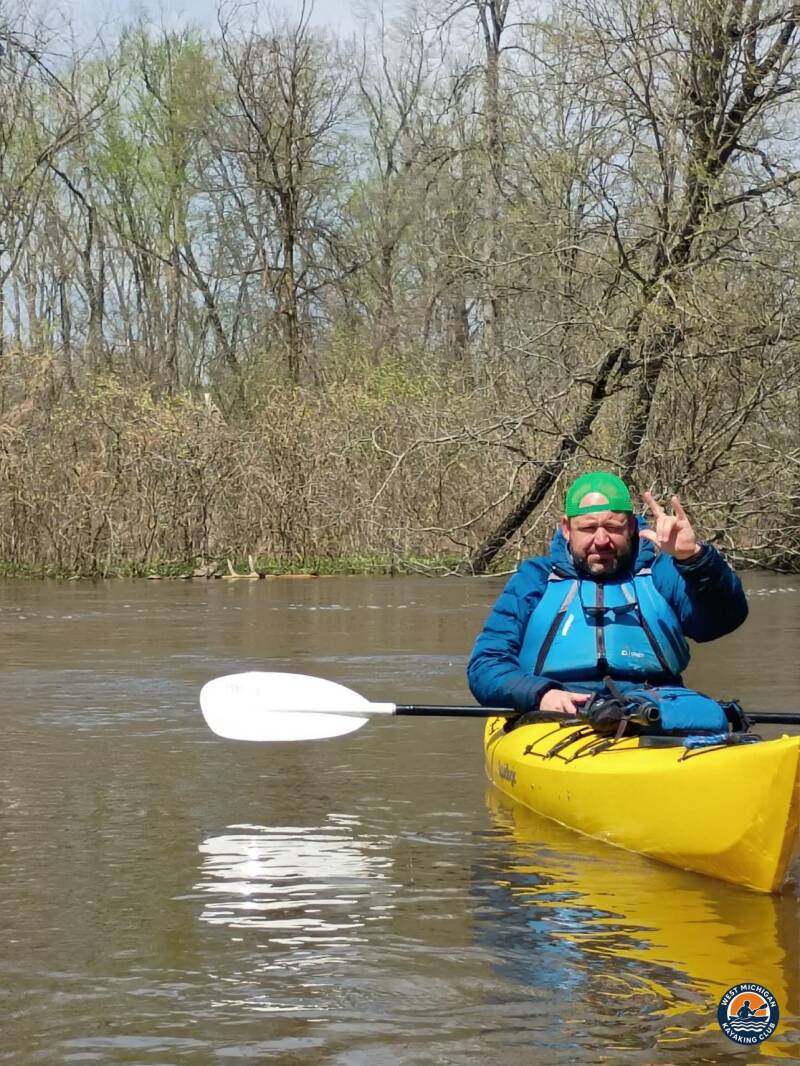
If you evaluate only one thing, evaluate this. A club's safety culture is the sum of small, consistent habits, and you can see most of them from the outside before your first trip.
Start with the PFD rule. On any club worth joining, a properly fitted life jacket is worn on the water — not carried, not strapped to the deck. Worn. Michigan law sets the minimum requirements, and the Michigan Department of Natural Resources publishes them; clubs with a real safety culture set their own bar at or above that floor and hold it without apology. Written standards are a good sign — our safety page is one example of what "written down" looks like.
Next, look at how trips are rated. A difficulty scale only helps if it is honest. Rated trips should come with the distance, the pace, the current, and the known hazards — strainers, low-head dams, cold water, long carries around obstacles. When a club's hardest trip reads suspiciously like its easiest one, the ratings are decoration.
Finally, watch how the club treats water levels and weather. Michigan rivers change fast, and durable clubs check the gauges before a trip — our current water levels page gathers the relevant ones, and the U.S. Geological Survey publishes the real-time data behind them — and they are willing to move or cancel a paddle when the numbers are wrong. Ask directly: "When did you last cancel a trip for conditions?" A club that has never cancelled anything is not lucky. It is not checking.
Organization: Shuttles, Sign-Ups, and the Morning-Of Test
River trips are logistics with scenery. Somebody has to set the shuttle, pick the meeting time, and decide what happens when the forecast changes at 6 a.m. Organized clubs make all of that boring on purpose.
The shuttle is the classic failure point. On a point-to-point river trip, vehicles have to end up at the take-out, and the plan for that should exist before launch day — who drives, when, and in what order. If a club's trips regularly begin with forty minutes of parking-lot improvisation, that improvisation is the product.
Communication is the other half. Find out where official trip information lives and how changes reach you: a calendar, an email list, a Facebook group, a group chat. The channel matters less than the discipline — one place, kept current, that members are expected to check. Ask how sign-ups work, whether group size is capped, and who you contact the morning of a trip. Then apply the simplest test of all: show up for one well-matched outing and watch the first fifteen minutes.
What It Costs — and What the Money Buys
Kayaking groups in Michigan run the full pricing spectrum. Some communities are entirely free, organized by volunteers. Some traditional clubs charge annual dues. Commercially run groups may charge per trip, and outfitter programs fold instruction and rental gear into the price. None of these models is automatically better — but you should know exactly what your money buys: insurance, instruction, maintained gear, permitted access, or simply organization.
Also price the hidden requirements. Do you need your own kayak and gear, or are rentals available? Are there per-trip costs — campsite fees on overnight trips, park passes, shared shuttle expenses? Does joining require a membership form or signed participation agreement? Many clubs ask for one; it is a sign of organization, not a red flag.
Ask for the all-in number: "What does a typical member actually spend in a season?" A transparent club can answer that in a sentence or two.
Experience Levels: Room to Start, Room to Grow
The right club fits the paddler you are today and leaves a path to the paddler you want to be in two years. Those are two separate tests, and a good Michigan kayaking club passes both.
For today: are there trips genuinely appropriate for your current skills, described honestly enough that you can tell? A beginner-friendly club does not just say "all levels welcome." It runs specific outings where a newer paddler can learn alongside experienced members, and it will steer you away from water you are not ready for. Being told "not yet" by a trip leader is a feature. It means somebody is paying attention.
For two years from now: does the club offer a progression? Longer distances, livelier water, expedition skills, kayak camping — if your ambitions grow, will the calendar grow with you, or will you outgrow the group within a season? The strongest sign is seeing members at visibly different levels inside the same program: newer paddlers on the Saturday day trip, veterans loading boats for a four-day expedition the following weekend.
The Adventures Themselves
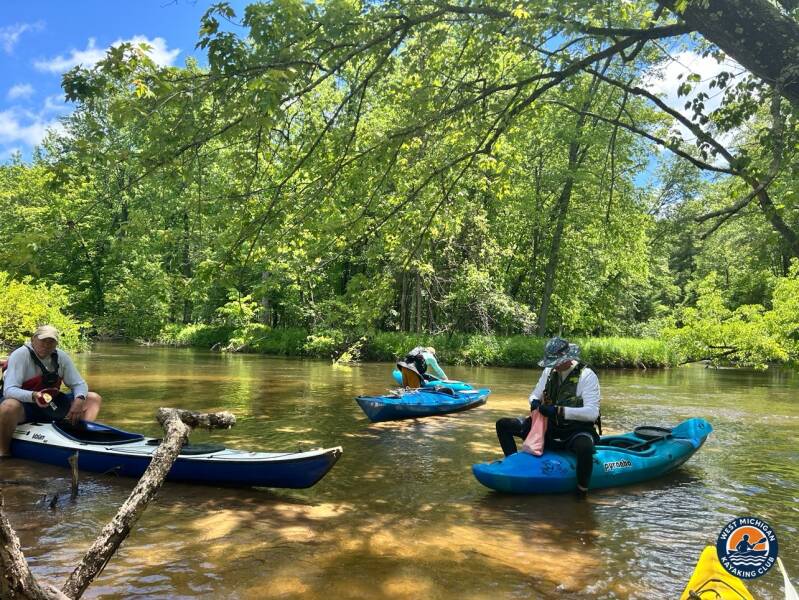
Finally, weigh the menu. Michigan's clubs collectively offer day paddles on local rivers, evening series through the summer, weekend trips up north, multi-day river expeditions with kayak camping, and — in some communities — hiking, cycling, and other outdoor trips alongside the paddling. Decide what you actually want more of. If your goal is mileage and new rivers, a club whose season peaks at a monthly two-hour paddle will frustrate you no matter how friendly it is. If you want relaxed social paddling, an expedition-driven calendar will feel like homework.
Do some reading before you ever show up. Clubs that publish trip reports give you the truest preview of their trips — the distances, the conditions, the character of the days. You can browse ours in The Kayakers Journal to see what documented trips look like, and the club's river guides show the water those trips run on. Whatever club you are considering, its paper trail is worth an evening of your time.

One Worked Example: West Michigan Kayaking Club
To make the checklist concrete, here is how one Michigan kayaking club — ours — is set up. Treat it as a worked example, not a verdict; a different structure may honestly suit you better.
West Michigan Kayaking Club was founded in Grand Rapids in 2019 by Brad De Young and Tim Postma, and now counts more than 2,000 members. Membership is free — there are no dues. The club is member-led and self-supported: trips are organized by experienced members, and every participant brings their own boat and gear and is responsible for their own decisions on the water. Trips are rated by difficulty, PFDs are required and worn, and the club calendar is the source of truth for what is official, with the club's Facebook group serving as the primary day-to-day coordination channel. In 2026, the club ran 76 sponsored trips, from local day paddles to multi-day river expeditions.
Run those facts back through the checklist and the trade-offs are plain. Free and volunteer-run means no paid staff and no rental fleet. Self-supported means you need your own gear. A big, active calendar means you are expected to read trip descriptions and choose your water honestly. For the members who stay, that is exactly the point. For someone who wants instruction included or gear provided, a different kind of organization will serve them better — and now you know how to tell the difference before you join.
The Questions to Ask, All in One Place
Print this list, or keep it on your phone, before you join anything:
- Who leads the trip, and how many times have they paddled this river?
- Are PFDs required — and worn — on every trip?
- How are trips rated, and who helps me decide if a trip is right for me?
- When did the club last cancel or move a trip because of water levels or weather?
- Where does official trip information live, and how do changes get announced?
- How does the shuttle work, and what will it cost me in time or money?
- What does membership cost across a full season, all in?
- Do I need my own kayak and gear?
- What would a realistic first trip look like for someone at my level?
- What do the club's biggest trips look like — distance, days, difficulty?
How to Join a Kayaking Club Once You've Chosen
Joining usually takes minutes — a membership page, a form, a follow on the club's channel. Ours is the become a member page. The real joining is slower: show up for a trip matched to your level, introduce yourself at the launch, and paddle. Clubs are communities, and communities are built at take-outs and on shuttle rides as much as on the water. Give a club two or three well-chosen trips before you decide. If the checklist said the fundamentals were sound, the people will usually take care of the rest.
Explore Michigan with West Michigan Kayaking Club
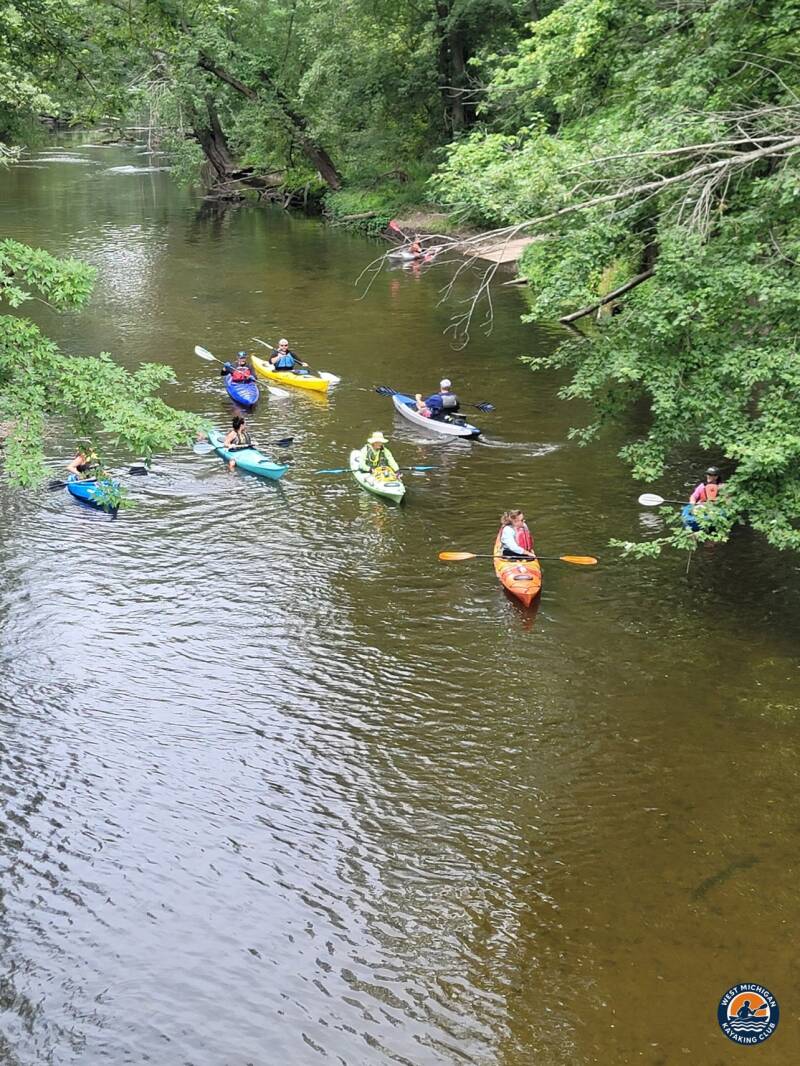
Looking for more than an occasional paddle? Join the West Michigan Kayaking Club, a Grand Rapids-based outdoor adventure community exploring Michigan's rivers, lakes, trails, and wilderness.
Our adventures include active day paddles, multi-day river expeditions, kayak camping, hiking, backpacking, cycling, and outdoor exploration.
We believe in getting out there, covering miles, and discovering what's around the next bend.
Wild Rivers. Rugged Trails. Real Adventure.
Membership is free. There are no dues or membership fees.
Website: https://www.westmichigankayakingclub.online
Become a member: https://www.westmichigankayakingclub.online/become-a-member
Facebook community: West Michigan Kayaking Club
By Brad De Young | Co-Founder, West Michigan Kayaking Club
The Kayakers Journal
Add comment
Comments