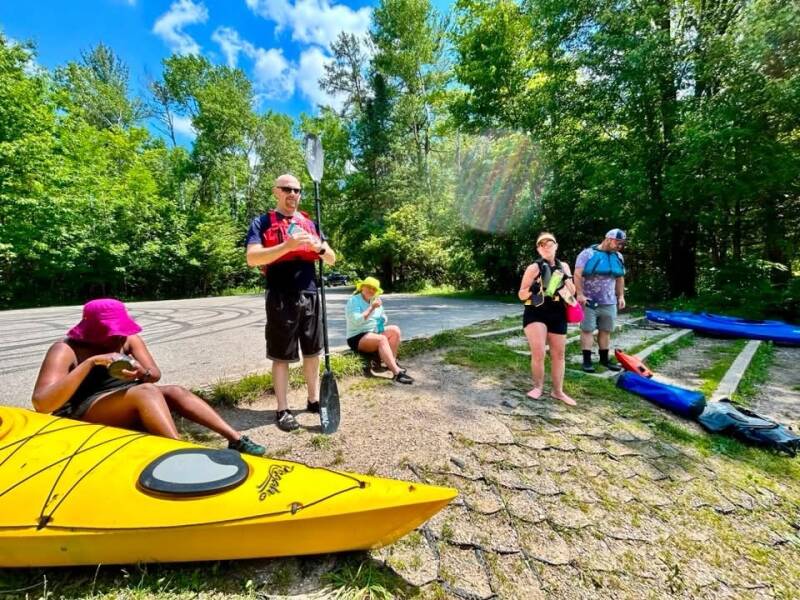
A kayak camping trip is two trips at once: a river trip and a camping trip, each small enough to fit inside a kayak. Done well, it is the finest way we know to see this state — you travel the way the river travels, sleep where the day ends, and wake up already on the water. Done carelessly, it is a wet sleeping bag, a swamped boat, and a long walk. The difference is rarely paddling skill. It is planning.
What follows is the planning method our members use for Michigan river expeditions, from the first map session to the trip plan you leave with a friend: the step-by-step version of planning a kayak camping trip that turns a good idea into a boat that sits level and a camp that works.
Step One: Choose the Route for Your Kayak Camping Michigan Trip
Start with the water, not the gear. Pick a stretch that matches your group's honest skill level — not the level you hope to have by launch day. Look at the character of the water first: current speed, obstacles like logjams and tight bends, how remote the banks are, and how many bail-out points exist if someone must leave early. A route with access points every few miles is forgiving; a stretch that commits you to two full days between take-outs is not, and it should be earned with shorter trips first.
Then answer the camping question before anything else: where, legally, will you sleep each night? On some rivers that means designated campgrounds; on others, dispersed camping on public land may be an option; on many stretches the banks are private and the answer is "you don't." There is no statewide rule to memorize — permissions, fire rules, permits, and fees vary by river and by land manager, so check with the Michigan Department of Natural Resources, the U.S. Forest Service, or the local authority, and verify before you go. Our own multi-day trips are built this way — the club's three-day Manistee River trip and our AuSable River trip, based at Canoe Harbor State Forest Campground, both started with confirmed places to sleep. Read how they unfolded in the Manistee River trip report and the AuSable River trip report.
Daily Mileage: Do the Honest Math
More kayak camping trips are spoiled by ambitious mileage than by bad weather. A loaded boat is slower, camps take time to make and break, and rivers add delays — a logjam portage, a headwind, a swim that becomes a full stop-and-dry-out. Plan around the slowest realistic version of your group, not the fastest.
A workable framework: take your comfortable unloaded day-trip distance, and cut it by a third for a loaded expedition. Known obstacles, tight technical water, or mixed group experience? Cut it further. Build the first day short — an easy day lets you fix loading mistakes while they are still small. Put the longest day in the middle, when systems are practiced and food weight is dropping, and keep the final day modest so a delay cannot become a missed shuttle. Add the discipline that saves trips: a turnaround rule agreed in advance. If the group is not at a named checkpoint by a set time, the plan changes — shorter day, earlier camp — no debate.
Packing the Boat: Weight, Trim and Access
Load the boat like a boat, not a closet:
- Heavy low and centered. Dense items — water, food, the kitchen — go low in the hull, close to the cockpit, where their weight helps stability instead of fighting it. Light, bulky items — sleeping bag, clothing, tent fabric — go in the ends.
- Balance side to side, then mind the trim. Load both sides evenly, then sit in the boat on calm water and check how it sits. Most paddlers prefer level or very slightly stern-heavy. A bow-heavy boat wanders and buries its nose in waves; fix trim at the launch, not at mile six. Test the whole load before the trip, too: a full boat handles differently — slower to turn, lower, clumsier — and ten minutes of surprise at home beats three days of it.
- Day gear stays reachable. Rain gear, lunch, water, sunscreen, and the safety kit should be accessible without a shore stop — cockpit, day hatch, or a small deck bag. Anything you must unpack the boat to reach does not exist during the day.
- Respect the capacity. Every kayak has a weight limit that includes you. If the full kit does not fit below deck, the answer is a bigger boat, less gear, or a shorter trip — not a tower of bags lashed on deck, raising your center of gravity and catching wind.
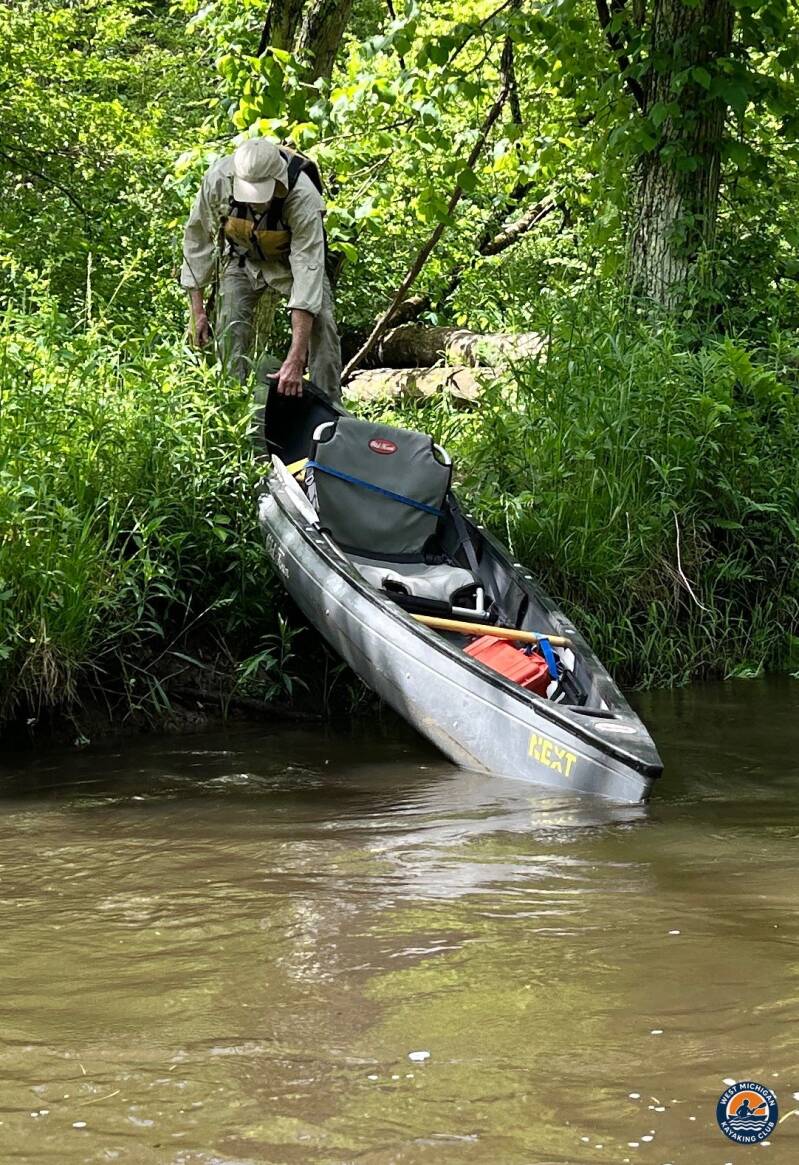
The Dry Bag System
Everything in a kayak eventually gets damp; the goal is that nothing important gets wet. Treat dry bags as a system, not a pile. Give each category its own bag: sleep kit, camp clothing, kitchen, small ones for personal items and electronics. Use consistent colors or sizes per category, so you can find the right bag by feel in a dark hatch.
Two habits make the system work. First, redundancy for the things that end trips: the sleeping bag and your warm layer get a bag inside a bag, or a bag inside a hatch you have verified stays dry. A wet meal is annoying; a wet sleeping bag on a cold night is a safety problem. Second, pack by time of day — the lunch bag, the camp bag, and the emergency kit are three different bags. Packed that way, camp setup takes minutes and the boat repacks identically every morning.
A Working Kayak Camping Gear List
Gear lists should be boring, complete, and checked off physically — touch each item as you pack it.
Shelter and sleep
Tent or hammock system with rain protection, sleeping bag rated honestly for the coldest night you might get (not the average), an insulated sleeping pad — on cold ground the pad matters as much as the bag — and a small repair kit.
Kitchen and water
A compact stove and fuel, a pot sized to your group, utensils, a lighter kept dry plus a backup, and food storage that follows local rules — some areas require specific containers or hangs; verify with the land manager. For water, carry the day's supply plus a treatment method — filter, purifier, or chemical — because Michigan river water is not drinking water until you treat it.
Clothing
Paddle in synthetics or wool, never cotton, and keep one complete dry set sealed away for camp and sleeping only. Rain shell and pants, warm layers, camp footwear, hat and gloves when the season calls for them. Michigan shoulder seasons punish optimists: pack for the forecast's coldest number, not its warmest.
Safety and repair
PFD worn at all times, whistle, knife, a first aid kit someone in the group actually knows how to use, headlamp, map and compass (and the knowledge to use them), a boat repair kit, a spare paddle for the group, and warm emergency clothing sealed and untouched unless needed. Our club's safety page covers the standards we hold on every trip.
Feeding the Trip
River food should be simple, dense, and forgiving of delays. Plan dinners around one-pot meals that rehydrate or cook in minutes — paddlers are tired and hungry at the end of the day, and elaborate cooking loses its charm fast. Pre-measure ingredients at home, pack each meal in its own labeled bag, and carry one full extra day's worth of food on any multi-day trip. Weather, wind, and longer-than-expected days happen.
Lunches and snacks deserve as much thought as dinners, because they are what actually fuel the paddling. Keep them accessible in the day hatch or deck bag, and position the afternoon snacks where you can reach them without unpacking the boat. Fresh food travels well for the first day or two; after that, plan on shelf-stable food and treat any perishables with suspicion.
Choosing a Campsite
On Michigan's managed rivers, use designated sites where they exist — they come with fire rings, tent ground, and a location designed for low impact. Where dispersed camping is legal on public land, choose an established-looking spot on durable ground, well above the waterline and set back from the river, and check for dead trees or leaning snags — widows' hazards — before you pitch anything.
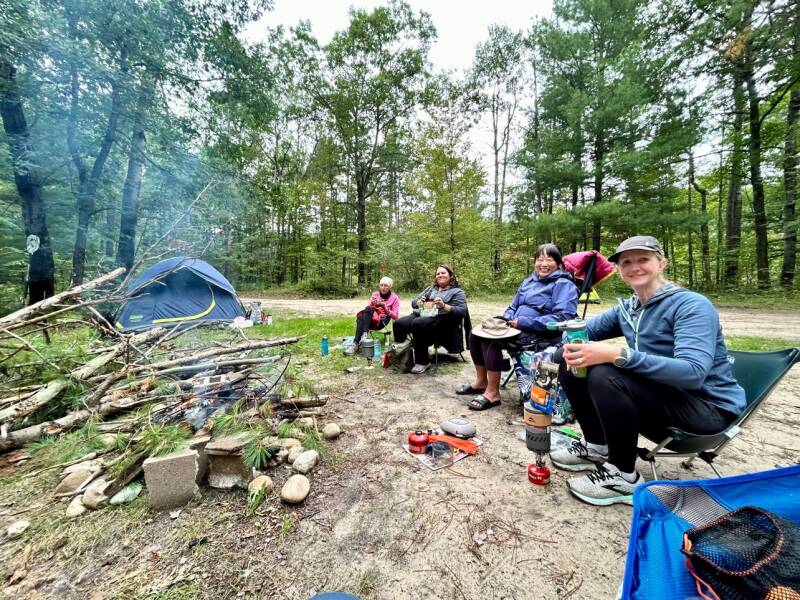
Stop early enough to set camp calmly. The classic mistake is paddling to exhaustion and then pitching tents at dusk in the rain. Arrive with daylight left: unload, set shelter, filter water, start dinner. A river evening should be the reward, not a rescue.
Weather and Water: Check, Then Check Again
Planning starts with the forecast and the gauges — and continues until you launch. Check current water levels before any Michigan trip, and if you want the primary source, the USGS water data gauges behind those levels publish readings around the clock. Rising water after upstream rain changes everything downstream in a day: strainers multiply, current strengthens, and yesterday's easy wading becomes today's hazard.
Then set thresholds and honor them. A thunderstorm forecast triggers a plan change, not a wait-and-see. High or fast water shrinks your margins for the whole trip, no matter how the sky looks at breakfast. And keep checking from camp — conditions upstream, out of sight, are what arrive by morning.
Emergency Planning: The Plan You Leave Behind
Before any expedition, someone not on the trip — a spouse, a friend, club leadership — gets the plan: the route, put-in and take-out, the vehicles, the expected end time, and the overdue procedure. If you have not surfaced by a stated time, that person starts making calls. Phone coverage on many Michigan rivers is patchy to nonexistent, so the plan cannot depend on a call that may never be possible.
Within the group, decide the emergency roles before you need them: who carries the first aid kit, who is the strongest swimmer, how far apart boats may spread, and the turnaround rules — if the group splits or the weather turns, what triggers a stop? On the water, an expedition is a team with a plan; off the plan is exactly when the plan matters.
Leave It Better Than You Found It
Pack out everything, including other people's carelessness when you can. Camp on durable surfaces, keep fires in established rings and dead out cold, and leave campsites cleaner than you found them. Michigan's rivers stay wild partly because the people who love them behave as if the next group matters — because it does, and it is usually us.
Explore Michigan with West Michigan Kayaking Club
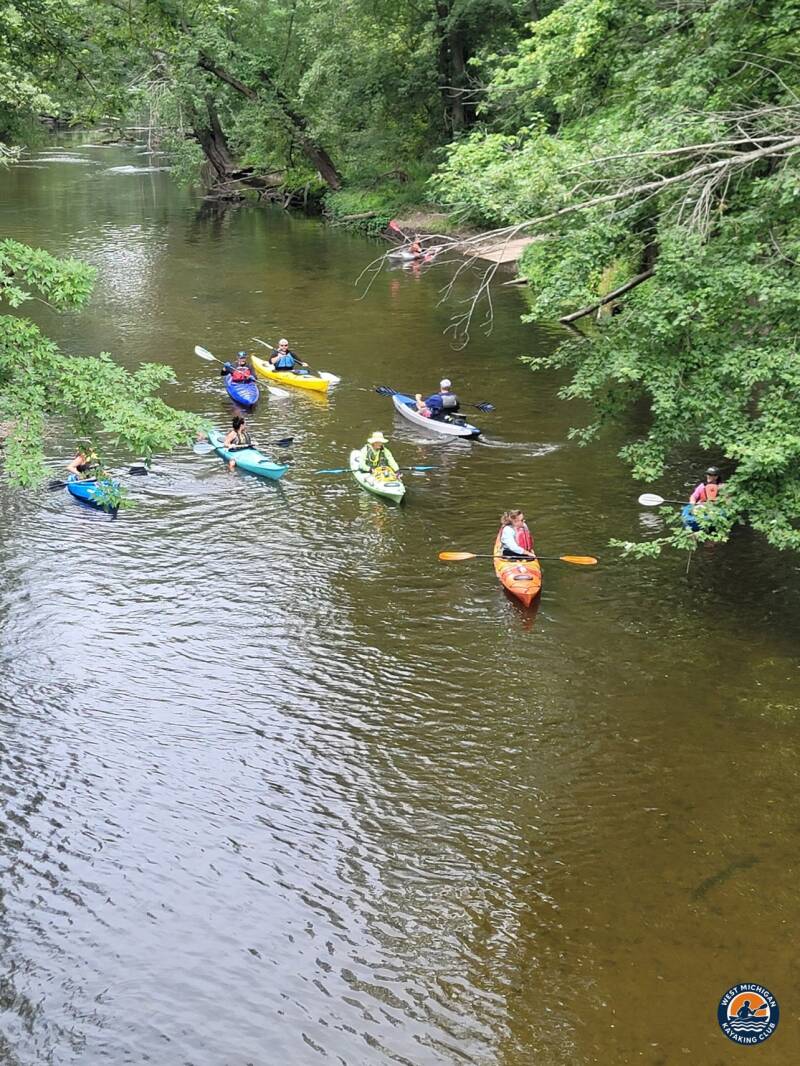
Looking for more than an occasional paddle? Join the West Michigan Kayaking Club, a Grand Rapids-based outdoor adventure community exploring Michigan's rivers, lakes, trails, and wilderness.
Our adventures include active day paddles, multi-day river expeditions, kayak camping, hiking, backpacking, cycling, and outdoor exploration.
We believe in getting out there, covering miles, and discovering what's around the next bend.
Our multi-day Manistee and AuSable expeditions — and the Nordhouse Dunes trip planned for June 3–6, 2027 — are listed on the club calendar.
Wild Rivers. Rugged Trails. Real Adventure.
Membership is free. There are no dues or membership fees.
Website: https://www.westmichigankayakingclub.online
Become a member: https://www.westmichigankayakingclub.online/become-a-member
Facebook community: West Michigan Kayaking Club
By Brad De Young | Co-Founder, West Michigan Kayaking Club
The Kayakers Journal
Add comment
Comments