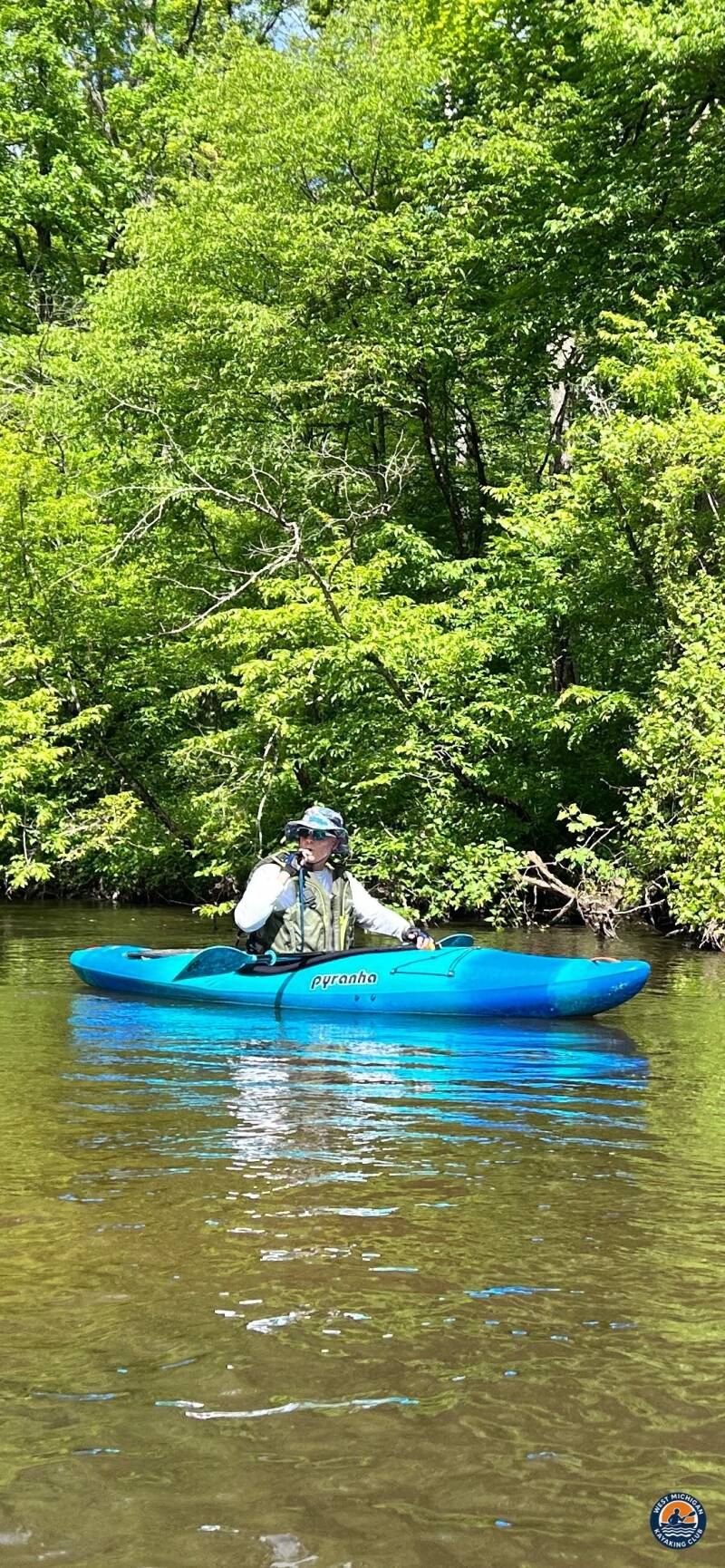
Ask a Grand Rapids paddler where to go kayaking and you will not get one answer — you will get five, and an argument about which is best in which season. That is the good problem with kayaking near Grand Rapids: the city sits in the middle of a small network of rivers, each one with a different personality. One is a big valley river running through downtown. One is a cold, shaded trout stream minutes north. One is gentle enough for a first season, and one, about an hour away, is long enough to turn a day trip into an expedition.
This guide walks through the five rivers our club paddles most around home: the Grand, the Rogue, the Thornapple, the Flat, and the Muskegon. For each one, we cover the character of the water, who it suits, and what to think about before you go. For launches, access points, and stretch-by-stretch detail, each section points to the club's full river guide — that is where the launch-by-launch information lives, and it is worth reading before any first trip on new water.
1. The Grand River — Big Water in the Middle of Town
The Grand is the river Grand Rapids is named for, and it is the easiest answer to anyone searching for kayaking in Grand Rapids, MI: it is already here. At roughly 252 miles, it is the longest river in Michigan, and it bends right through downtown past the bridges and the Fish Ladder before continuing southwest toward Lake Michigan.
What surprises new paddlers is how much the Grand changes from stretch to stretch. Above the city, it is a wide valley river moving through farmland and woods. Through town, it is an urban paddle with skyline views. Below Grand Rapids, it widens and slows on its way to the big lake. Because of that range, the Grand suits nearly everyone — newer paddlers on its calmer stretches, experienced paddlers looking for a long day — but it asks one thing in return: respect for water level. The Grand responds to rain and season more than the smaller rivers on this list, so the same stretch can paddle very differently in April than in August.
Plan a Grand River day around the gauge, not just the calendar, and use our Grand River guide for the stretches and access detail.
2. The Rogue River — Cold, Clear, and Shaded in Rockford
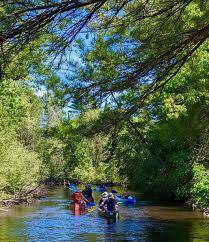
If the Grand is the region's big river, the Rogue is its quiet counterpoint. Flowing through Rockford before it joins the Grand, the Rogue is a designated Michigan Natural River: cold, clear, and shaded by a nearly continuous canopy. Rogue River kayaking feels like a northern Michigan trout stream that happens to sit in Kent County, minutes from the city.
The Rogue's character is intimate. It is narrower and more winding than the Grand, with bends that come one after another and downed wood that appears where the current puts it. That makes it a river for paddlers with basic boat control — the ability to steer with intent, edge a boat around a bend, and stop where you mean to stop. It is not a difficult river, but it rewards attention in a way open water does not, and it is many of our members' favorite classroom for building real river skills.
Because it is spring-fed and shaded, the Rogue also stays cool and green deep into summer, when bigger water can feel exposed and hot. Our Rogue River guide covers launches, seasonal notes, and the stretches to know.
3. The Thornapple River — The Grand's Wooded Neighbor
The Thornapple joins the Grand at Ada, southeast of Grand Rapids, and paddlers around Middleville know its upper stretches well. It is a smaller river than the Grand with a more enclosed, wooded feel — the kind of water where the banks close in, the current does some of the work, and a heron lifting off ahead of you is a normal part of the morning.
The Thornapple's defining trait is variety. Some stretches are quiet and slow-moving; others are livelier, with quicker water that asks for a bit more from the paddler. That mix makes trip planning the main skill here: the same river can host an easy afternoon or a more engaged paddle depending on which stretch you choose and what the water is doing that week. It suits newer paddlers on its calmer water and gives developing paddlers a next step without a long drive.
If you are building a rotation of Michigan river kayak trips close to home, the Thornapple earns its place quickly — close enough for a weekday decision, different enough from the Grand to feel like a new river every time. The club's Thornapple River guide has the access and difficulty detail by stretch.
4. The Flat River — The Gentle First River
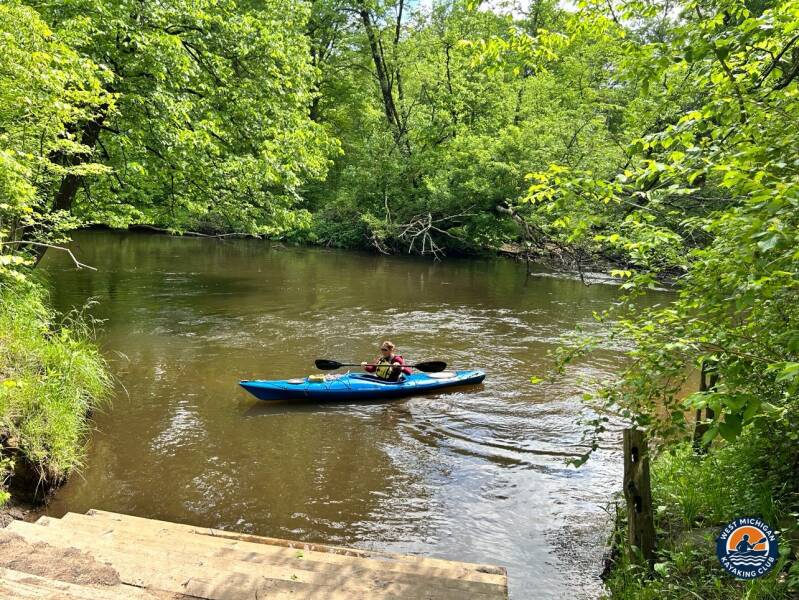
Every paddling region needs a river where beginners can learn without being punished for it, and around Grand Rapids that river is the Flat. Coming down through Greenville and Belding to meet the Grand at Lowell, the Flat is true to its name through much of its length: gentle current, forgiving bends, and long millpond stretches where the water slows and spreads out.
Gentle does not mean dull. The Flat runs through wooded corridors and small-town West Michigan, and its slower pace is exactly what makes it good teaching water — new paddlers can practice strokes, learn how a boat responds to current, and build confidence without the river making decisions for them. It is also a fine choice for experienced paddlers on a relaxed day, and for anyone introducing a friend or a teenager to the sport for the first time.
Two honest cautions apply. Millpond stretches mean some slow water where you supply all the forward motion, so plan distances conservatively. And gentle rivers still change with level and season, so the habits in the planning section below apply here too. Our Flat River guide covers the stretches through Lowell, Belding, and Greenville in detail.
5. The Muskegon River — The Long-Distance River
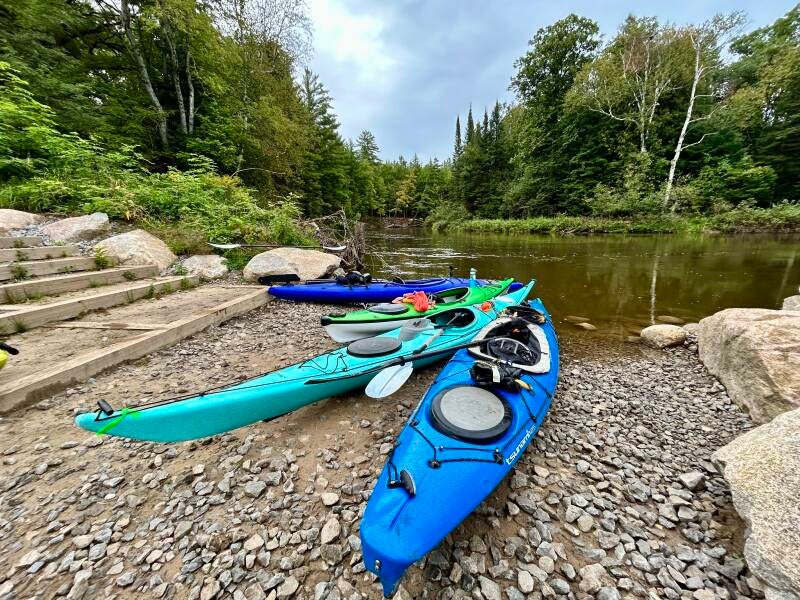
The first four rivers on this list are close enough for an afternoon. The Muskegon, roughly an hour north toward Newaygo and Big Rapids, is the one that changes what kind of paddler you are. It is one of Michigan's big rivers — wide, sustained, and long enough that you stop thinking in afternoons and start thinking in days.
That is the Muskegon's real gift to a Grand Rapids paddler: distance. Its stretches can be linked into long single days or genuine multi-day trips, which means it is where many of our members first try kayak camping, first learn to pack a boat with everything they need, and first discover that they like covering miles more than they expected. The paddling itself is big-river paddling — steady current, wide bends, and exposure to wind on the open reaches — so it asks for solid basics and honest self-assessment rather than any special heroics.
If the local rotation has started to feel small, the Muskegon is the natural next step, and it is a big reason West Michigan kayaking punches above its weight: a river of this scale, this close to home. Start with the club's Muskegon River guide for stretches, access, and multi-day planning notes.
Before You Go: Planning Kayaking Near Grand Rapids
Five different rivers share a few planning habits. Build these into every trip, whichever river you choose:
- Check the water level first. Every river on this list changes with rain and season. Our current water levels page gathers the relevant gauges in one place, and the U.S. Geological Survey publishes the real-time data behind them.
- Match the river to the paddler. Honest difficulty matching is most of river safety. Club trips are rated by difficulty for exactly this reason — pick water that fits the least experienced person in your group.
- Plan the shuttle before you launch. River trips are one-way. Know where the vehicles are before the boats touch water.
- Wear your PFD. A properly fitted life jacket, worn on every trip — not strapped to the deck.
- File a trip plan. Tell someone your launch, your take-out, and when you expect to be back.
- Dress for the water, not the air. Michigan river water stays cold well into the warmer months, especially on spring-fed water like the Rogue.
- Respect the banks. Much of the land along these rivers is private. Launch and land at public access, and leave every spot cleaner than you found it.
The Michigan Department of Natural Resources is the authority for state boating rules and public access programs, and it is worth any paddler's time.
Paddle Them With the Club
You can paddle all five of these rivers on your own, and our guides are written to help you do exactly that. But there is a reason West Michigan Kayaking Club exists: rivers are better with a shuttle already solved, a group that knows the water, and a calendar that keeps you honest about getting out.
The club was founded in Grand Rapids in 2019 by Brad De Young and Tim Postma and has grown to more than 2,000 members. In 2026 it ran 76 sponsored trips — local evenings on the rivers in this article, and longer expeditions across Michigan. Membership is free, the club is member-led, and trips are rated by difficulty so you can start on the Flat and work your way toward the Muskegon at your own pace. If you have been looking for a Grand Rapids kayaking club that actually paddles, come meet us at a launch.
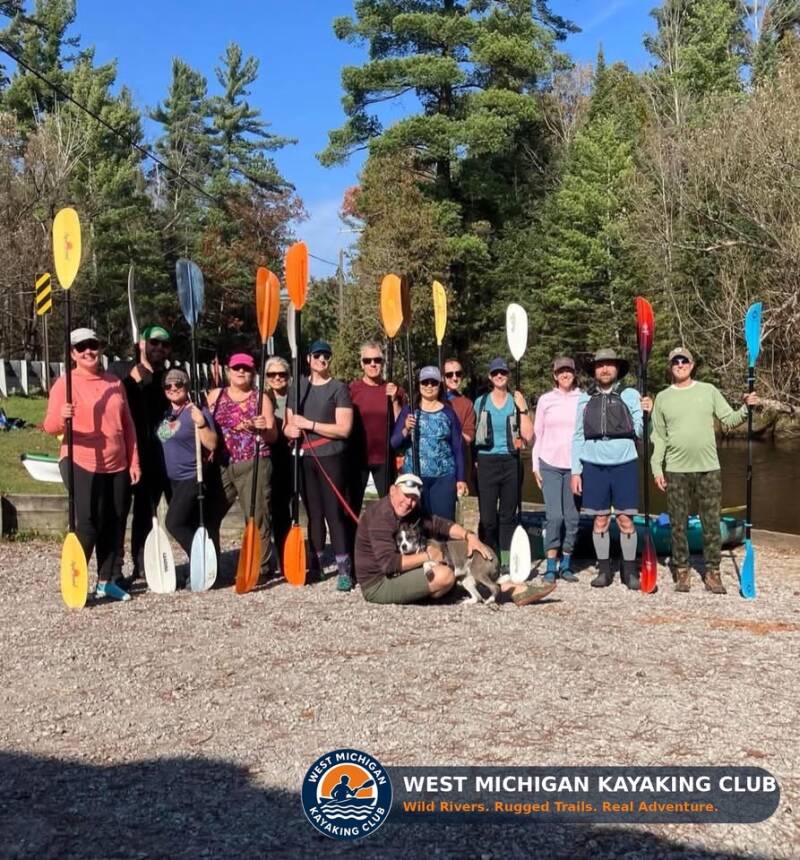
Explore Michigan with West Michigan Kayaking Club
Looking for more than an occasional paddle? Join the West Michigan Kayaking Club, a Grand Rapids-based outdoor adventure community exploring Michigan's rivers, lakes, trails, and wilderness.
Our adventures include active day paddles, multi-day river expeditions, kayak camping, hiking, backpacking, cycling, and outdoor exploration.
We believe in getting out there, covering miles, and discovering what's around the next bend.
Wild Rivers. Rugged Trails. Real Adventure.
Membership is free. There are no dues or membership fees.
Website: https://www.westmichigankayakingclub.online
Become a member: https://www.westmichigankayakingclub.online/become-a-member
Facebook community: West Michigan Kayaking Club
By Brad De Young | Co-Founder, West Michigan Kayaking Club
The Kayakers Journal
Add comment
Comments