
Ask a West Michigan paddler where they kayak and you will rarely get a one-river answer. West Michigan kayaking is not a single destination — it is a whole region of rivers running side by side toward Lake Michigan, each with its own character, all within an easy drive of each other. The Grand, the Rogue, the Thornapple, the Flat, the Muskegon, the White: learn the region and you stop asking "where should I paddle this weekend?" and start asking "which river fits the day I want?"
Week by week, that is the question our club answers. West Michigan Kayaking Club is based in Grand Rapids, but the region is our home water, and this is how it fits together — watershed by watershed, from the city rivers out to the lakeshore.
A Region Built by Rivers
West Michigan is defined by water moving west. Nearly every river in the region starts in the interior of the Lower Peninsula and finishes in Lake Michigan, which means the region's paddling has a natural geography: smaller, colder tributary streams inland; bigger valley rivers in the middle; and wide, slow mouths where the rivers meet the lake at shoreline towns.
That structure gives Michigan river kayaking unusual variety in a compact area. You can paddle a shaded trout-stream-sized river in the morning and a river wide enough to share with herons, eagles, and the occasional freighter-sized cloud reflection in the afternoon — without leaving the region. Drive times are part of the appeal: from Grand Rapids, most of the region's signature rivers are day trips, and all of them are reasonable weekend trips.
The Grand River System: West Michigan Kayaking's Home Water
The Grand is the region's spine — at roughly 252 miles, the longest river entirely within Michigan, running from the state's interior through Grand Rapids and out to Lake Michigan at Grand Haven. It is the river this club was founded on, and the one we return to most. Its stretches change personality as they go: farmland and woods upstream, an urban paddle through the city, and a widening, slowing river below town on its way to the lake.
What makes the Grand a system rather than a single river is its tributaries, each close enough to Grand Rapids to count as local water:
- The Rogue River comes through Rockford, cold and clear under a full canopy — a designated Michigan Natural River that feels like a piece of the north country tucked into Kent County. Our Rogue River guide covers its launches and seasons.
- The Thornapple River joins the Grand at Ada — a smaller, wooded river with a friendlier scale and a different mood from the main stream.
- The Flat River meets the Grand at Lowell after coming down through Greenville and Belding, mixing millpond stretches with quiet wooded corridors.
Between the main river and its branches, Grand Rapids kayaking alone could fill a season. That is the short answer for anyone searching for kayaking near Grand Rapids: start with the home water, then work outward. The club's Grand River guide is the place to start for stretch-by-stretch detail.
North to the Muskegon River
Drive north and the region's second great river takes over. The Muskegon River is one of the longest rivers in Michigan, and its lower stretches run through Newaygo County on their way toward the city of Muskegon and the lake. Muskegon River kayaking has a different feel from the Grand: long wooded corridors, a big-river steadiness, and the sense — accurate, as it happens — that the water has traveled a long way to get to you.
The Muskegon rewards paddlers who like to settle in and cover distance. It is the kind of river where the day organizes itself around the water: launch in the morning, let the current and the miles do their work, and take out feeling like you have been somewhere. For access points, stretch descriptions, and seasonal notes, see the club's Muskegon River guide.
The White River and the National Forest
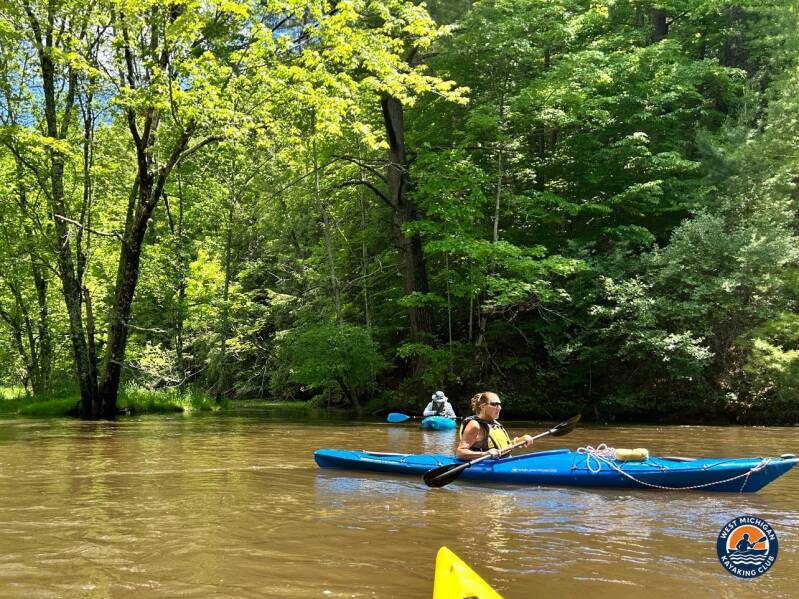
Northwest of Grand Rapids, the region gets wilder. The White River runs through the Manistee National Forest on its way toward White Lake and the big lake, and it is the West Michigan river that feels most like a backcountry trip: sandy bottom, forested banks, limited development, and long stretches where the forest closes in on both sides.
This is not theory for us — in June 2026 the club paddled the White from Pines Point to Fruitvale Road, a full day of tight bends, downed wood, and river splits through the national forest. Our White River trip report tells that day the way it happened, with the launches, the recorded river conditions, and what the route asks of a paddler. If you want to understand what West Michigan kayaking adventures look like at their most adventurous, start there.
Where the Rivers Meet the Lake
Every West Michigan river story ends the same way: at Lake Michigan. The Grand reaches the lake at Grand Haven, the Muskegon at Muskegon, and the shoreline is dotted with towns — Holland among them — built around harbors, river mouths, and the beaches beyond. For paddlers, the lakeshore adds a whole second menu: river mouths and harbor water on calm days, inland lakes when the big lake is rough, and towns that make a natural base for a weekend of exploring.
A word of respect is in order. Lake Michigan is not a big pond; it is an inland sea, and it behaves like one. Conditions on the open lake can change faster than on any river in this article, and cold water is a year-round reality. Many of our members treat the shoreline as a destination and the rivers as the paddling — and on the days they do venture onto big water, they go prepared, in groups, and with a close eye on the forecast. The region's beauty and its seriousness come from the same place.
An Adventure Culture, Not Just a Map
Rivers explain where West Michigan paddles. They do not explain how often — or how well. That part is culture. This region has a deep bench of people who would rather spend a Saturday covering twelve river miles than doing almost anything else, and West Michigan Kayaking Club exists to put those people in the same launch parking lot.
The club was founded in Grand Rapids in 2019 by Brad De Young and Tim Postma and has grown to more than 2,000 members. Membership is free, the club is member-led, and in 2026 it ran 76 sponsored trips — local day paddles, multi-day river expeditions, kayak camping, and the hiking, backpacking, and cycling outings that fill the spaces between river days. The club calendar is where the region's season actually lives: pick a date, pick a river, show up with your boat and gear.
That is the real shape of West Michigan kayaking: not one famous stretch of water, but a standing community moving across a whole region of rivers, all year.
Planning Your Own West Michigan River Day
A few habits make exploring the region easier and safer:
- Start with the guide library. The club's Lower Peninsula river guide collects our river write-ups in one place — the fastest way to compare stretches before choosing a day.
- Check the gauge before you go. West Michigan rivers rise and fall with rain and season. The U.S. Geological Survey publishes real-time flow data for the region's gauged rivers; a few minutes there will tell you more about your day than any forecast.
- Wear a properly fitted PFD, every trip, every season — and dress for the water temperature, not the air temperature, especially in spring and fall.
- File a trip plan. Launch, take-out, and expected return time, shared with someone off the water.
- Respect the banks. Much of the land along these rivers is private. Use public access for launching and landing, follow the rules that apply to the water you are on — the Michigan Department of Natural Resources is the authority for state boating rules — and leave every access cleaner than you found it.
Pick a River, Any River
If you live in West Michigan, you live in one of the best paddling regions in the Midwest — not because of one famous river, but because of the depth of the bench. Grand, Rogue, Thornapple, Flat, Muskegon, White, and a shoreline full of river towns: the region rewards people who keep exploring it. Start with one river this season. Next season, you will have a rotation.
Explore Michigan with West Michigan Kayaking Club
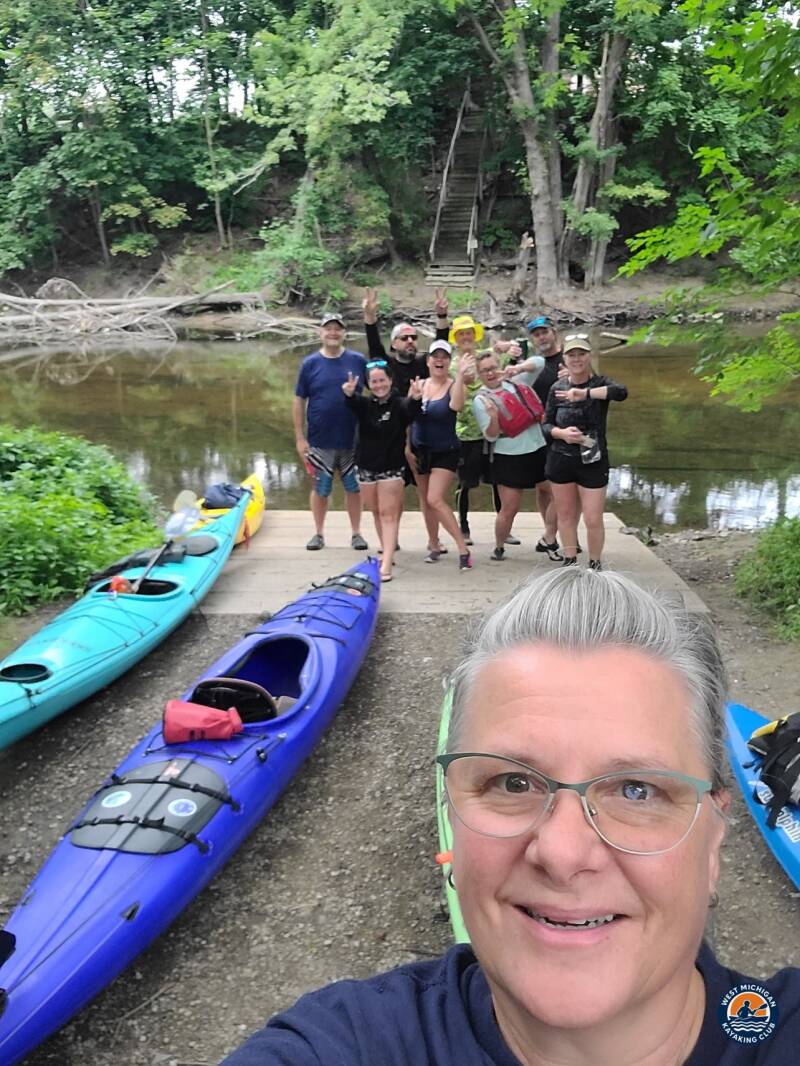
Looking for more than an occasional paddle? Join the West Michigan Kayaking Club, a Grand Rapids-based outdoor adventure community exploring Michigan's rivers, lakes, trails, and wilderness.
Our adventures include active day paddles, multi-day river expeditions, kayak camping, hiking, backpacking, cycling, and outdoor exploration.
We believe in getting out there, covering miles, and discovering what's around the next bend.
Wild Rivers. Rugged Trails. Real Adventure.
Membership is free. There are no dues or membership fees.
Website: https://www.westmichigankayakingclub.online
Become a member: https://www.westmichigankayakingclub.online/become-a-member
Facebook community: West Michigan Kayaking Club
By Brad De Young | Co-Founder, West Michigan Kayaking Club
The Kayakers Journal
Add comment
Comments